
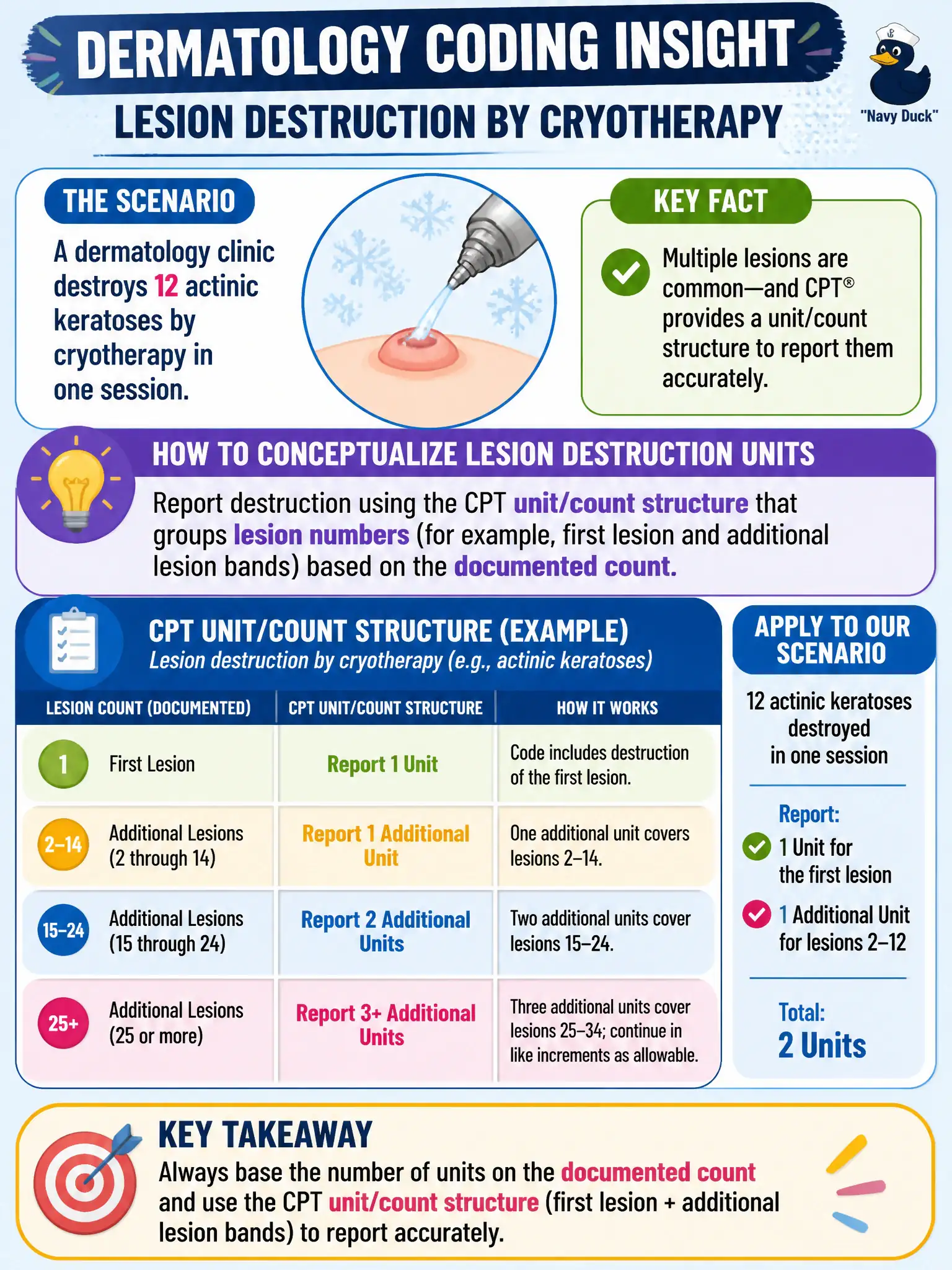
A dermatology clinic destroys 12 actinic keratoses by cryotherapy in one session. How should lesion destruction units be conceptualized for physician coding?
Select an answer to reveal the explanation.
Short Explanation
Cryo on a dozen sun spots isn’t ‘one zap covers all’ or ‘twelve major surgeries.’ Destruction codes usually climb in counted bands—first lesion, then add-ons—so you tally what was actually frozen. Count the keratoses; don’t invent excisions or hospital PCS.
Full Explanation
Cryotherapy destruction of multiple actinic keratoses is reported using the CPT unit and count structure that groups lesion numbers—such as first lesion and additional-lesion bands—based on the documented count. For a dermatology clinic treating twelve lesions in one session, tally the lesions and apply that family’s unit logic. Precise unit reporting in public and community clinics supports fair payment and defensible audit trails for high-volume destruction sessions.
Reporting a single destruction unit regardless of how many lesions were treated collapses counted work into one line and understates documented service volume. Billing twelve separate complex excision codes instead of destruction codes misclassifies cryotherapy destruction as excision surgery. Assigning hospital ICD-10-PCS destruction codes for clinic cryotherapy imports inpatient procedure coding into a professional-fee office setting where CPT governs.
Exam caveat: unit banding and add-on patterns are code-family specific—follow the descriptors for destruction of benign or premalignant lesions as published. Operational check: count documented treated lesions, map the count to the destruction family’s unit structure, and ensure medical necessity diagnoses support the session on the professional claim.