
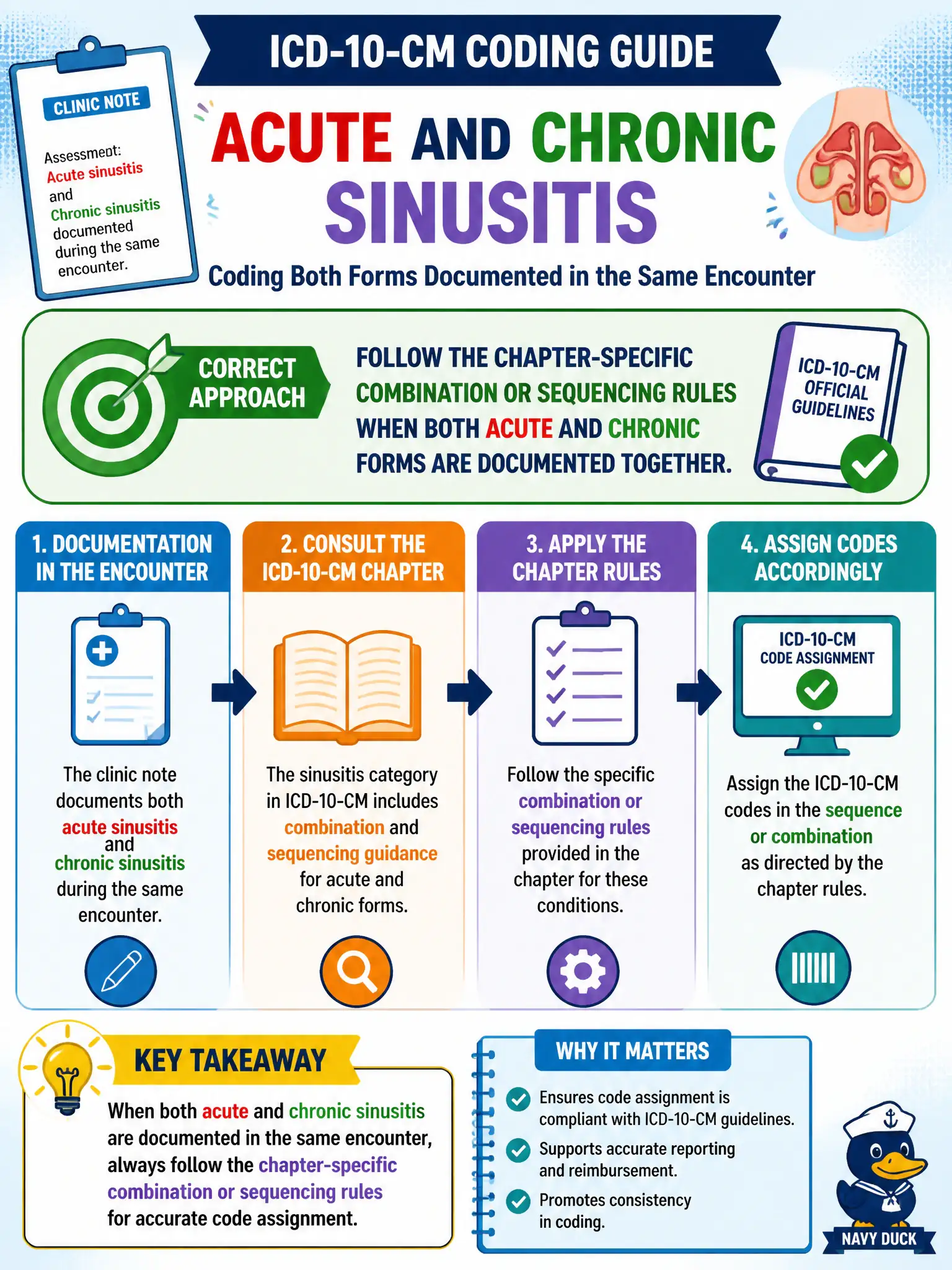
A county clinic note documents both acute and chronic sinusitis during the same encounter, and the ICD-10-CM chapter for that condition provides combination and sequencing guidance. How should the physician-based coder approach code assignment?
Select an answer to reveal the explanation.
Short Explanation
Think of acute and chronic like a flash flood and a long rainy season hitting the same road. When the chart names both, you don’t just pick a favorite—you open that chapter’s rulebook. Combination codes or sequencing notes tell you how ICD-10-CM wants them reported.
Full Explanation
When a county clinic note documents both acute and chronic forms of the same condition, ICD-10-CM Official Guidelines and the chapter-specific instructions—not a personal preference—govern code selection. Combination codes or defined sequencing notes exist so physician-based claims reflect the full clinical picture the public clinic actually treated, which protects Medicaid and commercial integrity when both statuses are present. Follow those chapter rules whenever both forms appear together.
Always coding only the acute form and ignoring the chronic form fails the documentation and chapter instructions that recognize concurrent chronic disease burden in the community population. Defaulting to an unspecified sinusitis code whenever both forms appear discards specificity the record already supports and weakens epidemiologic and quality reporting that civic clinics rely on. Coding acute and chronic as equal principal diagnoses without reviewing chapter notes or Official Guidelines invents dual-principal logic the classification does not authorize for physician claims.
Exam caveat: some chapters use a single combination code while others require a sequencing order—read the notes for that condition rather than assuming one pattern fits all. Operational check: before finalizing the claim, open the ICD-10-CM chapter for the documented sinusitis codes, confirm whether a combination or sequencing instruction applies, and verify the selected code(s) match both the note and those instructions.