
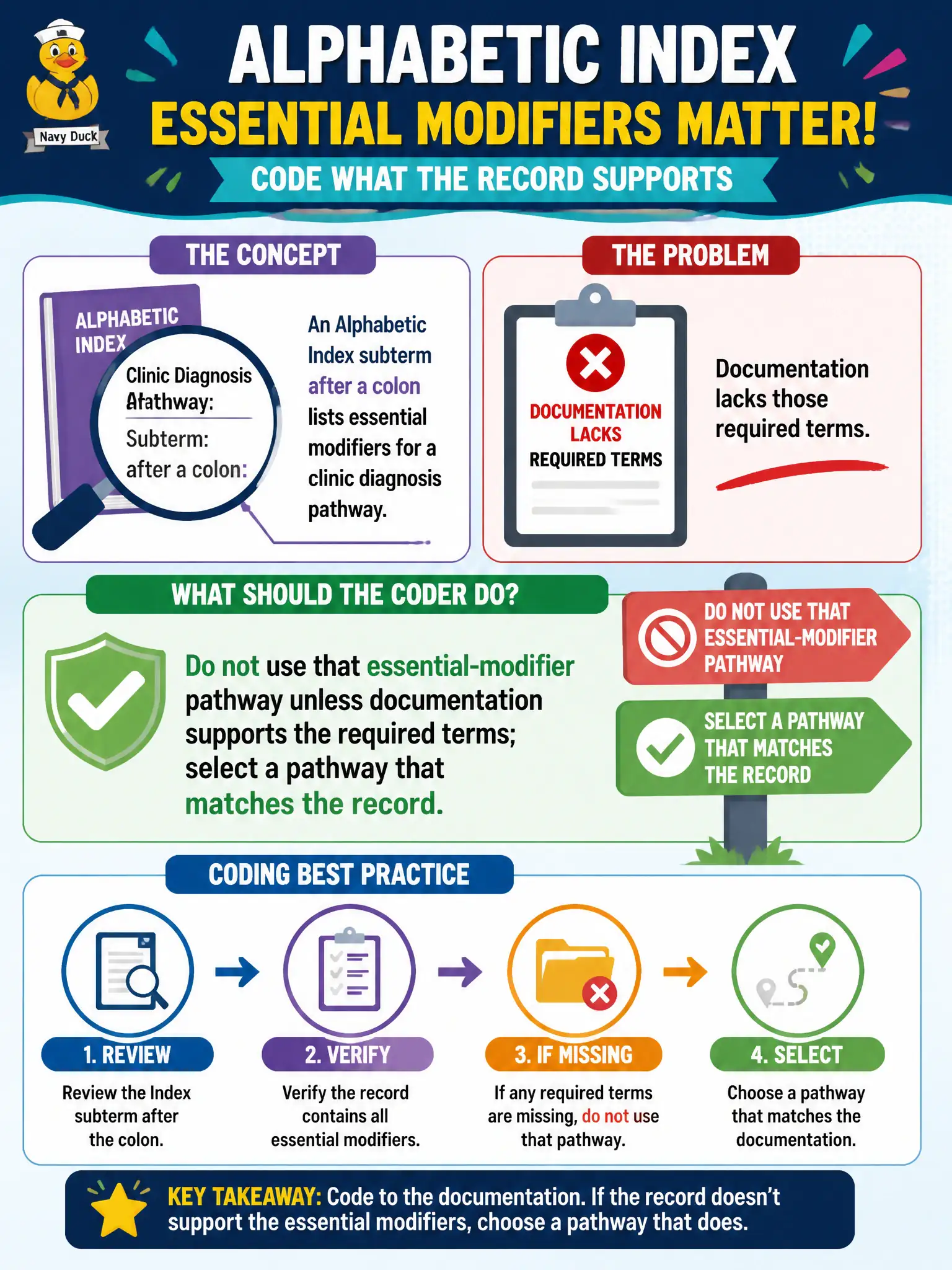
An Alphabetic Index subterm after a colon lists essential modifiers for a clinic diagnosis pathway. Documentation lacks those required terms. What should the coder do?
Select an answer to reveal the explanation.
Short Explanation
Words after a colon in the Index are the velvet rope—you need them to enter that path. If the note doesn’t support the essential modifier, pick a different Index route that matches what’s written. Don’t invent the missing words.
Full Explanation
Essential modifiers in the Alphabetic Index identify terms that must be present in the diagnostic statement for that specific pathway. When an Alphabetic Index subterm after a colon lists essential modifiers for a clinic diagnosis pathway and documentation lacks those required terms, do not use that essential-modifier pathway unless documentation supports the required terms; select a pathway that matches the record. Assigning that Index pathway anyway because all Index subterms are optional fails essential-modifier rules. Inventing the missing essential modifier from common clinical practice fabricates documentation. Always defaulting to the parenthetical nonessential modifier pathway instead confuses two different Index conventions. Exam caveat: return to the Index for an entry that matches available documentation or seek clarification when appropriate. Operational check: treat colon or indented essential modifiers as required, withhold that pathway if the clinic note lacks them, choose a matching alternative pathway, and never invent the missing words. In civic and community clinic workflows, document the chosen pathway in the coding rationale so auditors can see how the record supported specificity, sequencing, and instructional-note compliance on the professional claim.