
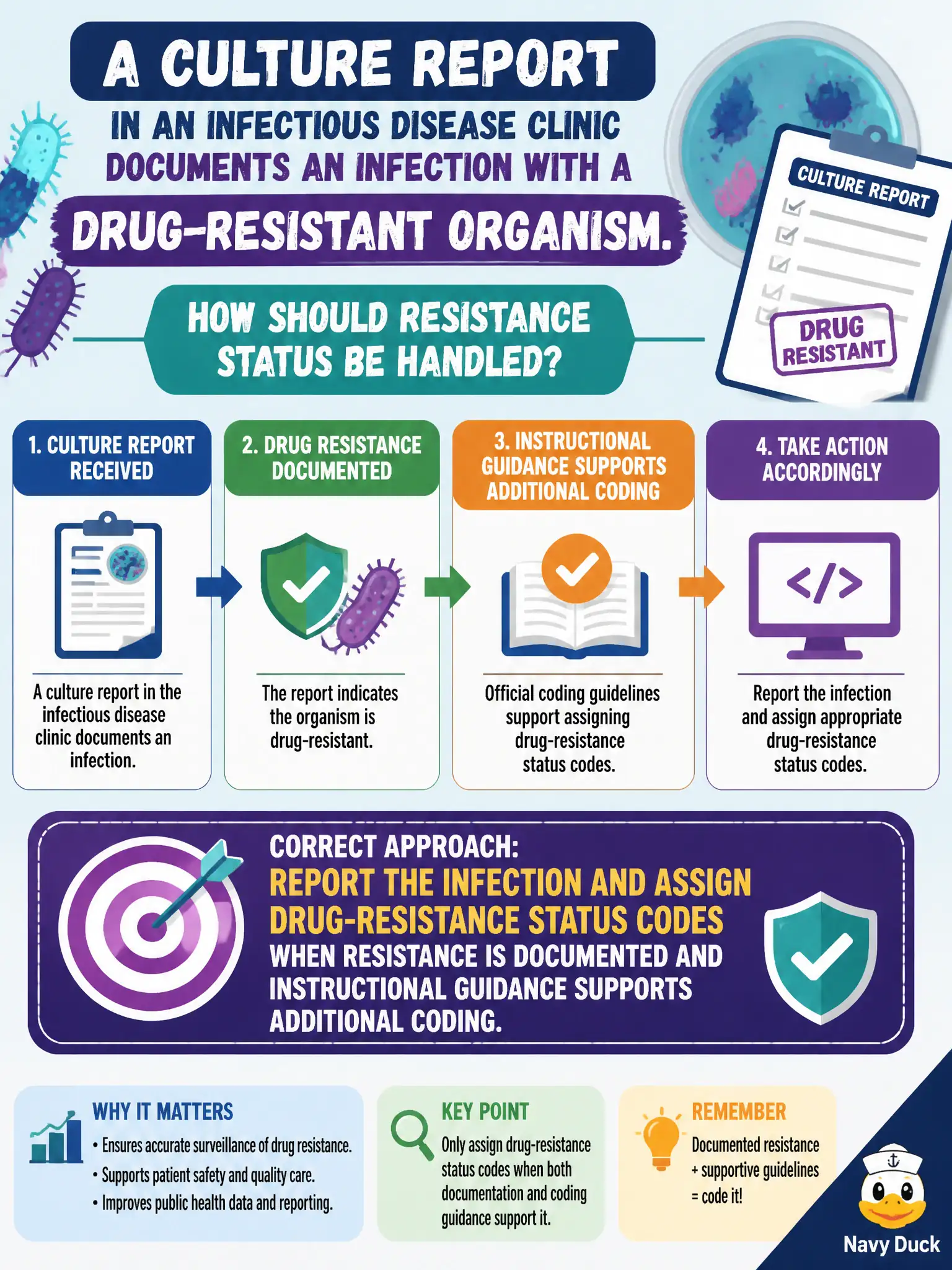
A culture report in an infectious disease clinic documents an infection with a drug-resistant organism. How should resistance status be handled?
Select an answer to reveal the explanation.
Short Explanation
Resistance is bonus detail on top of the infection—not a replacement for it. When the culture spells out drug resistance, add the status codes the classification allows. Allergy codes aren’t a stand-in for antimicrobial resistance.
Full Explanation
ICD-10-CM includes codes for infection with drug-resistant organisms as additional codes when resistance is documented. When a culture report in an infectious disease clinic documents an infection with a drug-resistant organism, report the infection and assign drug-resistance status codes when resistance is documented and instructional guidance supports additional coding. Coding only resistance status and omitting the infection diagnosis fails; resistance is adjunctive detail on top of the infection. Ignoring resistance documentation because resistance codes are inpatient-only fails; they are not limited to facility claims. Replacing the organism infection with an allergy code to the antibiotic fails; allergy describes immune response history, not microbial resistance patterns. Exam caveat: follow use-additional-code notes for resistance and organism as the Tabular directs. Operational check: code the infection and organism as required, add drug-resistance status codes when documented, and never substitute antibiotic allergy codes for resistance. In civic and community clinic workflows, document the chosen pathway in the coding rationale so auditors can see how the record supported specificity, sequencing, and instructional-note compliance on the professional claim.