
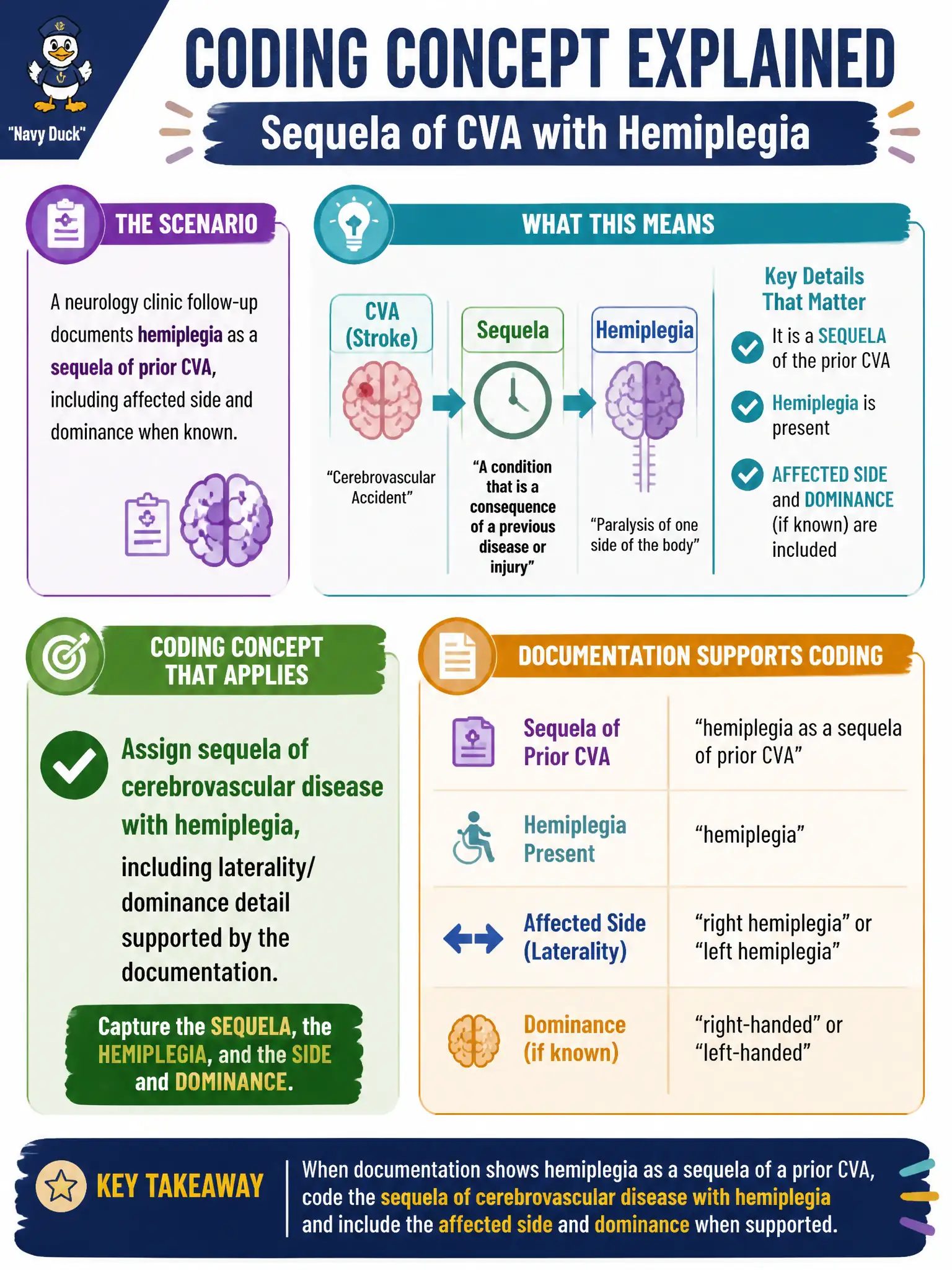
A neurology clinic follow-up documents hemiplegia as a sequela of prior CVA, including affected side and dominance when known. What coding concept applies?
Select an answer to reveal the explanation.
Short Explanation
Old stroke, lasting weakness—that’s sequela territory, not a fresh stroke code every visit. Hemiplegia wants side (and dominance when the note gives it). Capture the residual neuro deficit the way the documentation describes it.
Full Explanation
Late effects of cerebrovascular disease are coded with sequela pathways rather than acute stroke codes when the encounter addresses residual conditions. When a neurology clinic follow-up documents hemiplegia as a sequela of prior CVA, including affected side and dominance when known, assign sequela of cerebrovascular disease with hemiplegia, including laterality and dominance detail supported by the documentation. Coding only an acute stroke diagnosis for every sequela visit fails without a new acute event. Omitting laterality for hemiplegia because sequela codes never use side fails; hemiplegia categories commonly require side and sometimes dominance. Reporting personal history of CVA only and never coding residual hemiplegia fails when residuals are the focus of care. Exam caveat: do not report acute cerebral infarction for routine sequela follow-up without documentation of a new acute stroke. Operational check: confirm sequela hemiplegia after prior CVA, capture laterality and dominance when documented, and withhold acute stroke and history-only shortcuts. In civic and community clinic workflows, document the chosen pathway in the coding rationale so auditors can see how the record supported specificity, sequencing, and instructional-note compliance on the professional claim.