
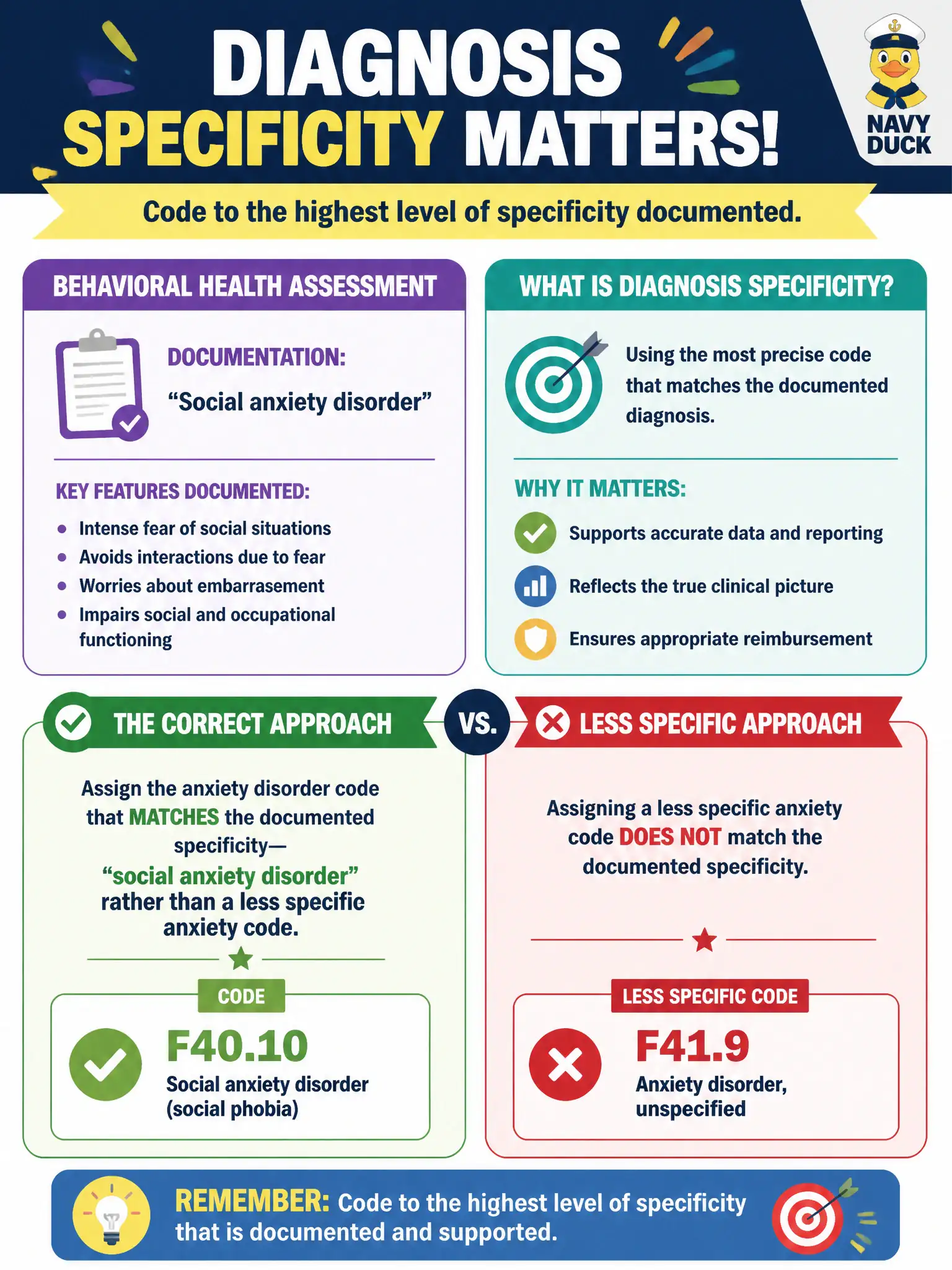
A behavioral health assessment documents social anxiety disorder. Which diagnosis specificity approach is correct?
Select an answer to reveal the explanation.
Short Explanation
If the psychiatrist names social anxiety disorder, that’s your specificity target—not a generic anxiety bucket. Unspecified is for when the note is vague, not when it’s precise. Match the diagnostic statement you were given.
Full Explanation
Mental, behavioral, and neurodevelopmental disorder coding should reflect the provider's diagnostic statement at the highest supported specificity. When a behavioral health assessment documents social anxiety disorder, assign the anxiety disorder code that matches that documented specificity rather than a less specific anxiety code. Always coding generalized anxiety disorder for any anxiety-related visit fails when social anxiety disorder is specified. Coding only anxiety, unspecified even when a more specific anxiety disorder is documented underuses available detail. Omitting mental health diagnoses on professional claims because they require facility coding only fails; these diagnoses are reportable on physician professional claims when documented. Exam caveat: do not down-code to unspecified for payer folklore when specificity is clearly stated. Operational check: match social anxiety disorder exactly, avoid GAD or unspecified defaults, and report the mental health diagnosis on the ambulatory professional claim. In civic and community clinic workflows, document the chosen pathway in the coding rationale so auditors can see how the record supported specificity, sequencing, and instructional-note compliance on the professional claim.