
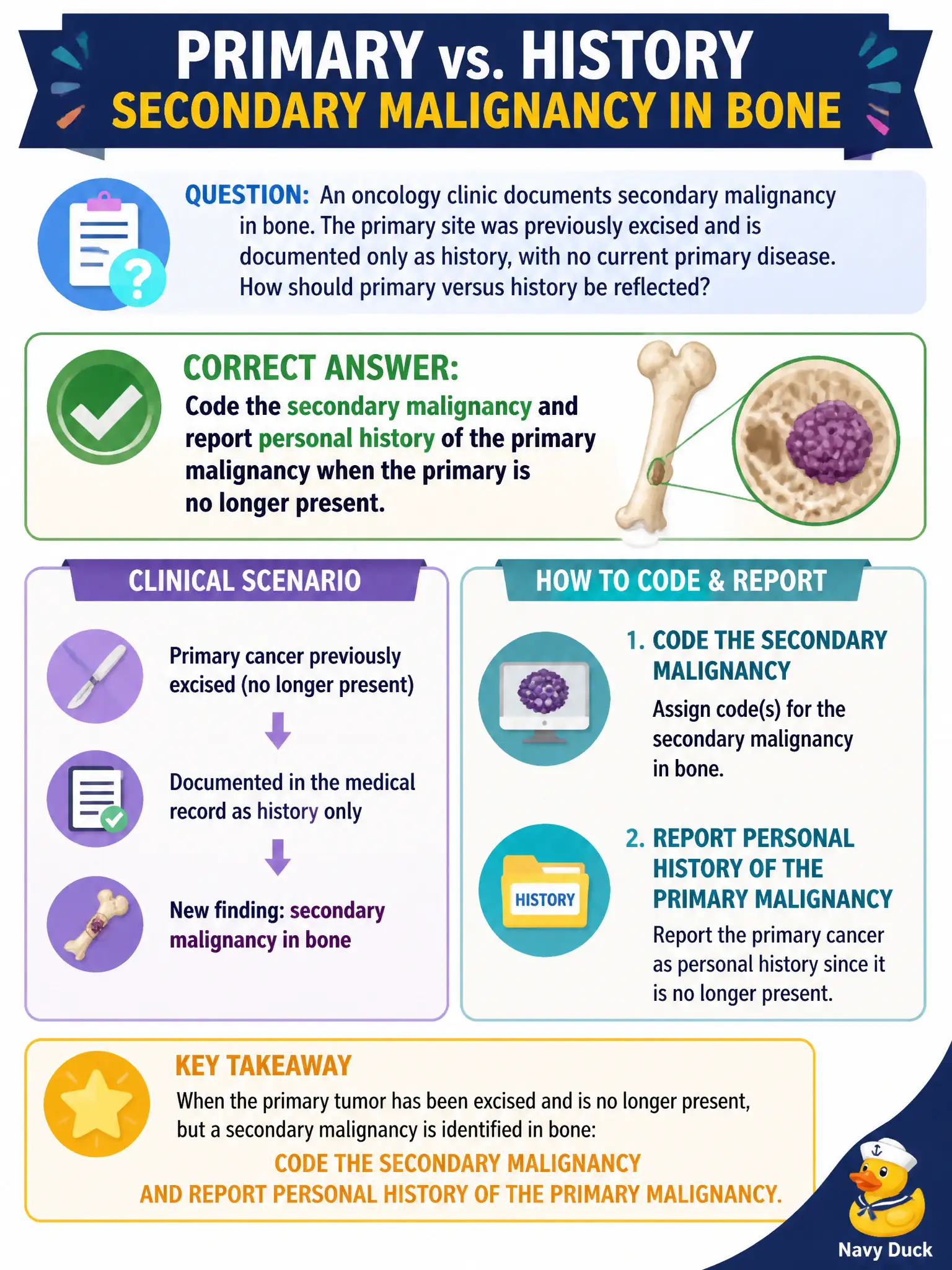
An oncology clinic documents secondary malignancy in bone. The primary site was previously excised and is documented only as history, with no current primary disease. How should primary versus history be reflected?
Select an answer to reveal the explanation.
Short Explanation
Metastasis can stick around after the original tumor is gone—that’s a documentation fork. Active secondary disease gets coded as secondary; the old primary, if excised and not current, is usually history. Don’t resurrect an active primary the note says is history.
Full Explanation
When a secondary metastatic malignancy is present and the primary has been excised with no further treatment of the primary, coding typically includes the secondary malignancy and a personal history code for the former primary. When an oncology clinic documents secondary malignancy in bone and the primary site was previously excised and documented only as history with no current primary disease, code the secondary malignancy and report personal history of the primary malignancy when the primary is no longer present. Coding an active primary malignancy at the old site whenever any secondary malignancy exists fails without current primary disease. Omitting the secondary malignancy and coding only personal history of cancer understates the reason for care. Coding family history of malignancy instead of secondary neoplasm codes fails; family history is about relatives, not the patient's metastasis. Exam caveat: if the primary is still under treatment, keep an active primary code—history versus active turns on documentation. Operational check: confirm active secondary bone malignancy, confirm primary is history only, assign secondary plus personal-history primary coding, and withhold family-history substitutes.