
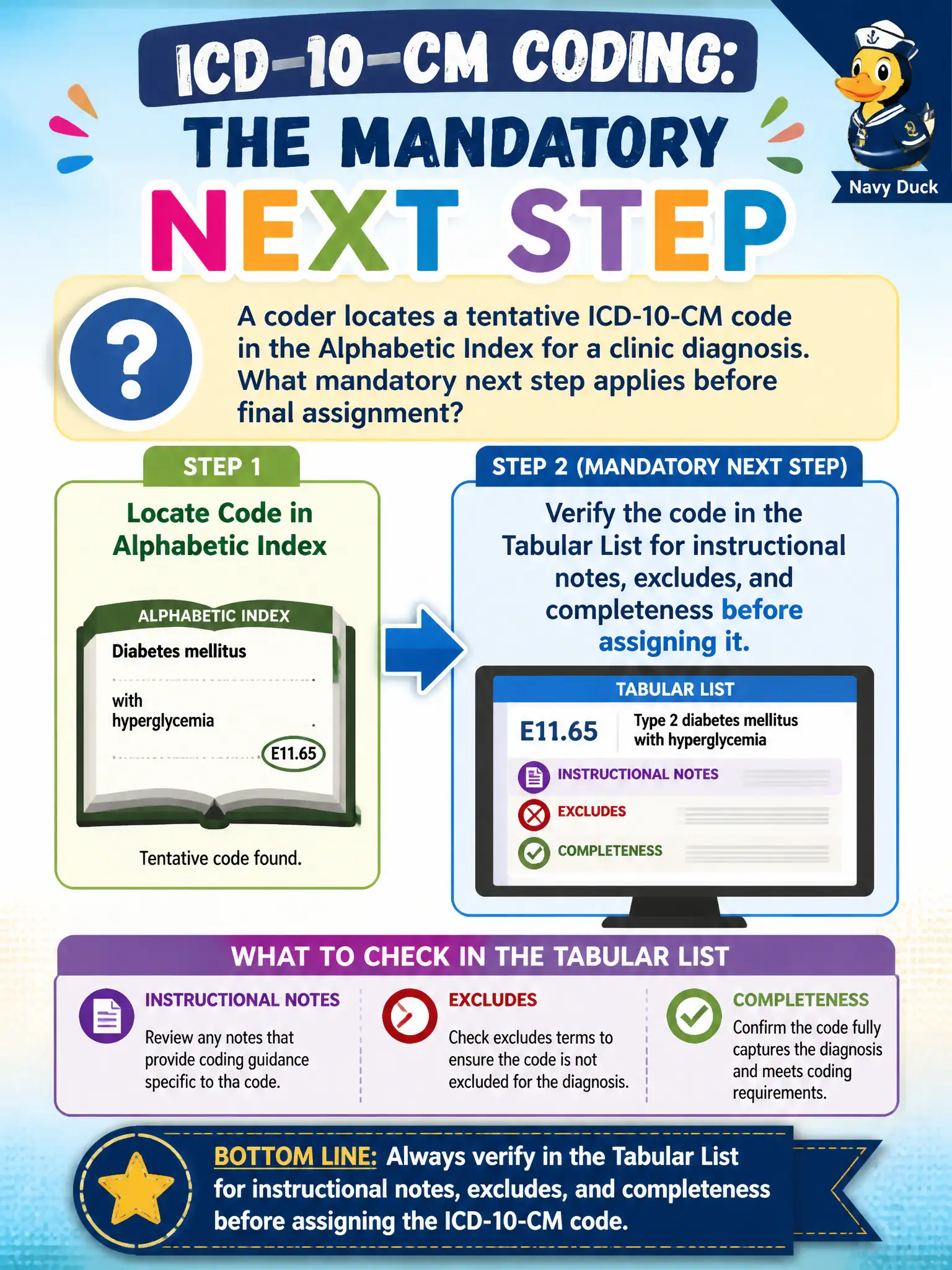
A coder locates a tentative ICD-10-CM code in the Alphabetic Index for a clinic diagnosis. What mandatory next step applies before final assignment?
Select an answer to reveal the explanation.
Short Explanation
The Index gets you to the neighborhood; the Tabular confirms the address. Instructional notes, excludes, and missing characters hide in the Tabular—skipping it is how wrong codes sneak onto claims. Look it up, then verify.
Full Explanation
Official coding process requires locating a code in the Alphabetic Index and then verifying it in the Tabular List. When a coder locates a tentative ICD-10-CM code in the Alphabetic Index for a clinic diagnosis, the mandatory next step is to verify the code in the Tabular List for instructional notes, excludes, and completeness before assigning it. Finalizing the code from the Index alone to save time on high-volume clinic days risks incomplete or incorrect codes. Always picking the first Index entry under the main term without reading subterms fails Index navigation. Substituting a CPT code for the diagnosis whenever Index look-up feels unclear confuses procedure coding with diagnosis coding. Exam caveat: the Tabular holds includes/excludes, code-first, use-additional-code, and character requirements the Index may not fully display. Operational check: Index to a candidate, open the Tabular entry, apply instructional notes and required characters, then assign—never Index-only finalization. In civic and community clinic workflows, document the chosen pathway in the coding rationale so auditors can see how the record supported specificity, sequencing, and instructional-note compliance on the professional claim.