
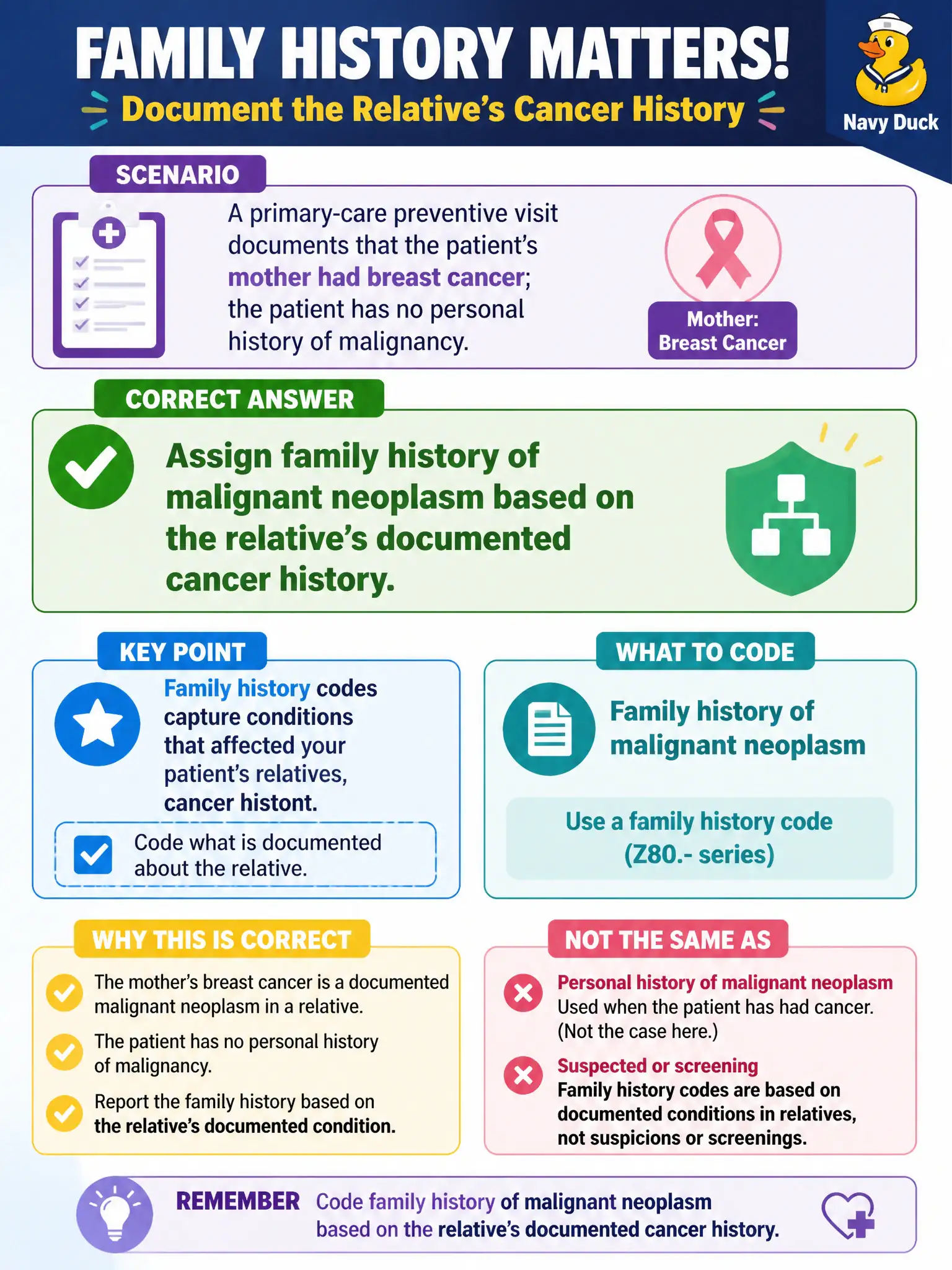
A primary-care preventive visit documents that the patient’s mother had breast cancer; the patient has no personal history of malignancy. Which history concept is correct?
Select an answer to reveal the explanation.
Short Explanation
Whose cancer is it—that’s the whole game. Mom’s breast cancer is family history for the patient, not the patient’s personal history. Don’t promote a relative’s diagnosis into the patient’s active or personal-history bucket.
Full Explanation
Personal history Z-codes describe the patient's own past conditions; family history Z-codes describe disease in relatives. When a primary-care preventive visit documents that the patient's mother had breast cancer and the patient has no personal history of malignancy, assign family history of malignant neoplasm based on the relative's documented cancer history. Assigning personal history of malignant neoplasm of breast for the patient fails—that would mean the patient herself had breast cancer. Assigning an active breast cancer code for the patient because family history implies current disease fails without personal disease. Omitting all history codes because family history is never reportable on physician claims fails; family history may be clinically relevant for screening encounters and is reportable when documented. Exam caveat: family history supports risk and screening context but never creates an active cancer diagnosis for the patient. Operational check: confirm the cancer belongs to the mother, assign family-history coding, and withhold personal-history or active malignancy codes for the patient. In civic and community clinic workflows, document the chosen pathway in the coding rationale so auditors can see how the record supported specificity, sequencing, and instructional-note compliance on the professional claim.