
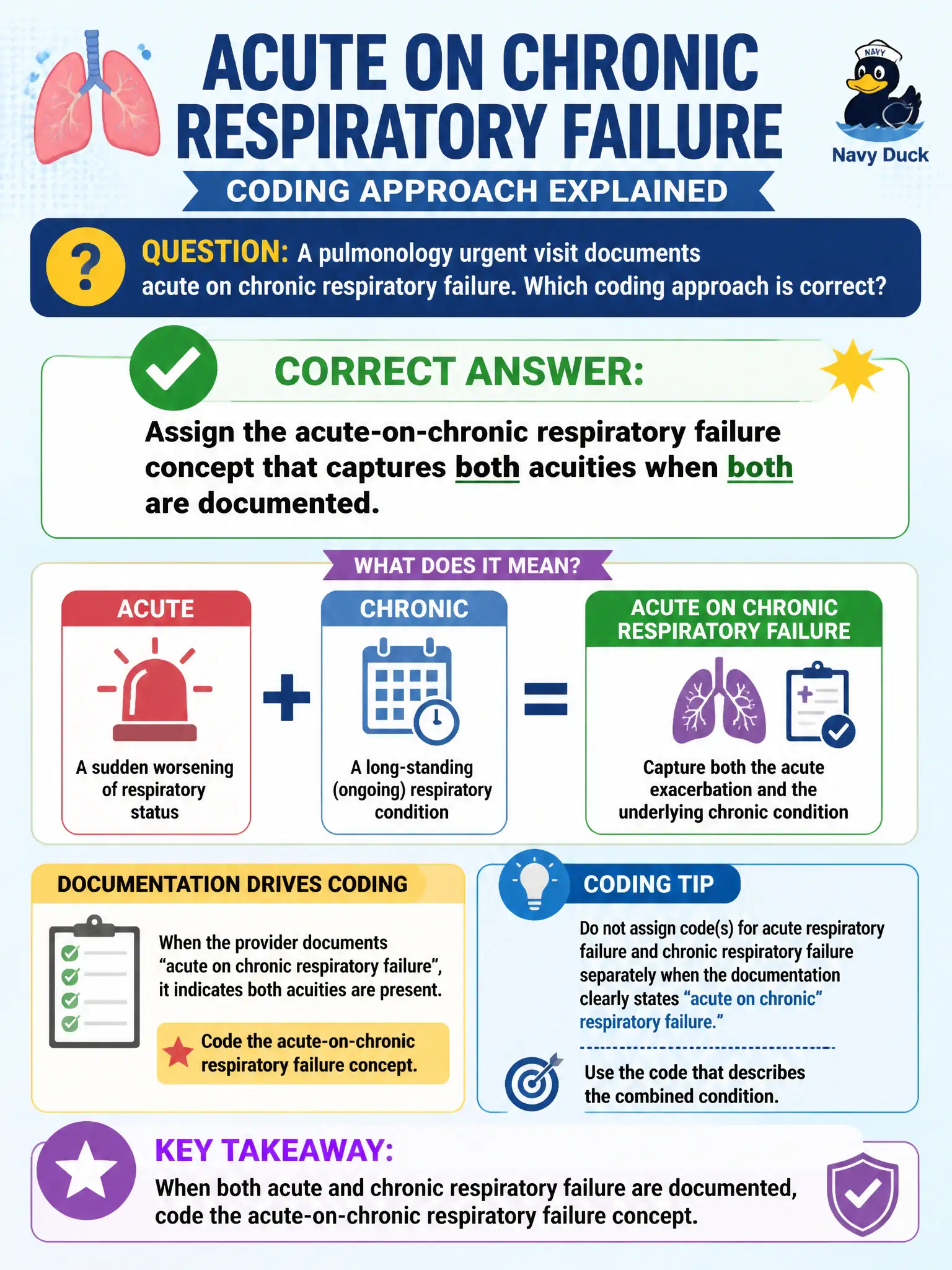
A pulmonology urgent visit documents acute on chronic respiratory failure. Which coding approach is correct?
Select an answer to reveal the explanation.
Short Explanation
‘Acute on chronic’ means both gears are spinning—don’t drop one. When the pulmonologist writes acute-on-chronic respiratory failure, use the pathway that reflects that combined acuity. Symptom codes aren’t a substitute for the documented failure diagnosis.
Full Explanation
ICD-10-CM provides acute, chronic, and acute-on-chronic respiratory failure codes. When a pulmonology urgent visit documents acute on chronic respiratory failure, assign the acute-on-chronic respiratory failure concept that captures both acuities when both are documented. Coding only chronic respiratory failure and ignoring the acute component drops documented acuity. Coding only acute respiratory failure and never reporting chronic respiratory failure on the same claim fails when the combined acute-on-chronic concept exists and is documented. Replacing respiratory failure with dyspnea alone because office visits cannot report respiratory failure fails; professional claims may report respiratory failure when clinically documented in ambulatory or urgent settings. Exam caveat: hypoxemic versus hypercapnic detail should be added when documented per category structure. Operational check: confirm acute-on-chronic wording, select the combined acuity code, add gas-exchange detail if stated, and avoid dyspnea-only substitutes. In civic and community clinic workflows, document the chosen pathway in the coding rationale so auditors can see how the record supported specificity, sequencing, and instructional-note compliance on the professional claim.