
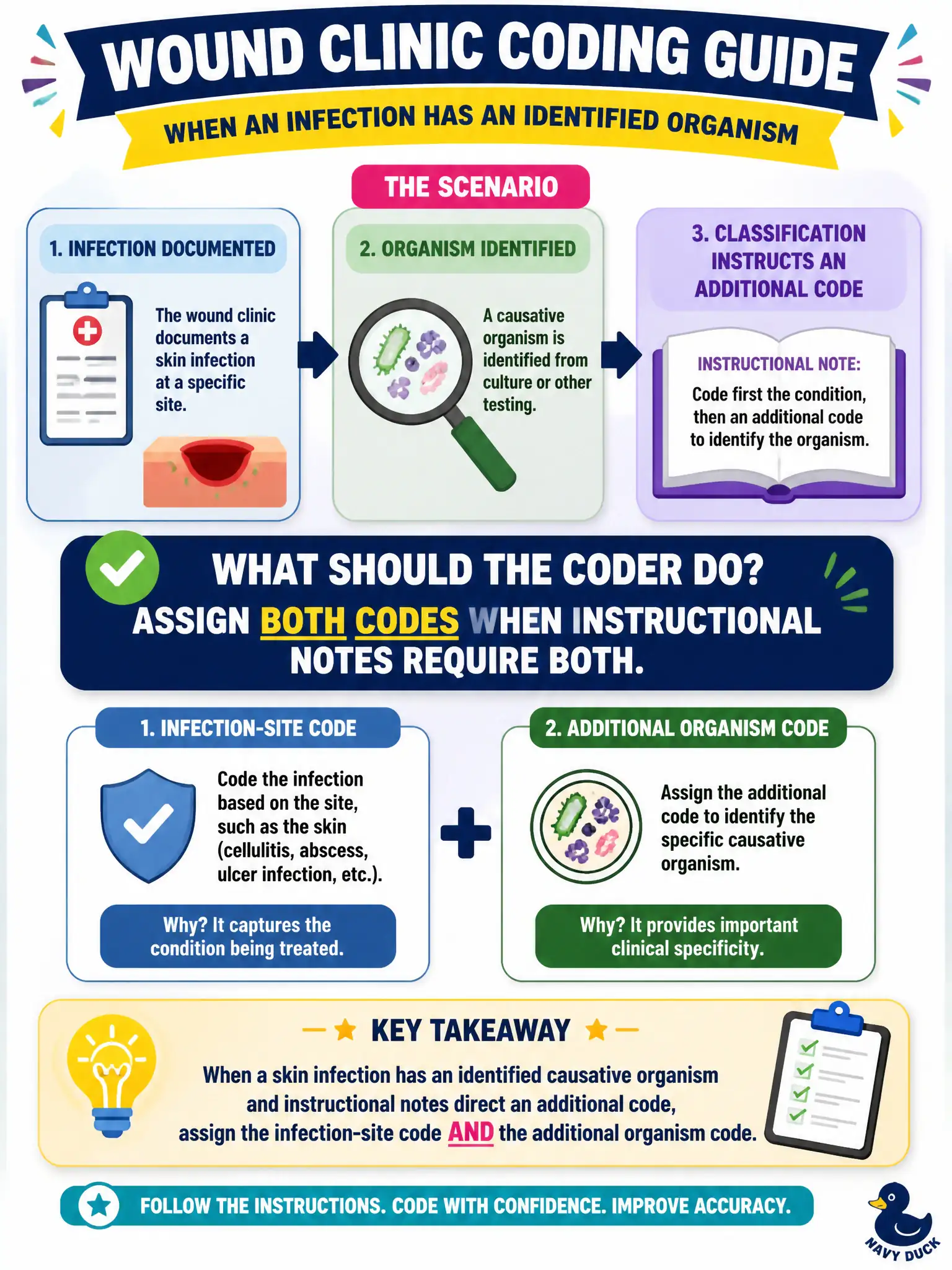
A wound clinic documents a skin infection and identifies a causative organism, and the classification instructs an additional code for the organism. What should the coder do?
Select an answer to reveal the explanation.
Short Explanation
Sometimes the code set wants both the ‘where’ and the ‘what bug.’ If the Tabular says add the organism, don’t stop at the site alone. Two codes, one infection story—when the instructions say so.
Full Explanation
Many infection categories include use-additional-code notes to identify the infectious agent. When a wound clinic documents a skin infection and identifies a causative organism, and the classification instructs an additional code for the organism, assign the infection-site code and the additional organism code when instructional notes require both. Coding only the organism and omitting the infection site because organism codes are always principal fails; organism codes typically do not replace the localized infection code. Ignoring organism documentation on professional claims and reporting the site only fails instructional notes. Reporting a sepsis code automatically whenever any organism is named fails without sepsis documentation. Exam caveat: if the Tabular does not require an organism code, do not force one—but when it does, complete both. Operational check: code the skin infection site or type, add the documented organism per use-additional instructions, and withhold sepsis unless the provider documents sepsis. In civic and community clinic workflows, document the chosen pathway in the coding rationale so auditors can see how the record supported specificity, sequencing, and instructional-note compliance on the professional claim.