
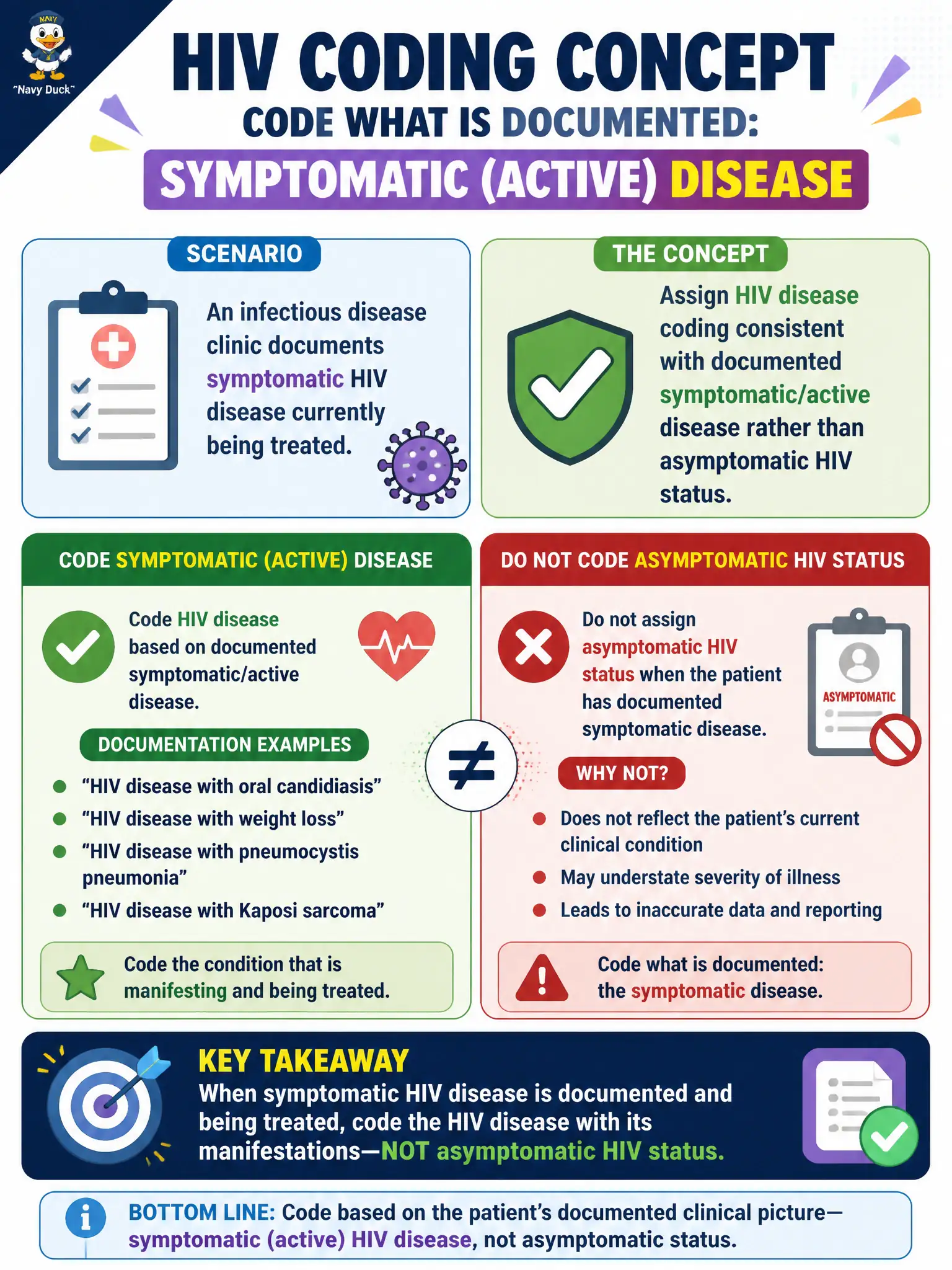
An infectious disease clinic documents symptomatic HIV disease currently being treated. Which HIV status coding concept applies?
Select an answer to reveal the explanation.
Short Explanation
HIV coding follows the clinical status in the note—not a one-size sticker. Symptomatic or AIDS-defining disease lives in the HIV disease pathway; quiet, asymptomatic infection is a different status code. Match the documented activity, not the med list alone.
Full Explanation
ICD-10-CM HIV guidelines distinguish asymptomatic HIV infection status from HIV disease. When an infectious disease clinic documents symptomatic HIV disease currently being treated, assign HIV disease coding consistent with documented symptomatic or active disease rather than asymptomatic HIV status. Always assigning asymptomatic HIV status Z21 for any patient with a positive HIV test fails when symptomatic disease is documented. Assigning inconclusive HIV serology whenever antiretroviral therapy is listed fails; therapy alone does not equal inconclusive serology. Using personal history of HIV only because treated HIV is never coded as current disease fails while symptomatic disease is present. Exam caveat: match documented clinical status—asymptomatic status versus HIV disease—rather than inferring from medication lists alone. Operational check: confirm symptomatic or AIDS-related disease language, assign HIV disease coding, and withhold asymptomatic, inconclusive, or history pathways unsupported by the note. In civic and community clinic workflows, document the chosen pathway in the coding rationale so auditors can see how the record supported specificity, sequencing, and instructional-note compliance on the professional claim.