
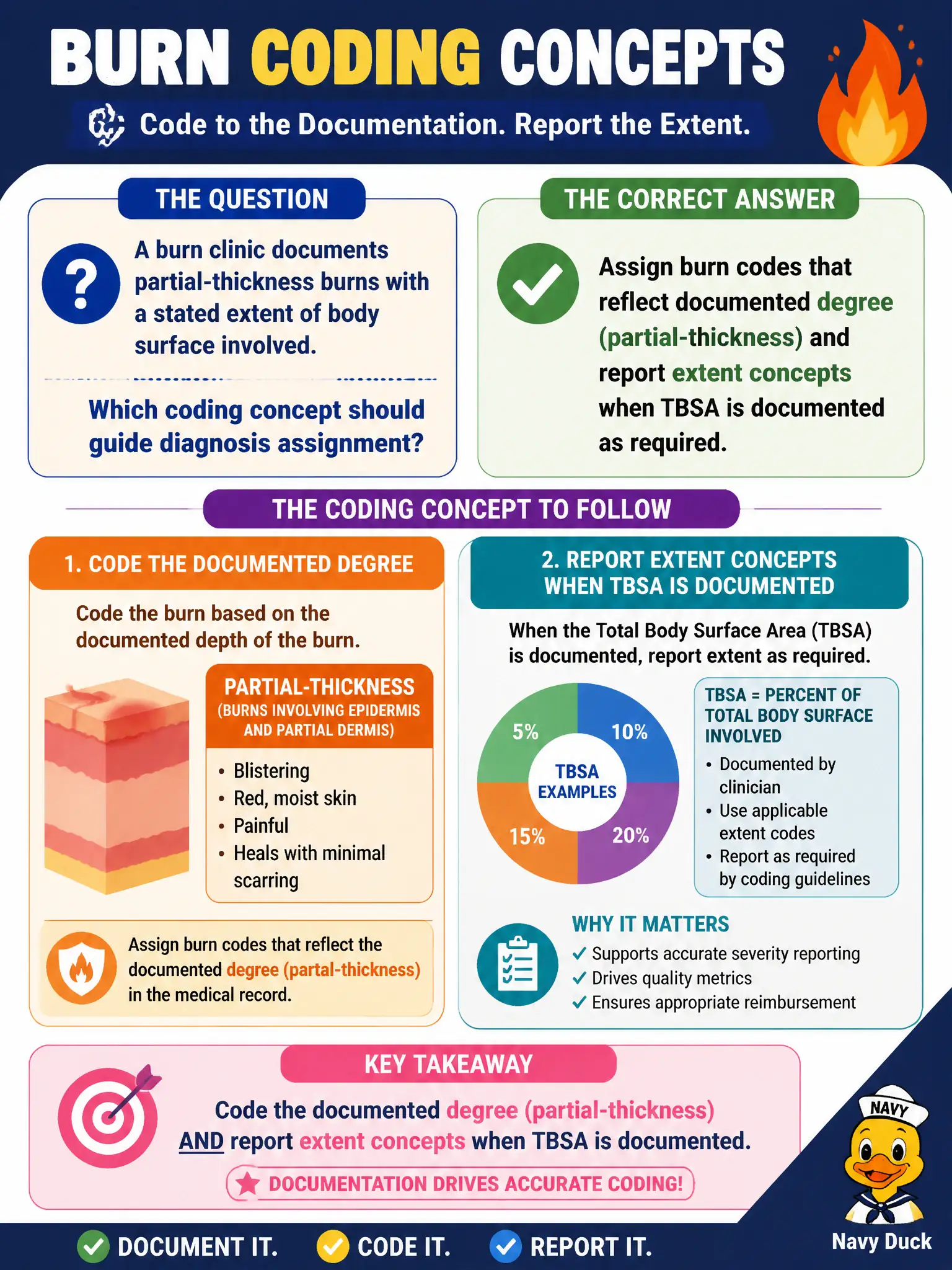
A burn clinic documents partial-thickness burns with a stated extent of body surface involved. Which coding concept should guide diagnosis assignment?
Select an answer to reveal the explanation.
Short Explanation
Burns want two coordinates: how deep and how much skin. Partial-thickness plus a stated TBSA means you code degree and bring extent along when the classification calls for it. Don’t ‘upgrade’ depth the note didn’t give you.
Full Explanation
Burn coding requires matching documented depth—for example, partial-thickness or second-degree—and, when instructed, reporting extent of body surface involved. When a burn clinic documents partial-thickness burns with a stated extent of body surface involved, assign burn codes that reflect documented degree as partial-thickness and report extent concepts when TBSA is documented as required. Coding burns only by mechanism and never reporting degree or extent fails classification requirements. Reporting full-thickness burn codes whenever any blistering is present, regardless of documentation, upgrades depth without support. Using only an aftercare Z-code for any outpatient burn visit and omitting burn diagnosis codes fails when the encounter is for the burn itself. Exam caveat: extent TBSA codes or characters follow guideline and category instructions—verify rather than omitting documented TBSA. Operational check: capture partial-thickness depth and stated TBSA, assign degree and extent as instructed, and avoid full-thickness upgrades or aftercare-only substitutions for active burn care. In civic and community clinic workflows, document the chosen pathway in the coding rationale so auditors can see how the record supported specificity, sequencing, and instructional-note compliance on the professional claim.