
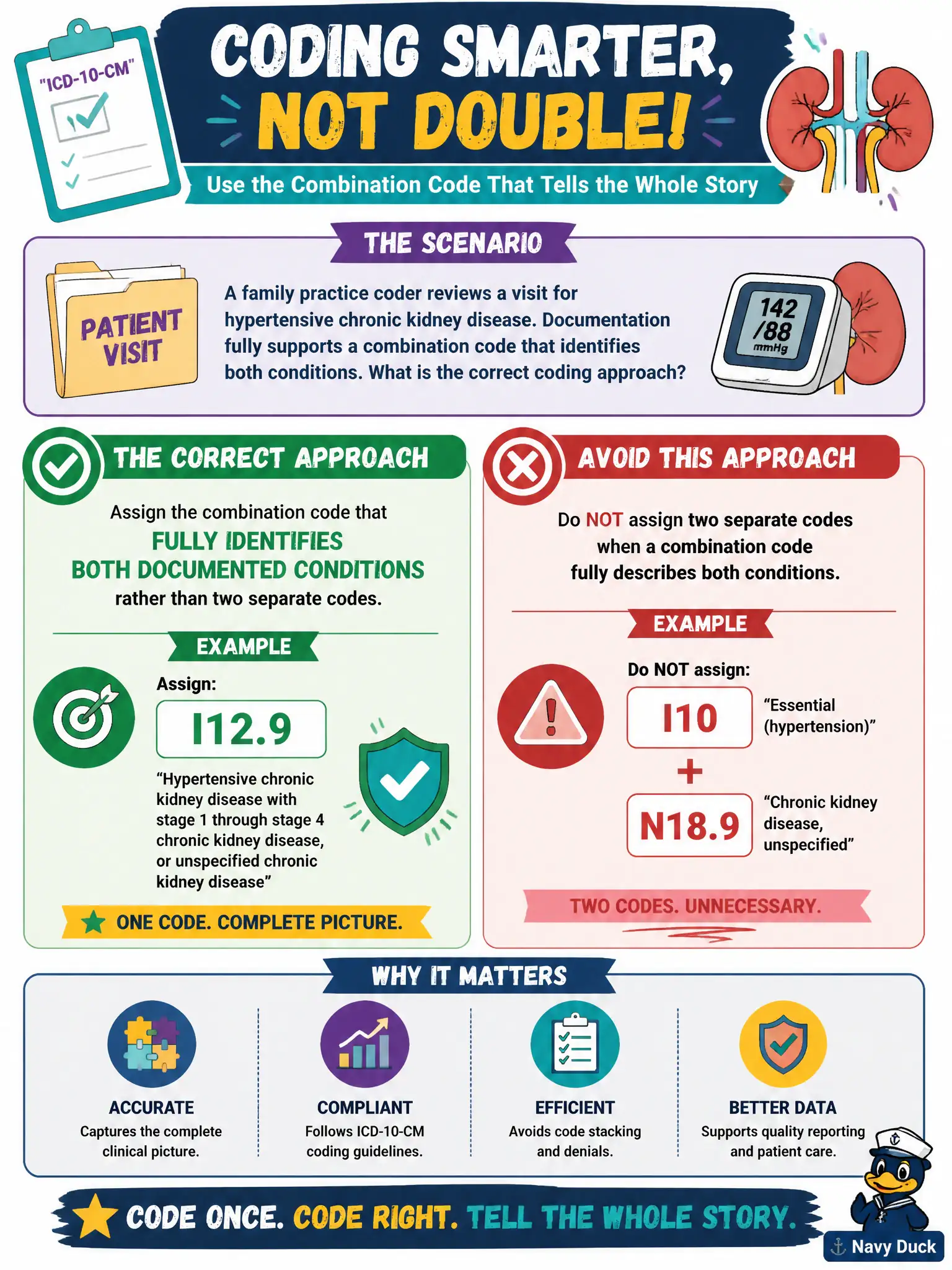
A family practice coder reviews a visit for hypertensive chronic kidney disease. Documentation fully supports a combination code that identifies both conditions. What is the correct coding approach?
Select an answer to reveal the explanation.
Short Explanation
When one code already tells the whole story, you don’t need two tickets for the same ride. Hypertensive CKD has a combination pathway for a reason—use it when the note supports both pieces. Splitting them just because habit says so is leftover thinking.
Full Explanation
ICD-10-CM directs use of combination codes when they fully identify the diagnostic statement. When a family practice coder reviews a visit for hypertensive chronic kidney disease and documentation fully supports a combination code that identifies both conditions, assign that combination code rather than two separate codes. Always reporting separate hypertension and CKD codes even when a combination code fully captures both fails combination-code preference. Reporting only the CKD code and omitting hypertension because blood pressure was controlled today fails when hypertensive CKD is the documented disease relationship. Using a symptom code for elevated blood pressure instead of any hypertensive disease code fails when hypertensive disease is established. Exam caveat: still complete any required additional characters or CKD staging codes instructed by the Tabular List after selecting the combination pathway. Operational check: confirm both hypertension and CKD with the supported relationship, select the combination code, add stage or instructional extras, and avoid unnecessary separate coding or symptom substitutes. In civic and community clinic workflows, document the chosen pathway in the coding rationale so auditors can see how the record supported specificity, sequencing, and instructional-note compliance on the professional claim.