
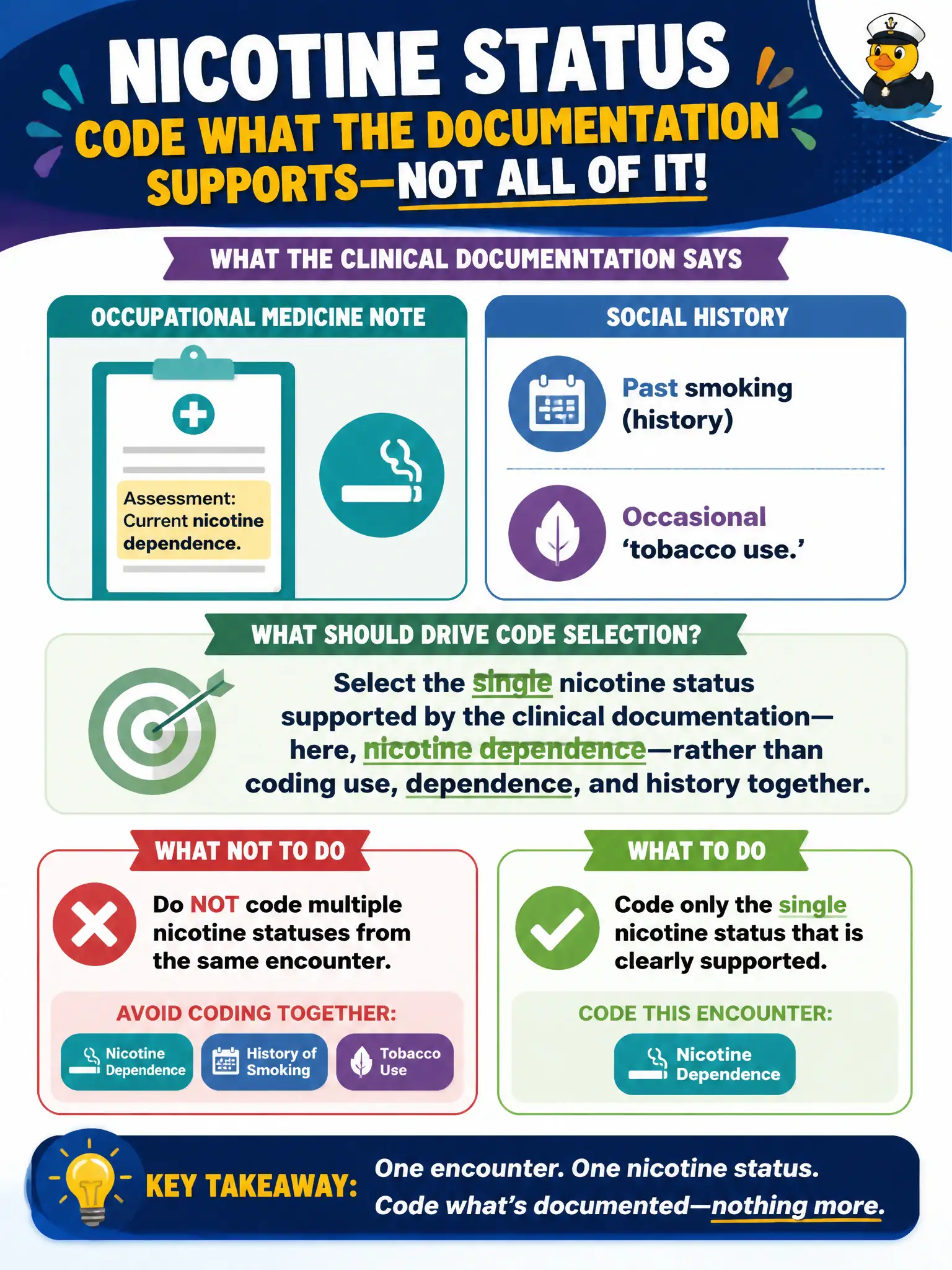
An occupational medicine note documents current nicotine dependence. The social history also mentions past smoking and occasional ‘tobacco use.’ Which nicotine status concept should drive code selection?
Select an answer to reveal the explanation.
Short Explanation
Nicotine status isn’t a buffet—you pick the plate that matches today’s clinical story. Dependence, use, and history are different lanes, and stacking all three usually muddies the claim. Go with what the provider actually established for this encounter.
Full Explanation
ICD-10-CM nicotine categories distinguish use, dependence, and history as mutually exclusive clinical states for a given substance pathway. When an occupational medicine note documents current nicotine dependence while social history also mentions past smoking and occasional tobacco use, select the single nicotine status supported by the clinical documentation—here, nicotine dependence—rather than coding use, dependence, and history together. Coding nicotine use, dependence, and personal history on every tobacco-related visit conflicts with exclusivity and muddies the claim. Always defaulting to personal history whenever any past smoking is mentioned fails when current dependence is documented. Omitting all nicotine codes on professional claims because tobacco status is supposedly never reportable fails; tobacco status is reportable when documented and relevant. Exam caveat: Tabular instructions and Excludes notes guide exclusivity—verify before stacking statuses. Operational check: choose the one status the assessment establishes for this encounter, usually dependence here, and withhold conflicting use or history codes without clarification. In civic and community clinic workflows, document the chosen pathway in the coding rationale so auditors can see how the record supported specificity, sequencing, and instructional-note compliance on the professional claim.