
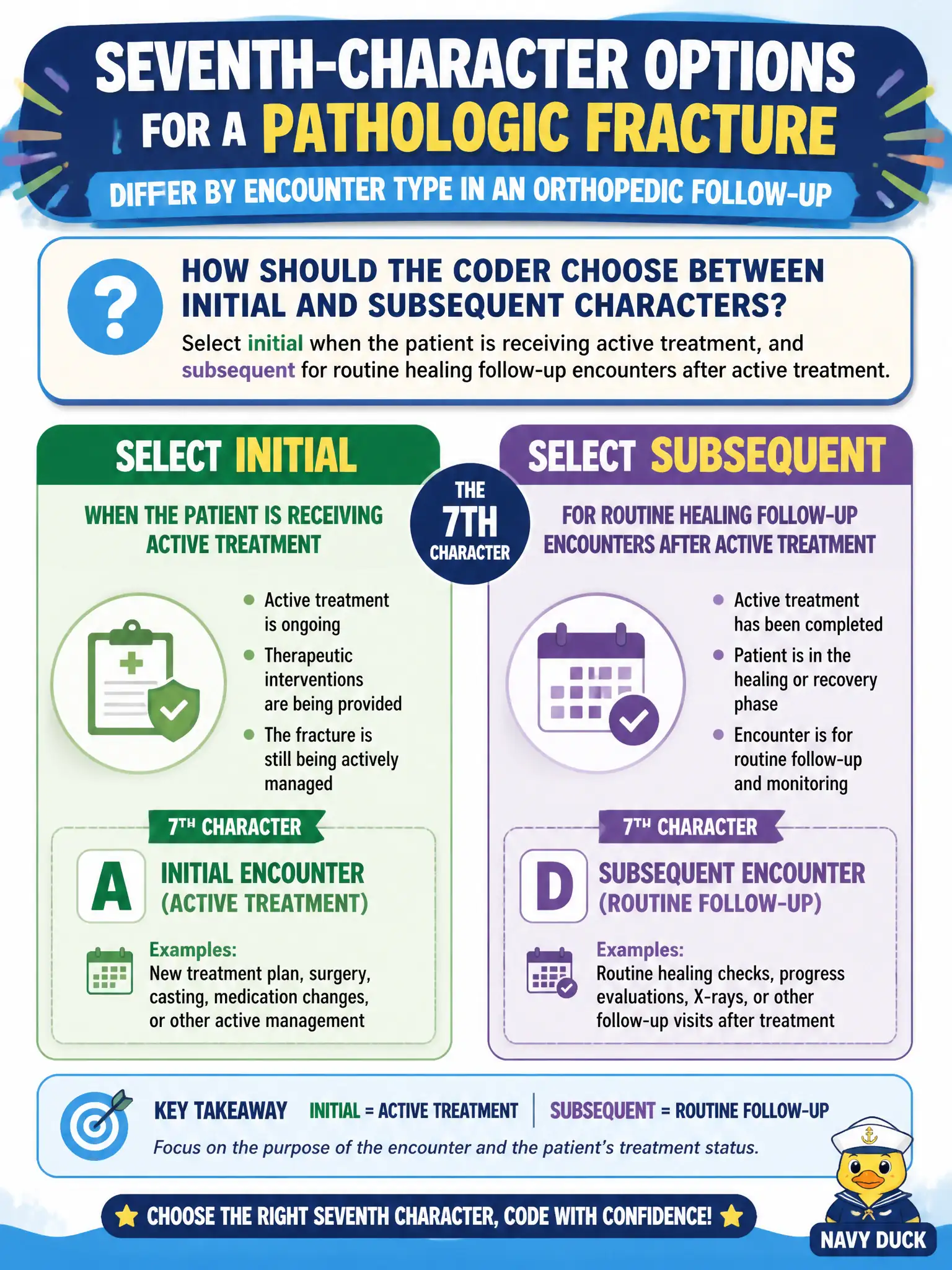
Seventh-character options for a pathologic fracture differ by encounter type in an orthopedic follow-up. How should the coder choose between initial and subsequent characters?
Select an answer to reveal the explanation.
Short Explanation
Seventh characters are the episode timeline: active treatment versus “checking the healing.” Pathologic fractures still need that stamp—don’t leave it blank or slap sequela on a routine healing visit.
Full Explanation
Pathologic fracture codes require a seventh character that reflects the encounter: initial for active treatment and subsequent for routine care during healing. In an orthopedic follow-up, select initial when the patient is receiving active treatment, and subsequent for routine healing follow-up encounters after active treatment. Always using initial encounter for every visit until the fracture radiographically disappears fails the episode-of-care concept. Always using sequela seventh character for any pathologic fracture in clinic fails; sequela is for late effects after the healing phase, not ordinary follow-up. Omitting the seventh character for pathologic fractures on professional claims fails when the code structure mandates it. Exam caveat: pathologic fracture episode rules can differ in wording from traumatic fracture aftercare pathways—follow the category's seventh-character definitions precisely. Operational check: determine whether today's care is active treatment or routine healing follow-up, assign initial or subsequent accordingly, and never leave a required seventh character blank. In civic and community clinic workflows, document the chosen pathway in the coding rationale so auditors can see how the record supported specificity, sequencing, and instructional-note compliance on the professional claim.