
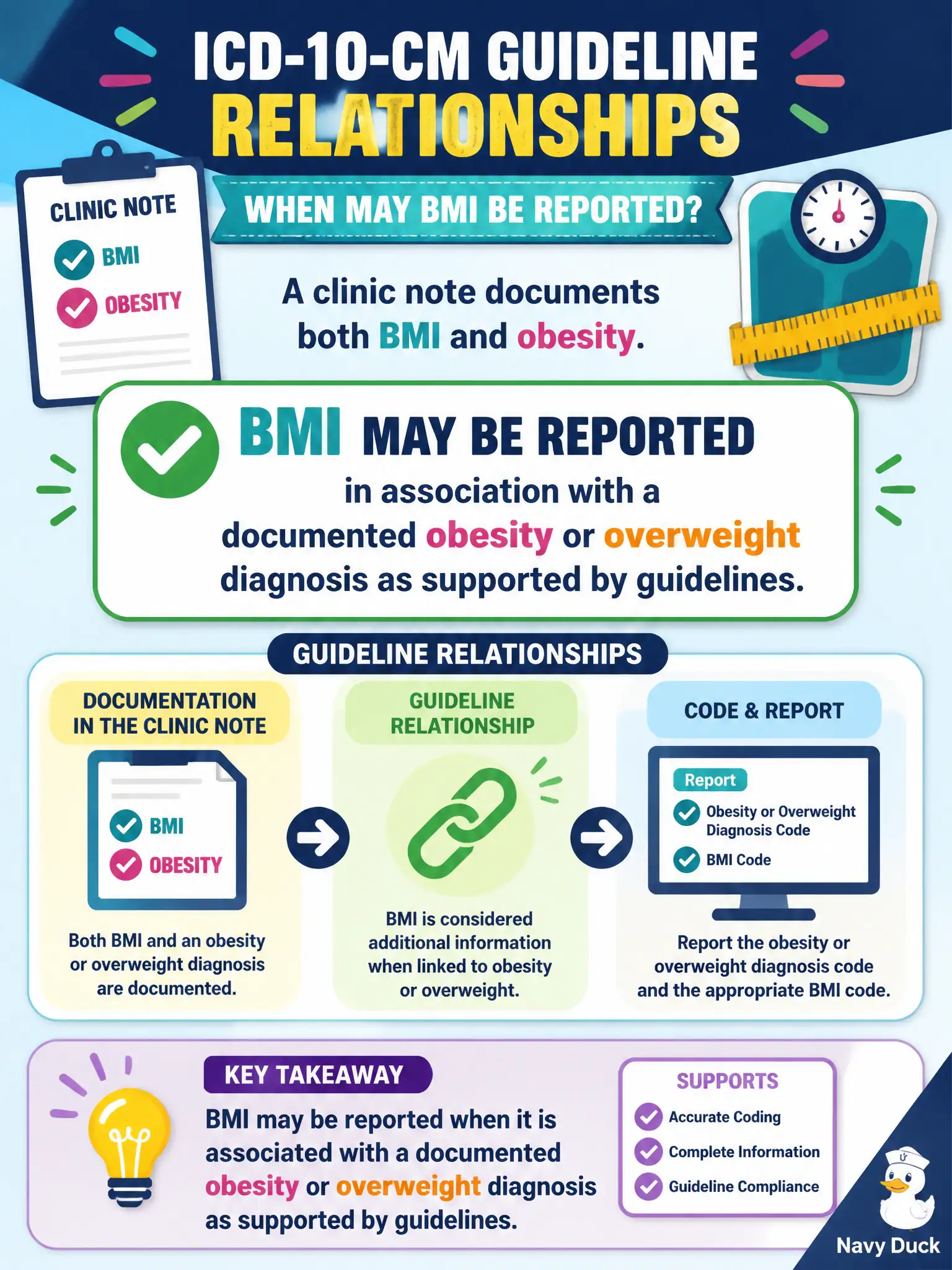
A clinic note documents both BMI and obesity. Under ICD-10-CM guideline relationships, when may BMI be reported?
Select an answer to reveal the explanation.
Short Explanation
BMI is the number; obesity/overweight is the clinical label that lets that number hitch a ride. When both are documented, BMI can tag along with the obesity diagnosis—BMI doesn’t kick obesity off the claim.
Full Explanation
Official Guidelines allow BMI codes to be reported when associated with a documented obesity or overweight diagnosis and in other guideline-specified contexts. When a clinic note documents both BMI and obesity, BMI may be reported in association with that documented obesity or overweight diagnosis. BMI codes should not replace obesity codes and be reported alone without an obesity diagnosis when obesity is the clinical condition. BMI is not limited to inpatient admissions; professional claims may report BMI when guidelines are met. BMI reporting is not defined solely by whether the patient requests weight-management counseling codes instead of obesity. Exam caveat: pediatric encounters use BMI percentile concepts rather than adult BMI value codes. Operational check: confirm obesity or overweight documentation, report BMI as an associated code per guidelines, keep the obesity diagnosis on the claim, and use age-appropriate BMI pathways. In civic and community clinic workflows, document the chosen pathway in the coding rationale so auditors can see how the record supported specificity, sequencing, and instructional-note compliance on the professional claim. Retain civic clinic, community health, and physician-office framing in the coding rationale so the professional claim reflects ambulatory CCS-P practice rather than facility-only habits.