
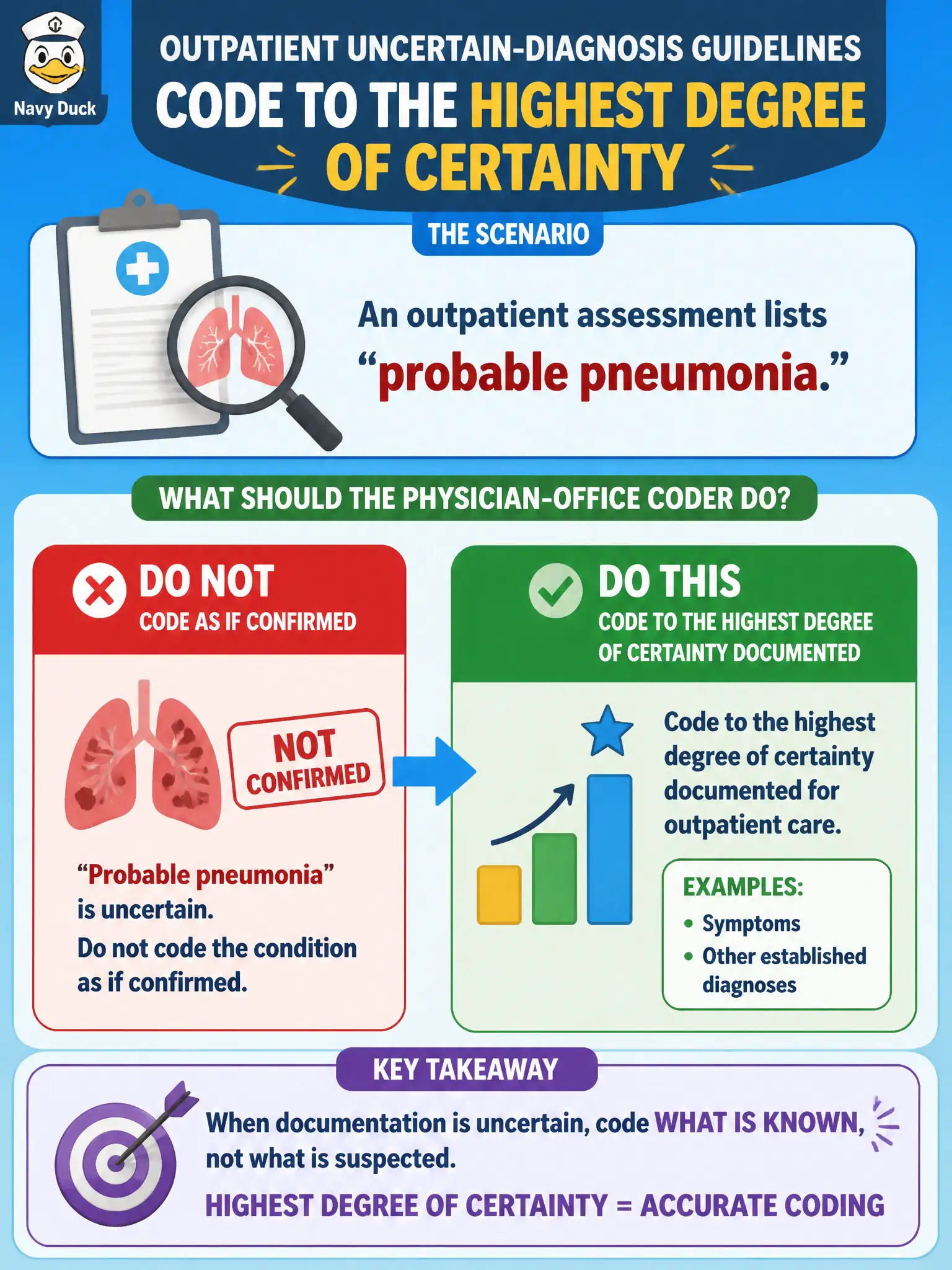
An outpatient assessment lists “probable pneumonia.” Applying outpatient uncertain-diagnosis guidelines, what should the physician-office coder do?
Select an answer to reveal the explanation.
Short Explanation
Outpatient world is picky: “probable” isn’t a green light to code confirmed pneumonia like inpatient sometimes allows. Stick to what’s solid—symptoms or other established diagnoses—until the clinician actually confirms it.
Full Explanation
ICD-10-CM Official Guidelines differ for inpatient versus outpatient uncertain diagnoses. In outpatient and physician-office settings, when an assessment lists probable pneumonia, do not code the condition as if confirmed; code to the highest degree of certainty documented, such as symptoms or other established diagnoses. Coding confirmed pneumonia because probable is always treated as definitive in all settings fails the outpatient rule. Coding sepsis automatically whenever probable pneumonia appears invents a more severe unconfirmed diagnosis. Deleting the encounter because uncertain diagnoses make claims unbillable fails; symptoms and established problems remain reportable. Exam caveat: inpatient uncertain-diagnosis rules must not be imported into CCS-P ambulatory coding. Operational check: spot probable, suspected, or likely language, withhold unconfirmed pneumonia, code documented signs symptoms or confirmed alternatives, and bill the visit on certainty—not speculation. In civic and community clinic workflows, document the chosen pathway in the coding rationale so auditors can see how the record supported specificity, sequencing, and instructional-note compliance on the professional claim.