
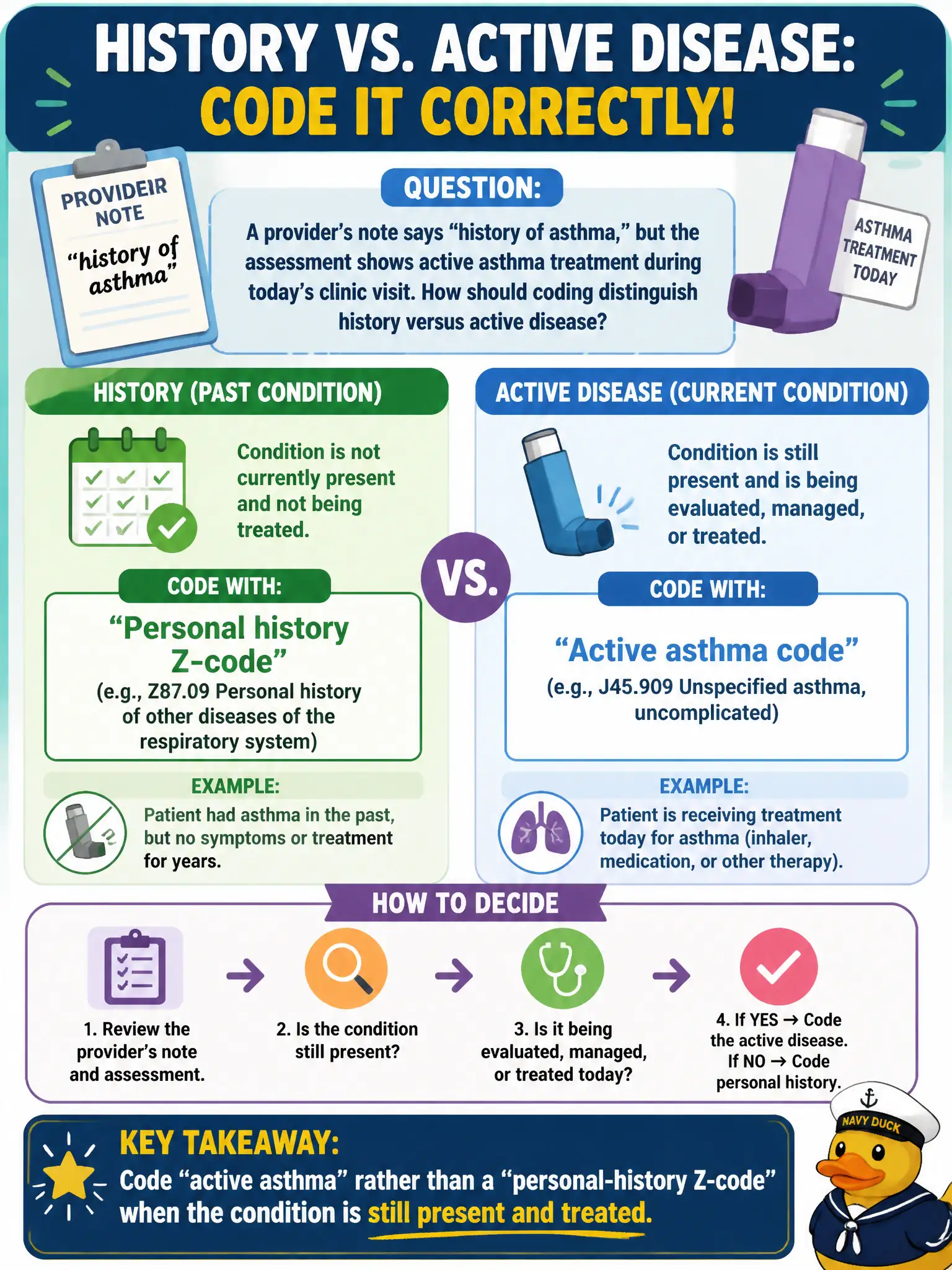
A provider’s note says “history of asthma,” but the assessment shows active asthma treatment during today’s clinic visit. How should coding distinguish history versus active disease?
Select an answer to reveal the explanation.
Short Explanation
“History of” in a sentence doesn’t trump today’s inhaler refill and treatment plan. If asthma is still being managed, code the active disease—history Z-codes are for conditions that are truly gone, not still on the med list.
Full Explanation
Personal-history Z-codes are used for resolved conditions that no longer exist. When a provider's note says history of asthma but the assessment shows active asthma treatment during today's clinic visit, code active asthma rather than a personal-history Z-code. Always preferring the history Z-code whenever the phrase history of appears anywhere fails when current treatment proves ongoing disease. Coding both active asthma and personal history of asthma for every treated flare is inappropriate dual reporting of the same condition's status. Omitting respiratory codes until pulmonary function testing is repeated fails when a current diagnosis is already documented and managed. Exam caveat: resolve conflicting language with a query when truly ambiguous; casual history-of wording often means the patient's known problem list, not resolved disease. Operational check: look at today's assessment and plan for active treatment; if asthma is managed now, assign active asthma coding and withhold personal-history asthma codes. In civic and community clinic workflows, document the chosen pathway in the coding rationale so auditors can see how the record supported specificity, sequencing, and instructional-note compliance on the professional claim.