
An injury code structure in ICD-10-CM uses placeholder “X” characters. What is the purpose of those placeholders?
Select an answer to reveal the explanation.
Short Explanation
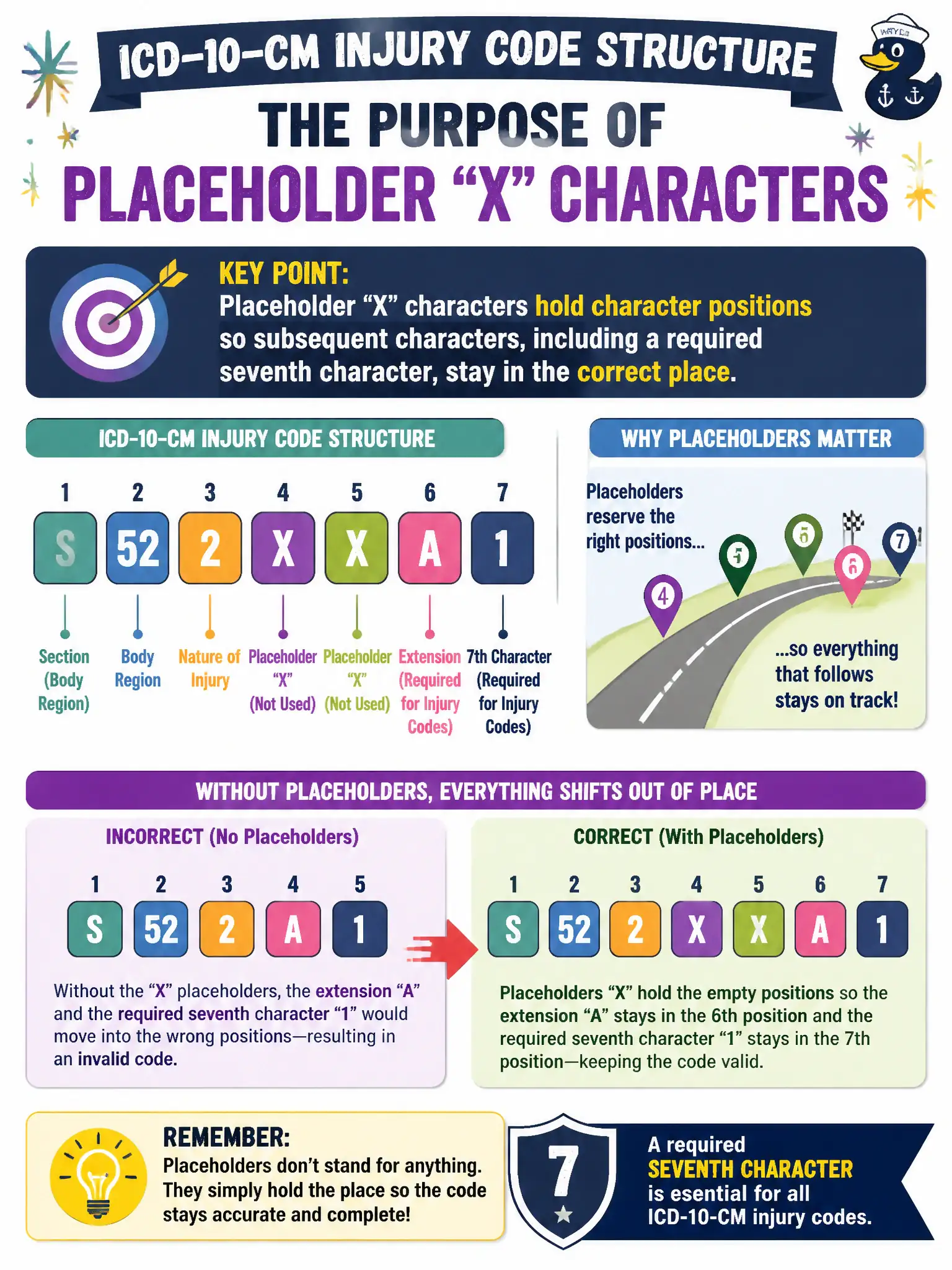
Placeholder X is like packing peanuts—it fills space so the real digits land in the right slots. It doesn’t mean “invalid code” or “skip the seventh character”; it keeps the code’s length and positions honest.
Full Explanation
ICD-10-CM uses the placeholder character X to fill empty character positions within certain codes so that later characters occupy the correct positions. This is especially important for injury codes that require a seventh character. Placeholder X characters hold positions so subsequent characters, including a required seventh character, stay in the correct place. They do not mark codes as invalid and must-never-be-reported. They do not replace the need for a seventh character on all injury codes. They do not indicate the injury occurred in an unknown year. Exam caveat for CCS-P: after inserting needed X placeholders, still assign the correct episode-of-care seventh character when the category requires it. Operational check: build the code to the required length using X where the structure demands empty slots, then place the seventh character in position seven and verify the complete code in the Tabular. In civic and community clinic workflows, document the chosen pathway in the coding rationale so auditors can see how the record supported specificity, sequencing, and instructional-note compliance on the professional claim. Retain civic clinic, community health, and physician-office framing in the coding rationale so the professional claim reflects ambulatory CCS-P practice rather than facility-only habits.