
Two conditions are linked by “with” in the ICD-10-CM Alphabetic Index for a physician-office encounter. What convention generally applies?
Select an answer to reveal the explanation.
Short Explanation
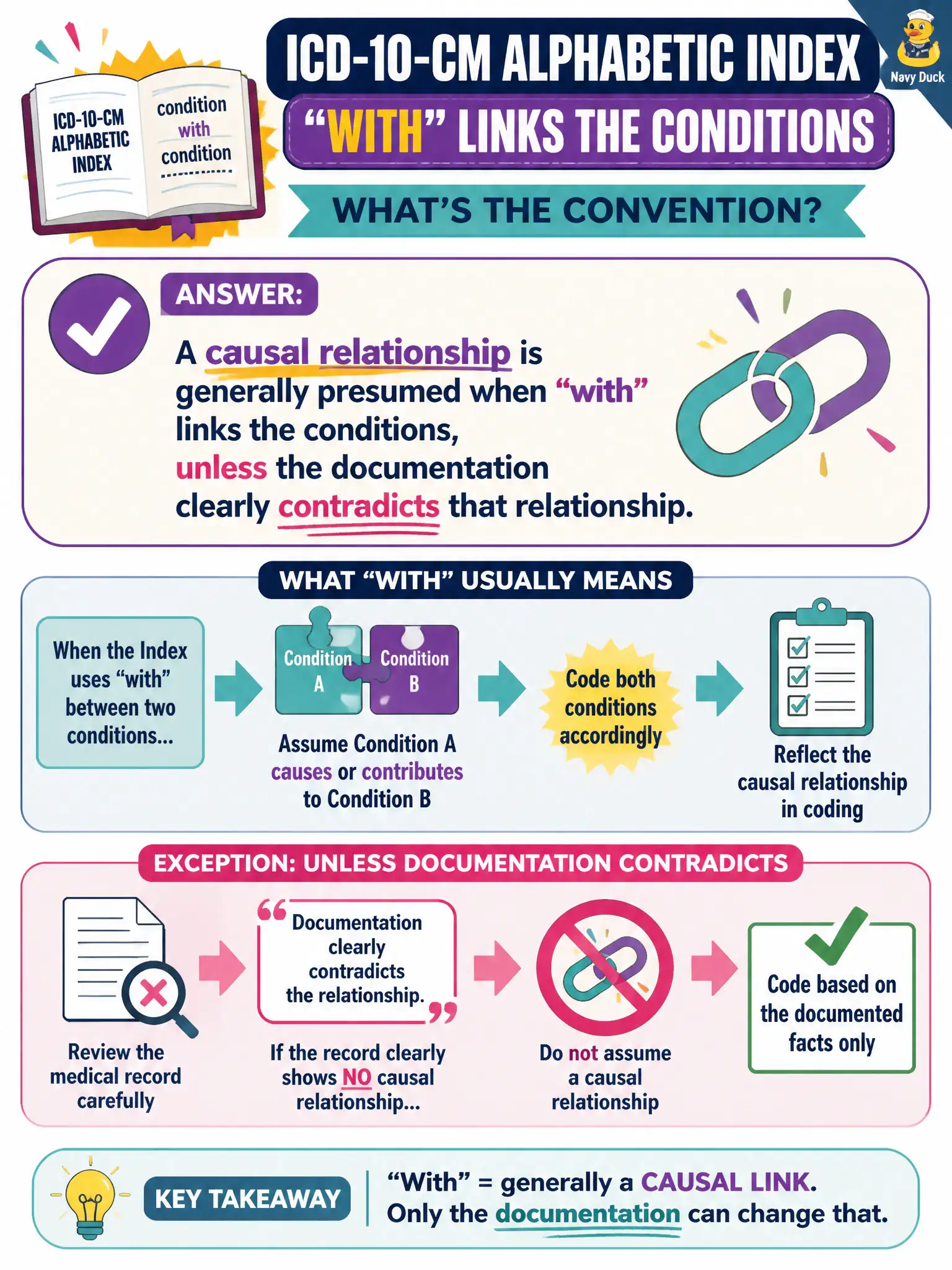
In the Index, “with” is a quiet handshake—those conditions are assumed related unless the chart clearly says otherwise. You don’t need the magic words “due to” stamped on every line to follow that convention.
Full Explanation
Official Guidelines provide that the word with or in in the Alphabetic Index or Tabular List generally means a presumed causal relationship between the linked conditions unless documentation indicates the conditions are unrelated. For a physician-office encounter where two conditions are linked by with in the Index, that presumed relationship generally applies. Claiming the conditions may never be coded as related unless due to appears verbatim fails the with convention. Interpreting with as always an Excludes1 conflict confuses relationship presumption with mutual exclusion. Claiming Index with entries apply only to inpatient POA coding fails; the convention applies to professional claims as well. Exam caveat: if the record clearly states the conditions are unrelated, do not force the presumed link. Operational check: when Index with links diabetes and a manifestation or similar pairs, apply the presumed relationship unless the clinic note contradicts it, then verify Tabular instructions. In civic and community clinic workflows, document the chosen pathway in the coding rationale so auditors can see how the record supported specificity, sequencing, and instructional-note compliance on the professional claim.