
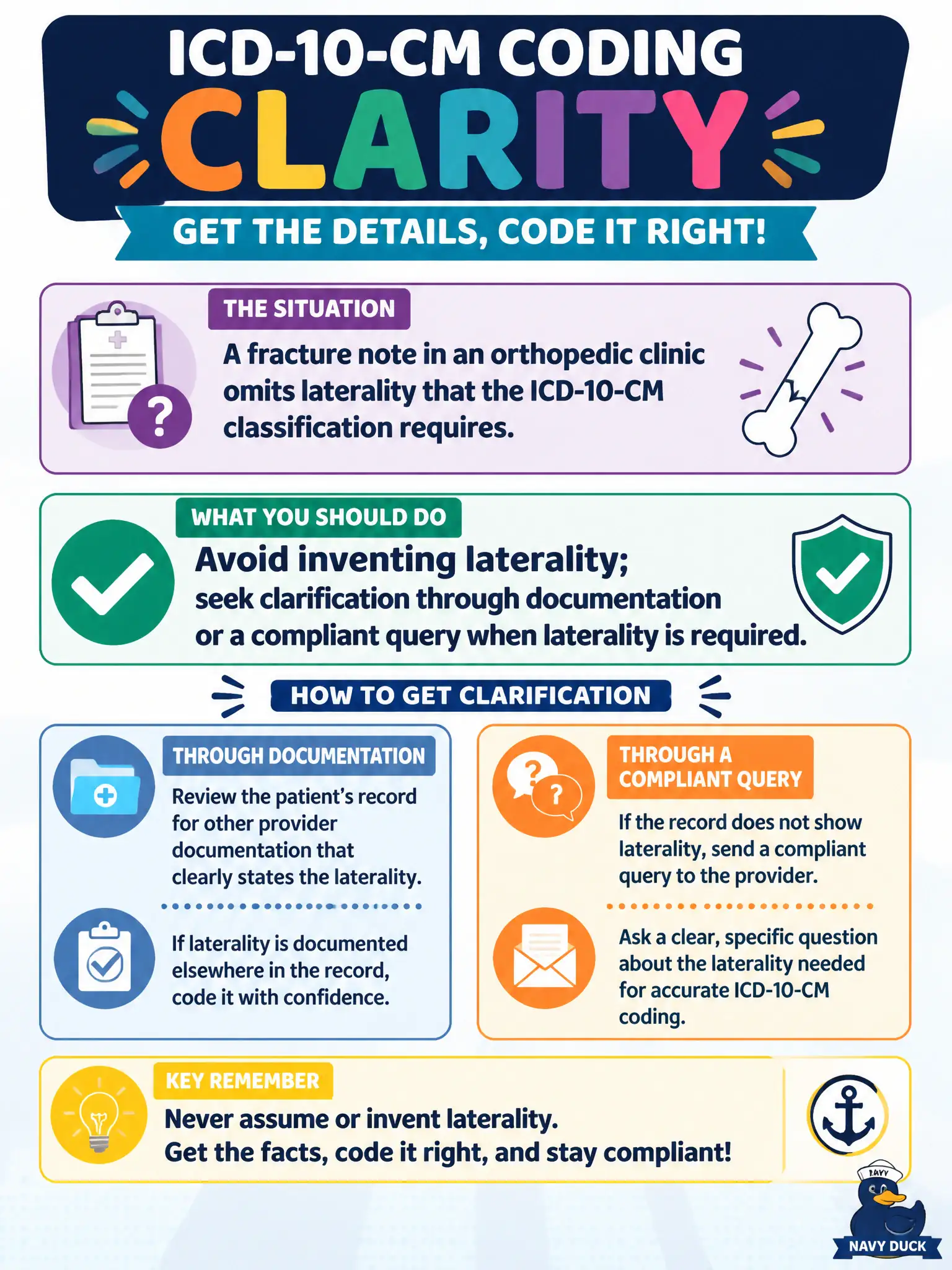
A fracture note in an orthopedic clinic omits laterality that the ICD-10-CM classification requires. What should the coder do?
Select an answer to reveal the explanation.
Short Explanation
Laterality isn’t a coin flip—you can’t guess left versus right to finish a code. If the note forgot the side and the classification needs it, query or get the documentation fixed instead of inventing anatomy.
Full Explanation
When ICD-10-CM requires laterality, documentation must support the side selected. If a fracture note in an orthopedic clinic omits laterality that the classification requires, avoid inventing laterality; seek clarification through documentation or a compliant query. Defaulting to left-sided coding because left is statistically more common fails without clinical support. Assigning bilateral codes to cover either possibility invents anatomy and is incorrect. Dropping the fracture diagnosis entirely and coding only pain is not an appropriate workaround when fracture is documented. Exam caveat: some codes allow unspecified laterality when the classification provides that option; use unspecified only when the Tabular permits and documentation truly lacks side—not as a guess substitute when query can obtain the side. Operational check: identify whether laterality is required, withhold guessed sides, query or amend the record, then complete the fracture code with documented laterality. In civic and community clinic workflows, document the chosen pathway in the coding rationale so auditors can see how the record supported specificity, sequencing, and instructional-note compliance on the professional claim.