
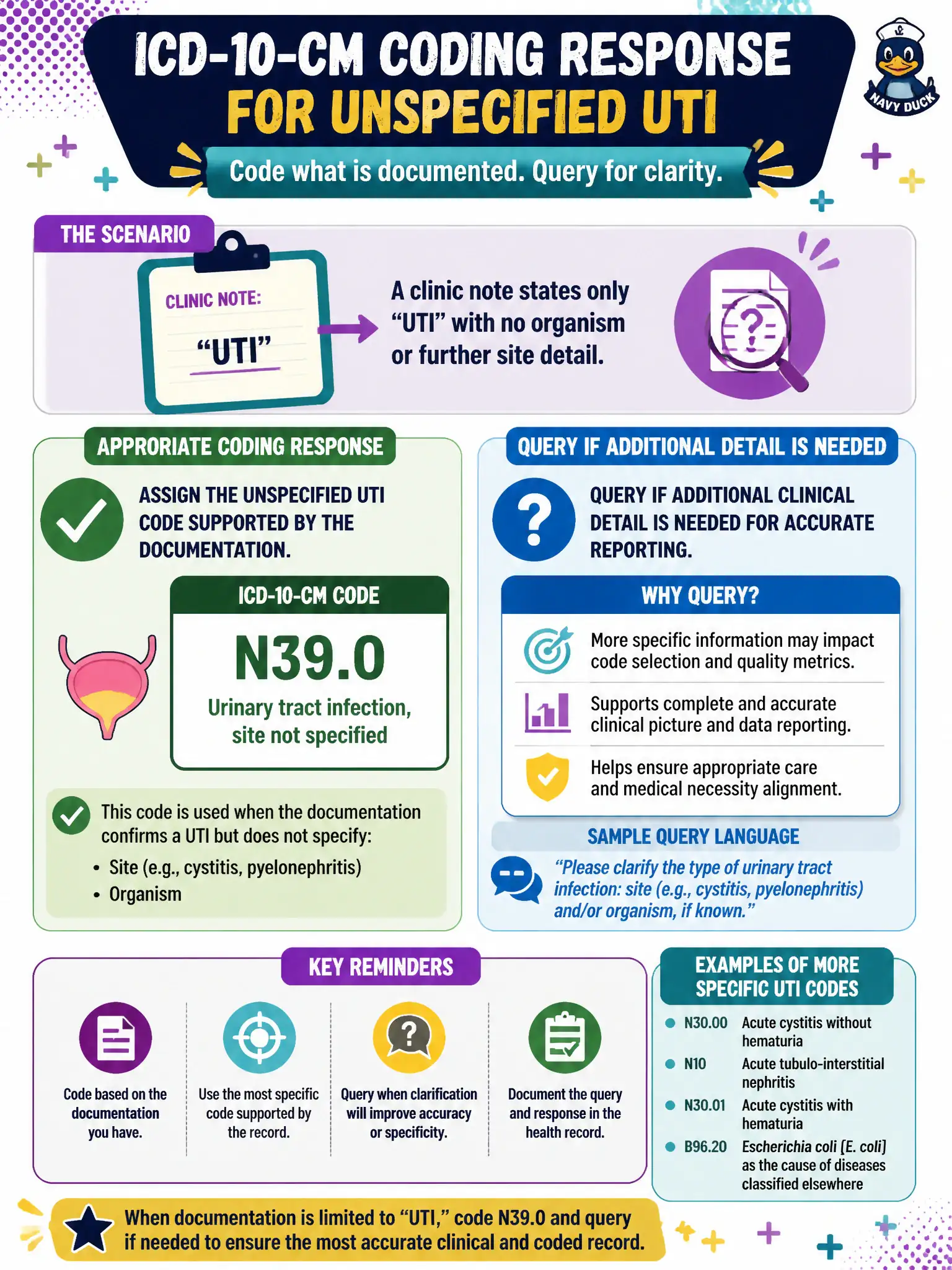
A clinic note states only “UTI” with no organism or further site detail. What is the appropriate coding response under ICD-10-CM conventions?
Select an answer to reveal the explanation.
Short Explanation
If the chart only says UTI, you don’t invent E. coli out of thin air. Code what you have—often unspecified—and query when the payer or guidelines need more meat on the bone.
Full Explanation
Coders may report an unspecified urinary tract infection when that is the highest specificity the documentation supports. When a clinic note states only UTI with no organism or further site detail, assign the unspecified UTI code supported by the documentation, and query if additional clinical detail is needed for accurate reporting. Inventing a specific organism code to improve specificity metrics fails coding ethics. Refusing to code any urinary diagnosis until culture results arrive days later is usually unnecessary delay when UTI is already diagnosed; cultures refine organism coding when available. Automatically replacing UTI with pyelonephritis for higher severity fails without pyelonephritis documentation. Exam caveat: if laterality, site, or organism becomes documented, update to the higher specificity supported—do not leave an unspecified code out of habit once detail arrives. Operational check: code the documented UTI specificity, query when clinically material detail is missing, and never fabricate organism or severity upgrades. In civic and community clinic workflows, document the chosen pathway in the coding rationale so auditors can see how the record supported specificity, sequencing, and instructional-note compliance on the professional claim.