
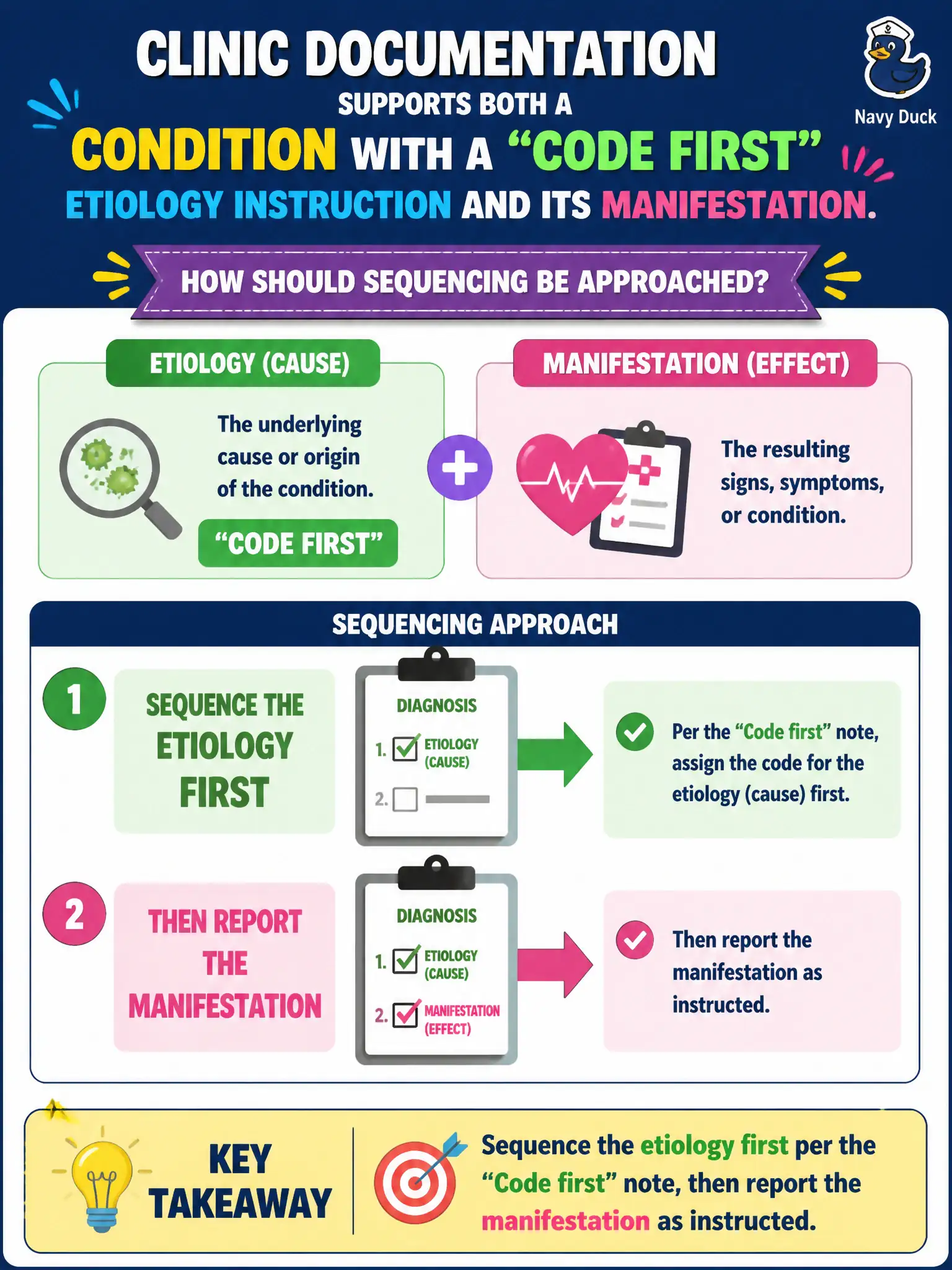
Clinic documentation supports both a condition with a “Code first” etiology instruction and its manifestation. How should sequencing be approached?
Select an answer to reveal the explanation.
Short Explanation
“Code first” is the etiology getting the front seat, manifestation riding shotgun. Physician claims still follow those Tabular instructions—don’t flip the order just because it’s an office visit.
Full Explanation
ICD-10-CM instructional notes such as Code first and Use additional code govern etiology and manifestation sequencing in all settings, including physician-office coding. When clinic documentation supports both a condition with a Code first etiology instruction and its manifestation, sequence the etiology first per the Code first note, then report the manifestation as instructed. Always listing the manifestation first because outpatient claims ignore instructional notes fails; notes apply ambulatory professional coding. Coding only the manifestation and discarding the etiology fails completeness and instructional compliance. Ignoring Use additional code notes because they supposedly apply only to inpatient DRG coding fails the same all-settings rule. Exam caveat: if documentation supports only one of the pair, do not invent the missing etiology or manifestation. Operational check: locate Code first and use-additional instructions in the Tabular, sequence etiology before manifestation when both are documented, and complete any required additional codes. In civic and community clinic workflows, document the chosen pathway in the coding rationale so auditors can see how the record supported specificity, sequencing, and instructional-note compliance on the professional claim.