
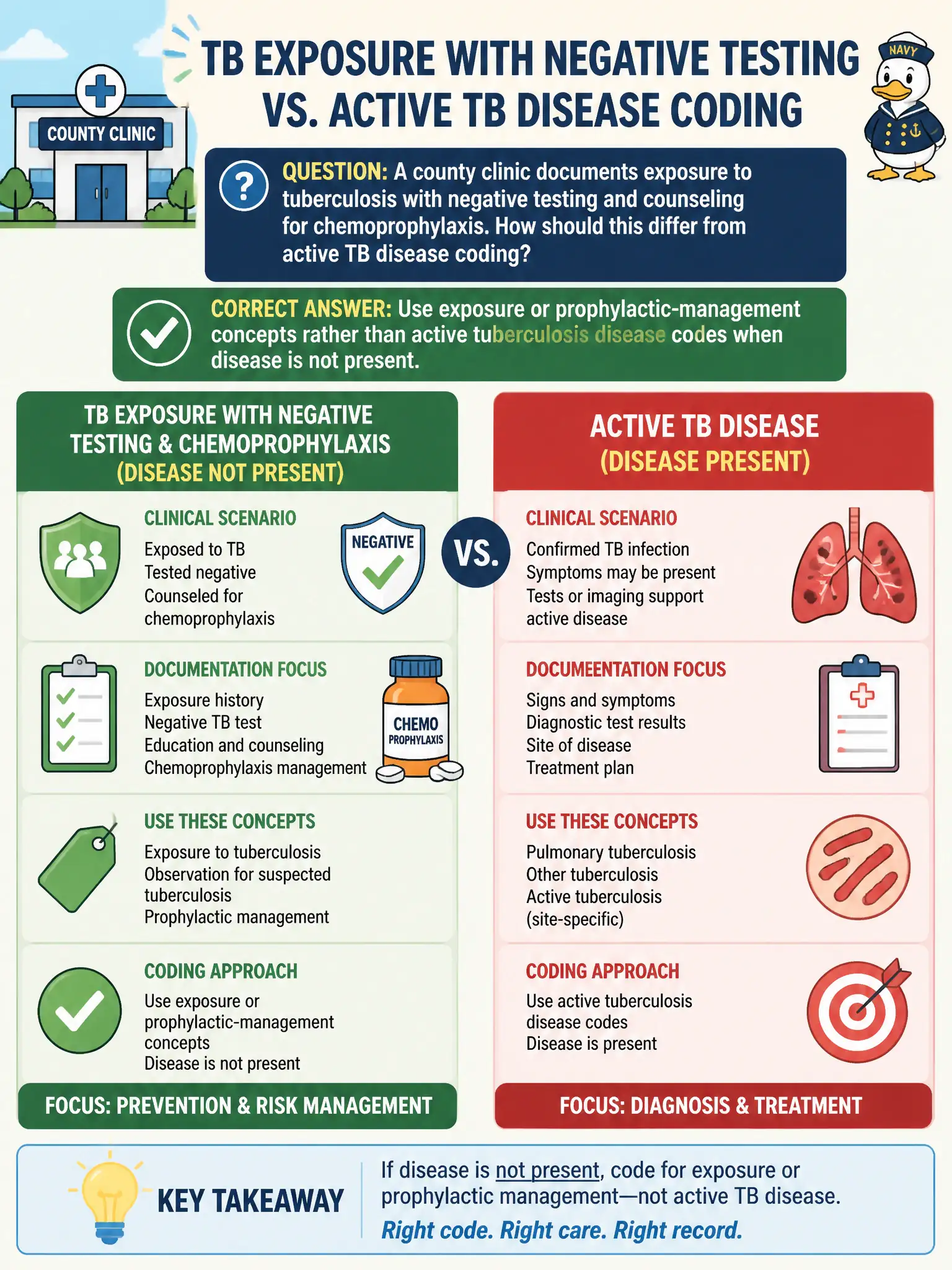
A county clinic documents exposure to tuberculosis with negative testing and counseling for chemoprophylaxis. How should this differ from active TB disease coding?
Select an answer to reveal the explanation.
Short Explanation
Exposure and “let’s prevent disease” visits are not the same as “you have TB.” Negative testing plus chemoprophylaxis counseling points to exposure/prophylaxis coding—not an active pulmonary TB stamp on the claim.
Full Explanation
ICD-10-CM distinguishes contact or exposure and prophylactic encounters from confirmed active tuberculosis. When a county clinic documents exposure to tuberculosis with negative testing and counseling for chemoprophylaxis, use exposure or prophylactic-management concepts rather than active tuberculosis disease codes when disease is not present. Always assigning active pulmonary tuberculosis whenever exposure is mentioned fails without disease confirmation. Coding latent TB as active multidrug-resistant TB for public-health emphasis fails ethics and clinical accuracy. Omitting all TB-related codes because negative tests erase any reportable encounter reason fails when exposure and prophylaxis counseling are the visit focus. Exam caveat: civic public-health urgency never authorizes upgrading exposure to active or MDR disease without documentation. Operational check: confirm exposure without active disease, confirm negative testing and prophylaxis counseling, assign exposure or prophylactic encounter concepts, and withhold active TB codes. In civic and community clinic workflows, document the chosen pathway in the coding rationale so auditors can see how the record supported specificity, sequencing, and instructional-note compliance on the professional claim.