
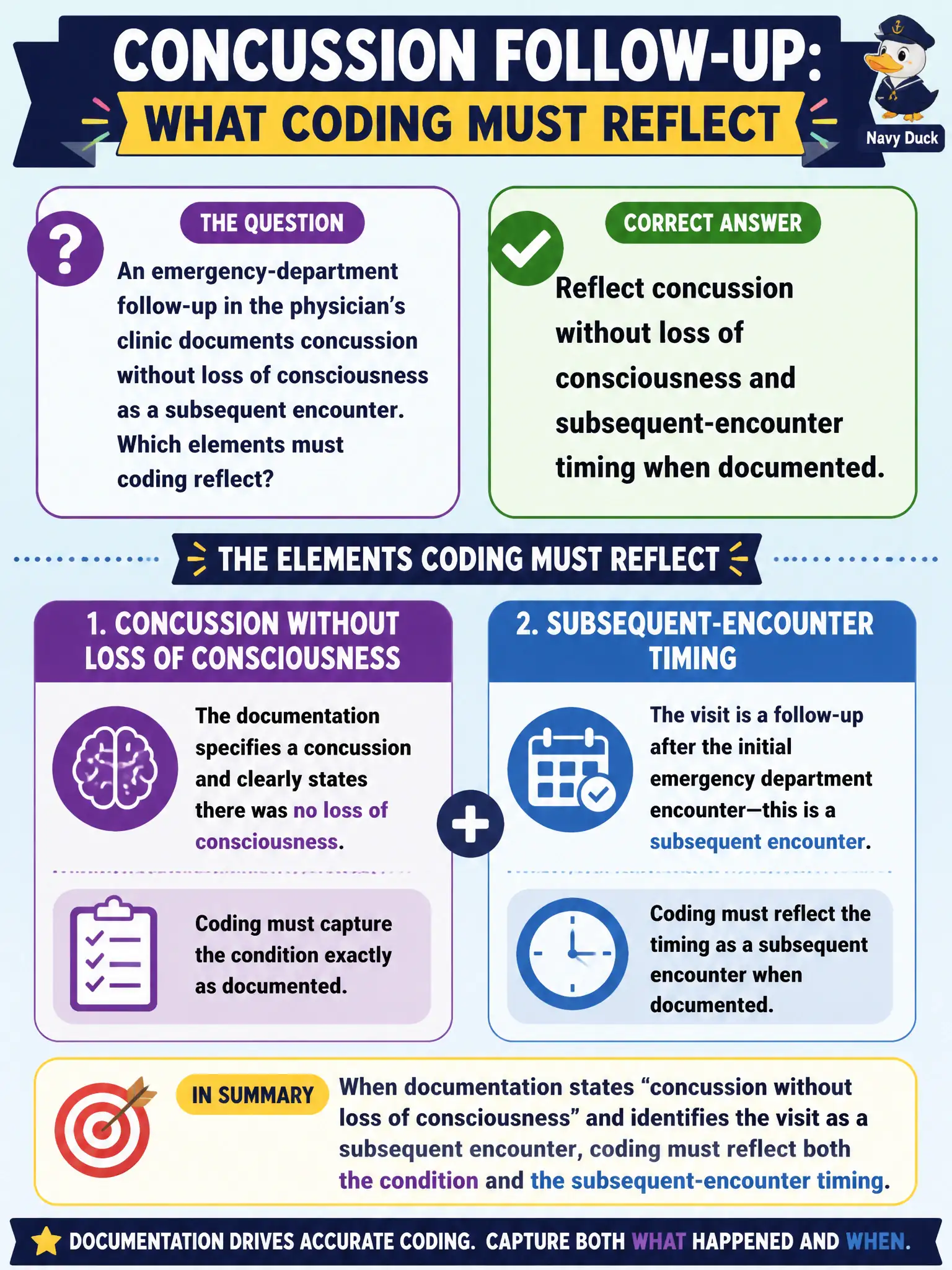
An emergency-department follow-up in the physician’s clinic documents concussion without loss of consciousness as a subsequent encounter. Which elements must coding reflect?
Select an answer to reveal the explanation.
Short Explanation
Episode of care is a timeline stamp: initial versus subsequent isn’t a vibe check. Clinic follow-up after the ED usually means subsequent encounter, and if the note says no LOC, don’t invent one just because the patient came back.
Full Explanation
Injury seventh characters distinguish initial, subsequent, and sequela encounters. When an emergency-department follow-up in the physician's clinic documents concussion without loss of consciousness as a subsequent encounter, coding must reflect concussion without LOC and subsequent-encounter timing. Always using initial-encounter seventh character for any clinic visit after an ED concussion fails when follow-up after acute evaluation is subsequent care. Coding concussion with loss of consciousness because clinic follow-up implies LOC fails; consciousness status must follow documentation. Replacing the concussion diagnosis with a nonspecific headache symptom code only fails when concussion is documented. Exam caveat: if active treatment of the acute injury is still underway, initial may still apply—read the care phase, not merely the clinic location. Operational check: confirm no LOC in the note, confirm subsequent follow-up after ED care, assign the matching concussion code with subsequent seventh character, and keep the injury diagnosis rather than symptom-only coding. In civic and community clinic workflows, document the chosen pathway in the coding rationale so auditors can see how the record supported specificity, sequencing, and instructional-note compliance on the professional claim.