
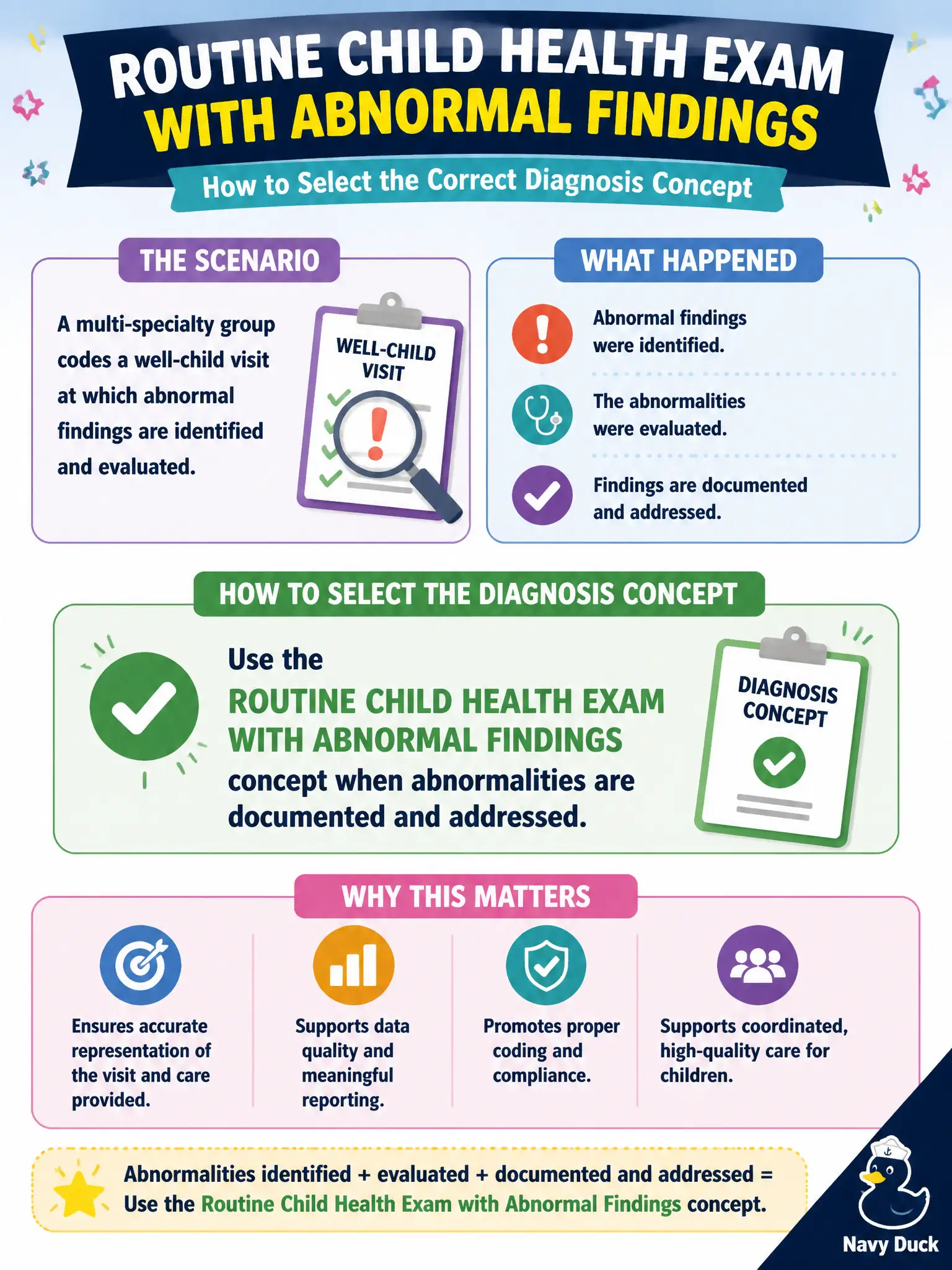
A multi-specialty group codes a well-child visit at which abnormal findings are identified and evaluated. How should the routine child health examination diagnosis concept be selected?
Select an answer to reveal the explanation.
Short Explanation
Well-child visits come in two flavors: clean check versus “we found something.” If abnormal findings show up and get worked up, pick the with-abnormal-findings exam concept—not the everything-is-fine version just because it was booked as a wellness slot.
Full Explanation
ICD-10-CM distinguishes routine child health examinations with and without abnormal findings. When a multi-specialty group codes a well-child visit at which abnormal findings are identified and evaluated, use the routine child health exam with abnormal findings concept. Always using the without-abnormal-findings code because the visit was scheduled as a well-child check fails when abnormalities are documented and addressed. Never reporting a well-child examination code once any abnormality is found fails; the with-abnormal-findings preventive concept exists for this pattern, with related condition codes as supported. Coding only adult general medical examination categories for any pediatric visit fails age-appropriate exam code selection. Exam caveat: also assign codes for the abnormal findings or diagnosed conditions that were evaluated, per guideline relationships for preventive encounters. Operational check in civic pediatric clinics: confirm abnormalities were found and addressed, select with-abnormal-findings well-child coding, add condition codes supported by the note, and avoid adult exam categories. In civic and community clinic workflows, document the chosen pathway in the coding rationale so auditors can see how the record supported specificity, sequencing, and instructional-note compliance on the professional claim.