
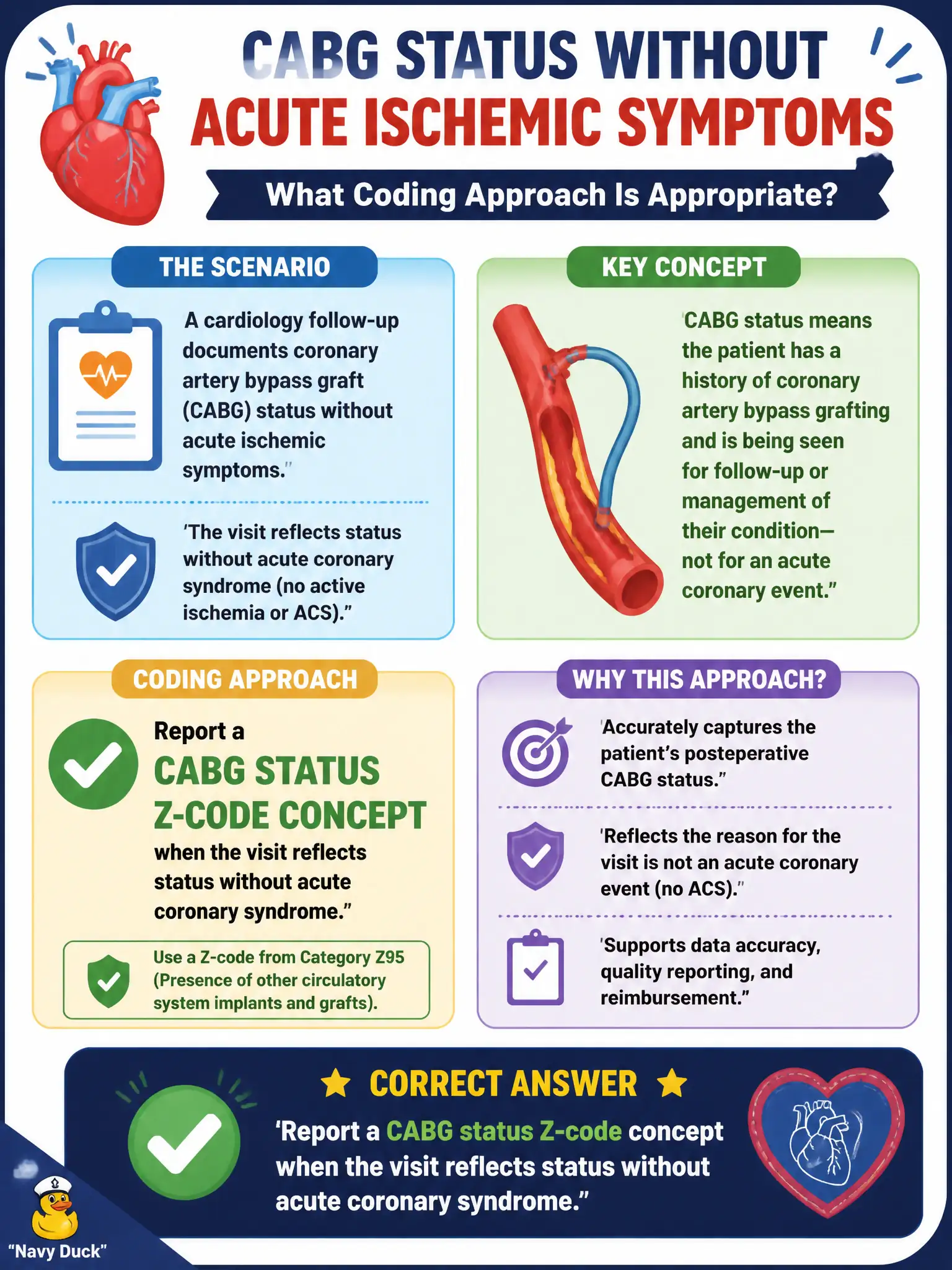
A cardiology follow-up documents coronary artery bypass graft (CABG) status without acute ischemic symptoms. What coding approach is appropriate?
Select an answer to reveal the explanation.
Short Explanation
CABG status is the “plumbing already fixed” sticker—not an automatic heart-attack code. If cardiology is documenting status without acute ischemic symptoms, use the status concept rather than inventing an ACS episode.
Full Explanation
Status Z-codes communicate presence of a coronary artery bypass graft when relevant to care. When a cardiology follow-up documents CABG status without acute ischemic symptoms, report a CABG status Z-code concept rather than inventing acute coronary syndrome. Always assigning acute myocardial infarction whenever CABG history exists fails without documentation of acute MI. Coding only unstable angina even when the note denies ischemic symptoms fails the documentation rule. Omitting any cardiac-related codes because status codes are supposedly never allowed on professional claims fails; physician-office claims may include pertinent status codes. Exam caveat: if the visit actually treats angina, MI, or other ischemic disease, code those conditions—and still consider status when clinically relevant—rather than status alone. Operational check: confirm absence of acute ischemic diagnoses for a status-focused visit, assign CABG status when pertinent, and do not fabricate ACS from surgical history alone. In civic and community clinic workflows, document the chosen pathway in the coding rationale so auditors can see how the record supported specificity, sequencing, and instructional-note compliance on the professional claim.