
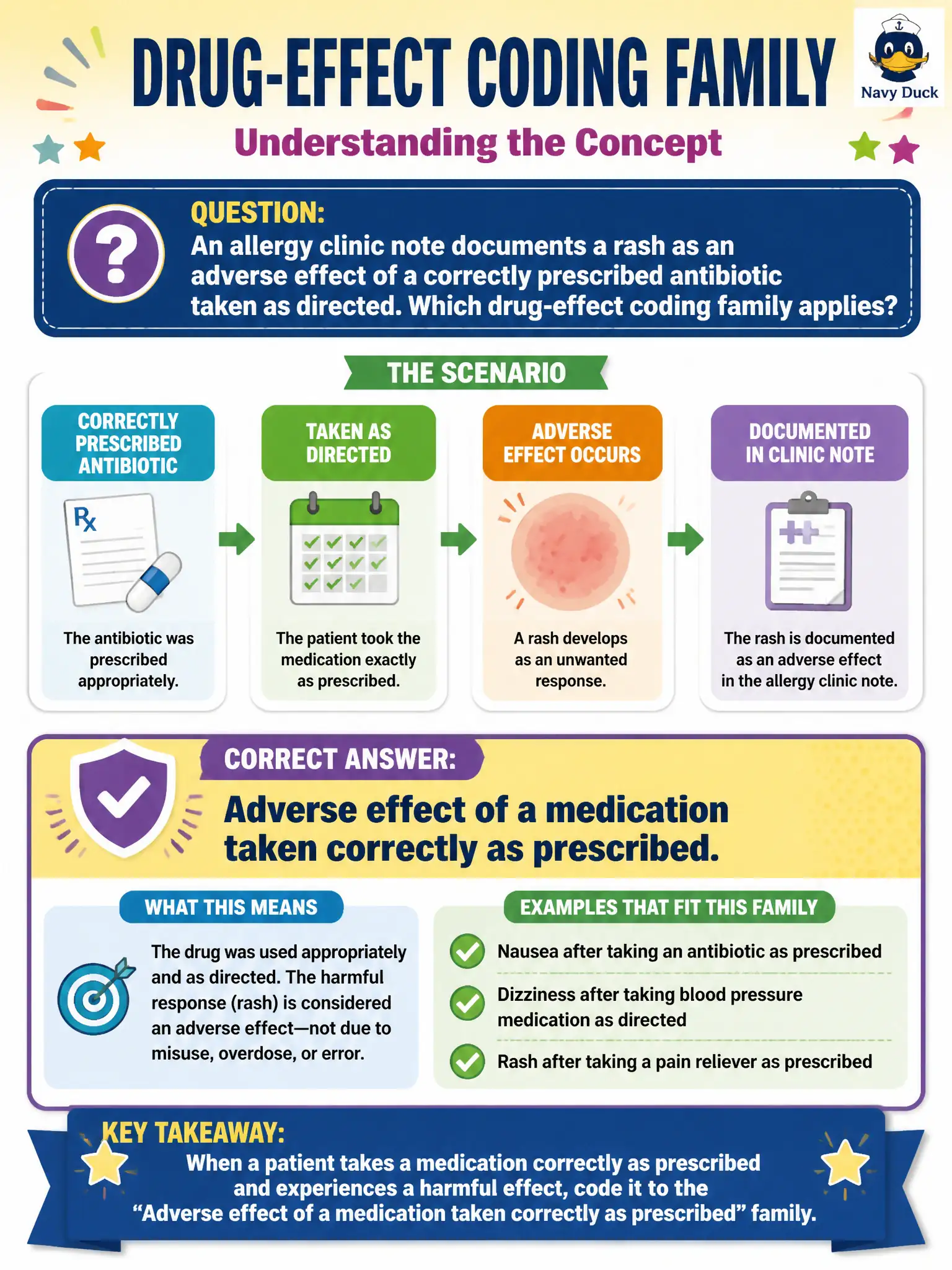
An allergy clinic note documents a rash as an adverse effect of a correctly prescribed antibiotic taken as directed. Which drug-effect coding family applies?
Select an answer to reveal the explanation.
Short Explanation
Right drug, right dose, wrong side effect—that’s adverse effect territory, not a poisoning movie plot. If the antibiotic was taken as directed and still caused a rash, don’t slap a poisoning or underdosing label on it.
Full Explanation
ICD-10-CM separates adverse effects of a correct substance properly administered, poisonings from wrong substance or incorrect use including overdose, and underdosing. When an allergy clinic note documents a rash as an adverse effect of a correctly prescribed antibiotic taken as directed, the adverse-effect pathway applies. Coding poisoning because any drug reaction is supposedly poisoning in outpatient care fails the correct-use distinction. Coding underdosing because a rash supposedly means too little antibiotic was taken fails without underdosing documentation and misreads adverse effect. Coding toxic effect of a nonmedicinal substance only fails when the documented agent is a medicinal antibiotic. Exam caveat: adverse-effect coding typically requires the manifestation plus the responsible drug code as instructional notes direct. Operational check: confirm the antibiotic was taken as prescribed, confirm the rash manifestation, assign adverse-effect rather than poisoning or underdosing, and complete required drug and manifestation codes. In civic and community clinic workflows, document the chosen pathway in the coding rationale so auditors can see how the record supported specificity, sequencing, and instructional-note compliance on the professional claim.