
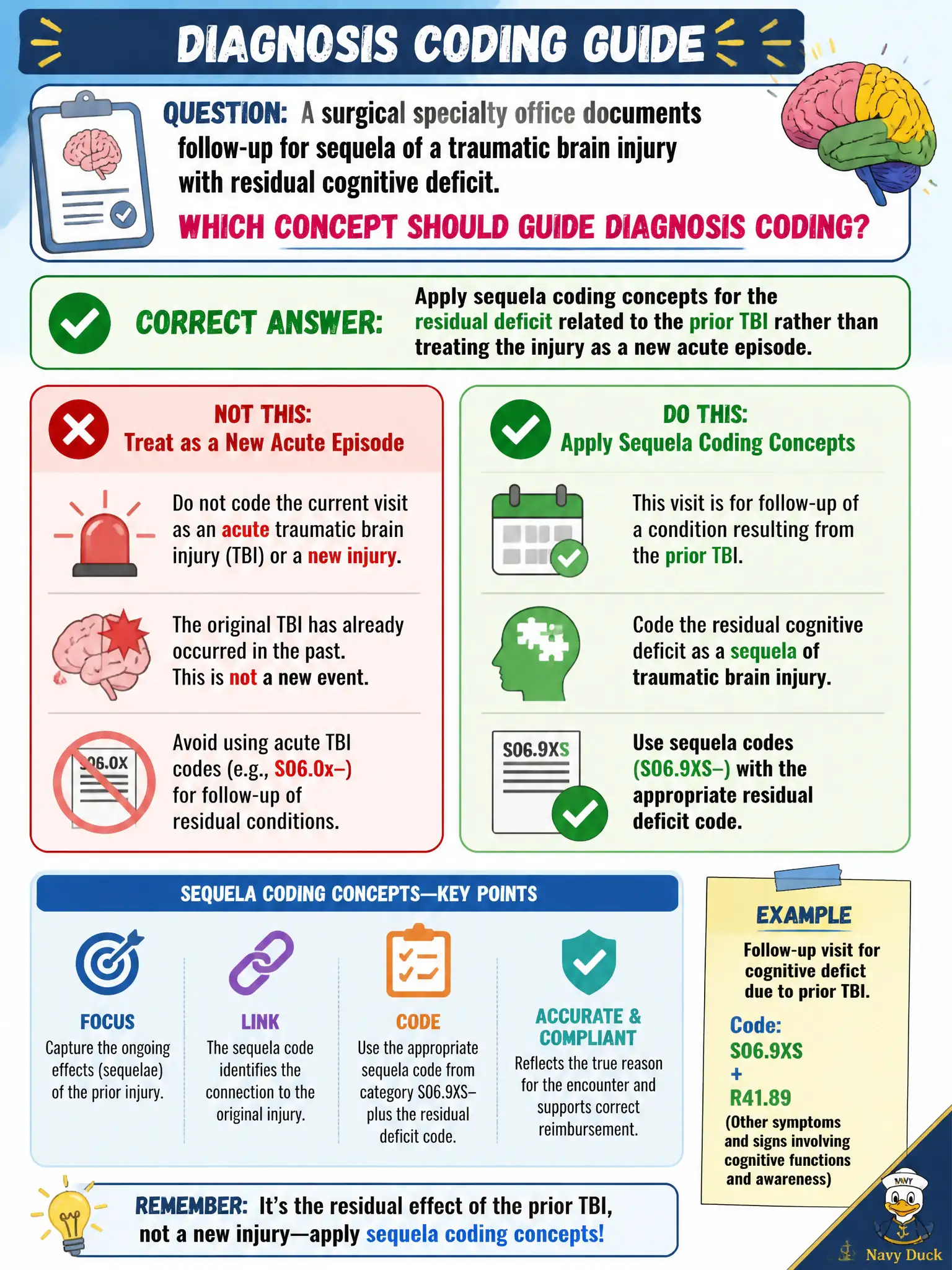
A surgical specialty office documents follow-up for sequela of a traumatic brain injury with residual cognitive deficit. Which concept should guide diagnosis coding?
Select an answer to reveal the explanation.
Short Explanation
Sequela is the “aftershock” chapter—old injury, lingering problem. Clinic follow-up for residual cognitive deficit after TBI is not a fresh initial-encounter reboot; code the residual as sequela of the prior injury.
Full Explanation
ICD-10-CM distinguishes acute injury episodes from sequela late effects. When a surgical specialty office documents follow-up for sequela of a traumatic brain injury with residual cognitive deficit, apply sequela coding concepts for the residual deficit related to the prior TBI rather than treating the injury as a new acute episode. Coding only the original acute TBI with initial-encounter seventh character forever fails once care addresses residuals rather than active acute injury treatment. Using a personal-history Z-code exclusively and never reporting sequela residuals fails when residual deficits are actively managed. Coding an acute concussion initial encounter because any cognitive complaint restarts the injury episode fails without documentation of a new acute injury. Exam caveat: sequela coding still requires linkage of the residual condition to the prior injury per guideline and Index pathways. Operational check: confirm residual cognitive deficit tied to prior TBI, select sequela concepts, and withhold repeated initial acute injury coding unless a new acute event is documented. In civic and community clinic workflows, document the chosen pathway in the coding rationale so auditors can see how the record supported specificity, sequencing, and instructional-note compliance on the professional claim.