
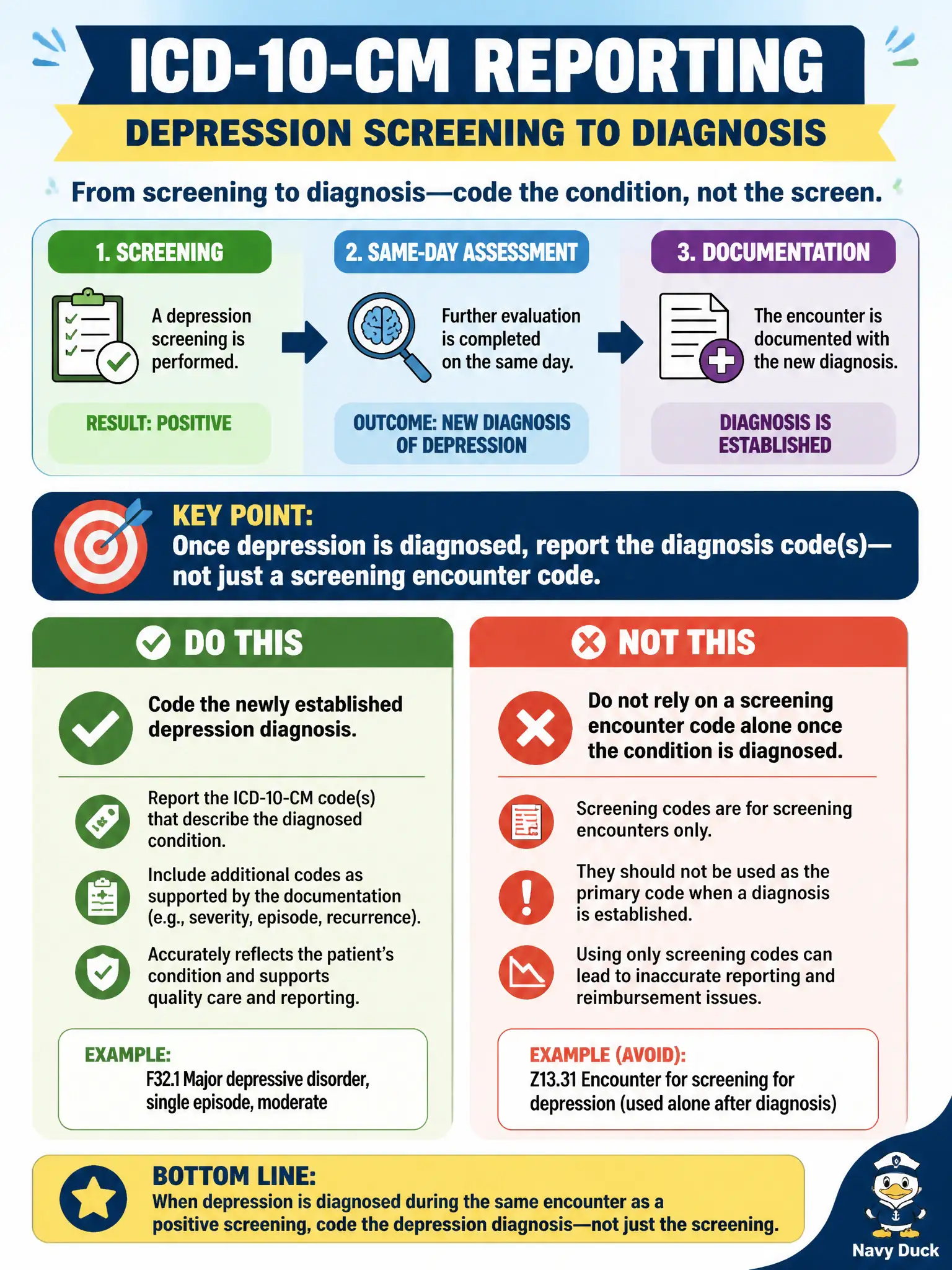
A family practice documents a depression screening that is positive, and the same-day assessment establishes a new diagnosis of depression. How should ICD-10-CM reporting generally be handled?
Select an answer to reveal the explanation.
Short Explanation
A screening Z-code is the “we checked” ticket; once the clinician actually diagnoses depression that day, the real diagnosis takes the driver’s seat. Don’t leave the claim stuck on screening-only when the assessment already named the condition.
Full Explanation
Screening Z-codes describe encounters for screening. When a family practice documents a depression screening that is positive and the same-day assessment establishes a new diagnosis of depression, code the newly established depression diagnosis rather than relying on a screening encounter code alone once the condition is diagnosed. Reporting only the screening Z-code and never coding confirmed depression fails guideline direction after diagnosis is established. Reporting neither code until a psychiatric specialty consult is completed fails when the primary-care clinician has already diagnosed depression. Replacing the depression diagnosis with an unspecified rule-out psychiatric disorder code fails outpatient uncertain-diagnosis rules and undercuts a confirmed assessment. Exam caveat: if the note remains only positive screen without a confirmed diagnosis, screening and symptom coding may still apply—do not invent depression. Operational check: determine whether depression was actually diagnosed that day; if yes, code the depression diagnosis and do not leave the claim on screening-only status. In civic and community clinic workflows, document the chosen pathway in the coding rationale so auditors can see how the record supported specificity, sequencing, and instructional-note compliance on the professional claim.