
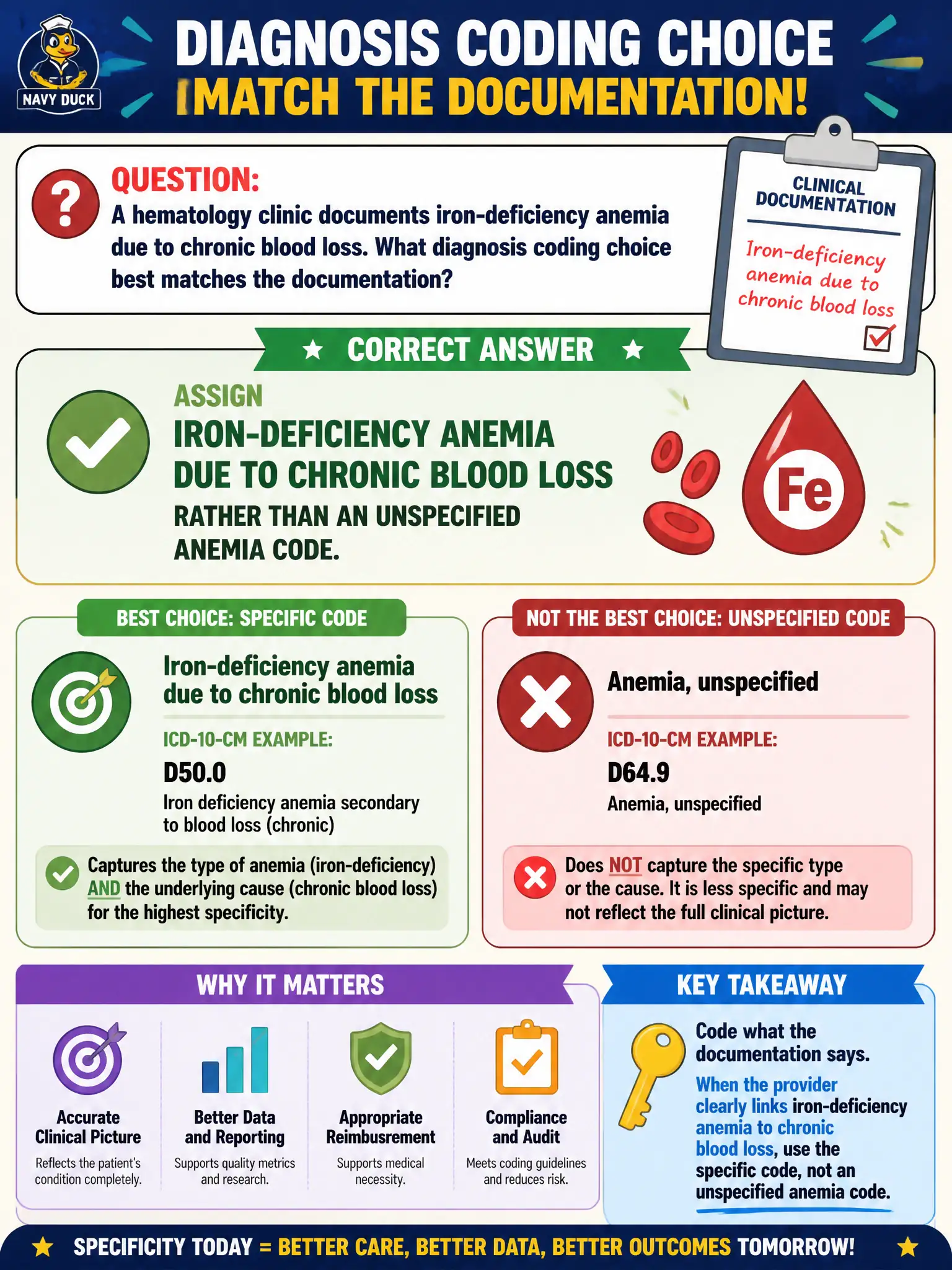
A hematology clinic documents iron-deficiency anemia due to chronic blood loss. What diagnosis coding choice best matches the documentation?
Select an answer to reveal the explanation.
Short Explanation
Chronic blood-loss iron deficiency is a different story than “anemia, shrug.” When the hematology note names both the iron problem and the chronic-loss cause, code that relationship—don’t hide behind unspecified anemia.
Full Explanation
Physician-based diagnosis coding should reflect documented etiology and type of anemia. When a hematology clinic documents iron-deficiency anemia due to chronic blood loss, assign that specific relationship rather than an unspecified anemia code. Coding only unspecified anemia because etiology is supposedly never coded in physician offices fails; etiology is reportable and expected when documented. Coding acute blood-loss anemia even though the note specifies chronic blood loss fails the acuity distinction built into the classification. Omitting anemia and reporting only a fatigue symptom fails when a definitive anemia diagnosis is stated. Exam caveat: if an underlying bleeding source is also diagnosed and treated, additional codes may apply per instructional notes without replacing the anemia concept. Operational check: confirm iron deficiency and chronic blood-loss language, select the matching anemia pathway, and reject acute-loss, unspecified-only, or symptom-only substitutes. In civic and community clinic workflows, document the chosen pathway in the coding rationale so auditors can see how the record supported specificity, sequencing, and instructional-note compliance on the professional claim.