
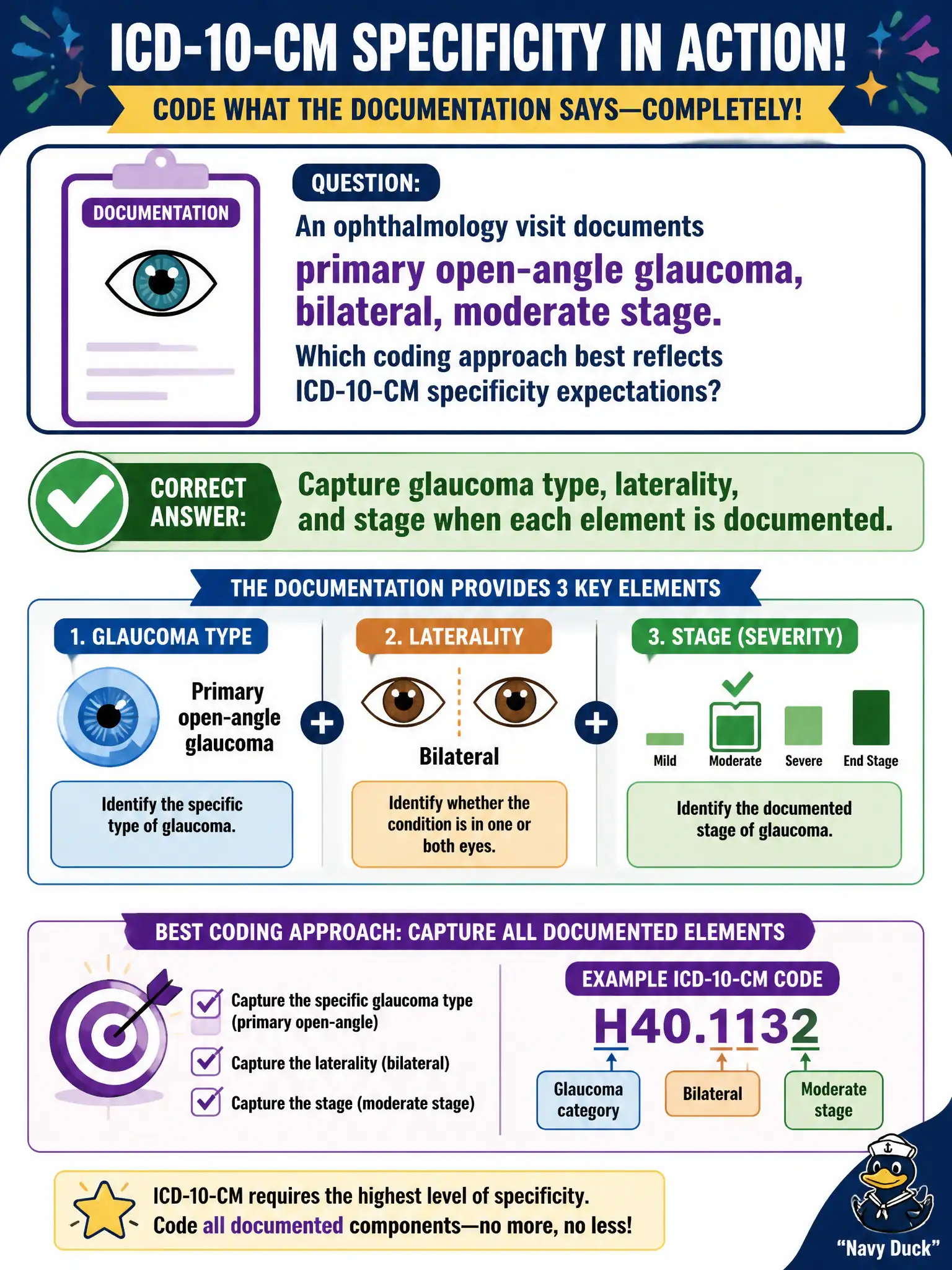
An ophthalmology visit documents primary open-angle glaucoma, bilateral, moderate stage. Which coding approach best reflects ICD-10-CM specificity expectations?
Select an answer to reveal the explanation.
Short Explanation
Glaucoma coding likes the full address: type, which eye(s), and how far along it is. If the ophthalmology note already hands you bilateral moderate primary open-angle glaucoma, don’t shrug and drop an unspecified placeholder.
Full Explanation
ICD-10-CM glaucoma categories commonly require type, laterality, and stage for complete code assignment. When an ophthalmology visit documents primary open-angle glaucoma, bilateral, moderate stage, coding should capture glaucoma type, laterality, and stage rather than unspecified glaucoma. Coding unspecified glaucoma only because stage is supposedly never reportable in ambulatory settings fails; stage is classifiable on professional claims when documented. Reporting laterality alone and omitting type and stage fails completeness when those elements are present in the record. Using a blindness category code whenever any glaucoma is documented fails without documentation of blindness and is not an automatic substitute. Exam caveat: if stage differs by eye, follow category instructions for bilateral staging rather than inventing a single incorrect stage. Operational check: extract type as primary open-angle, laterality as bilateral, and stage as moderate from the note, complete the glaucoma code family accordingly, and avoid blindness or unspecified defaults. In civic and community clinic workflows, document the chosen pathway in the coding rationale so auditors can see how the record supported specificity, sequencing, and instructional-note compliance on the professional claim.