
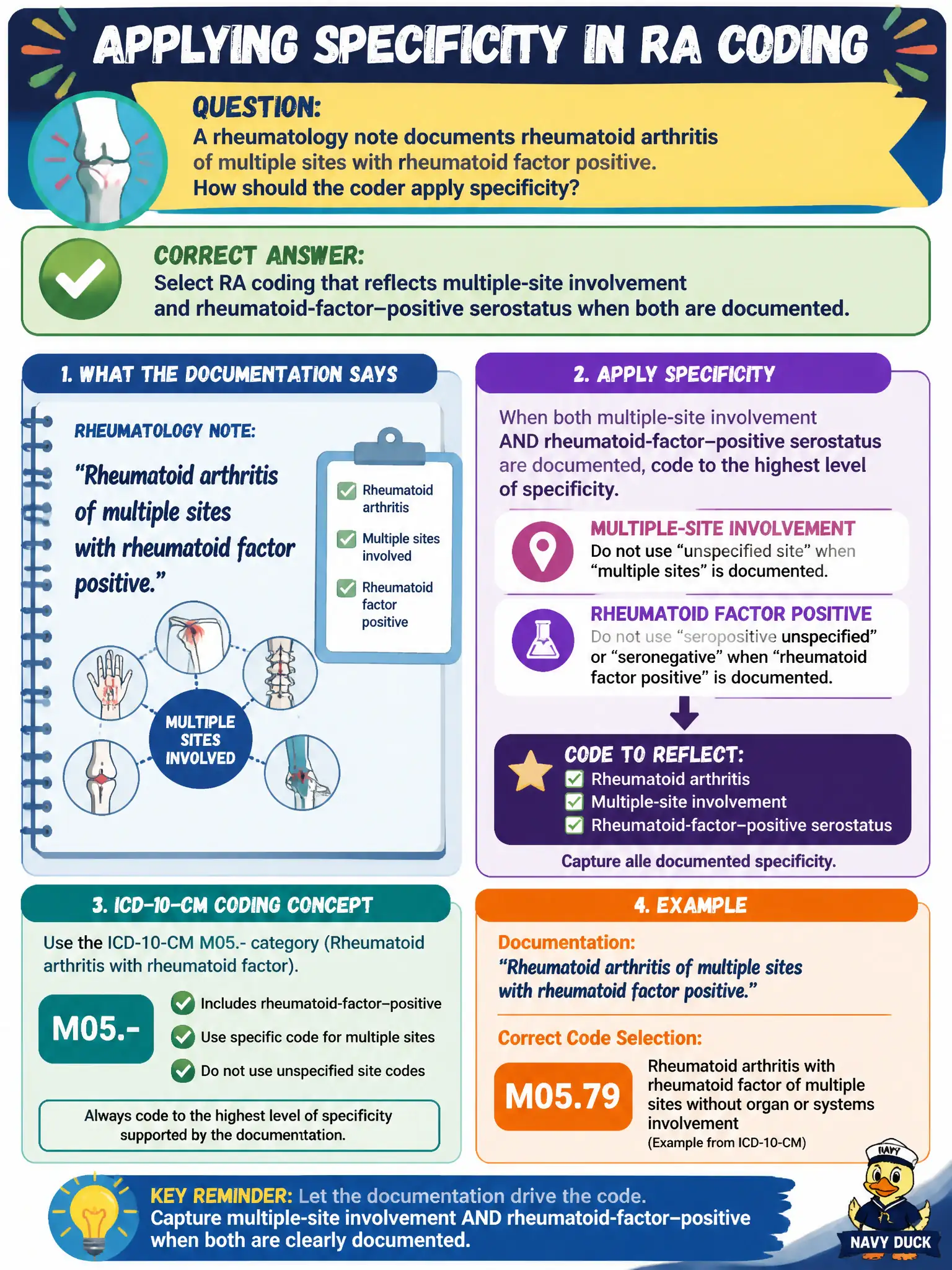
A rheumatology note documents rheumatoid arthritis of multiple sites with rheumatoid factor positive. How should the coder apply specificity?
Select an answer to reveal the explanation.
Short Explanation
RA with 'many joints' and RF-positive is specific gold—use it. Don't hide behind unspecified arthritis or swap in osteoarthritis when the rheumatologist already named rheumatoid disease and the lab status.
Full Explanation
Rheumatoid arthritis codes distinguish site involvement, including multiple sites, and often serostatus when documented. When a rheumatology note documents rheumatoid arthritis of multiple sites with rheumatoid factor positive, select RA coding that reflects multiple-site involvement and RF-positive serostatus. Coding unspecified arthritis only because serostatus is supposedly never used on professional claims fails; serostatus axes are valid when documented and are not inpatient-only. Coding osteoarthritis of a single joint and ignoring RF results fails when the provider named rheumatoid arthritis with multi-site disease. Reporting personal history of RA whenever DMARD therapy is prescribed fails while disease is active under treatment—therapy does not convert RA to history. Exam caveat: if laterality or specific joint detail is also documented for certain categories, incorporate supported site detail without inventing joints absent from the note. Operational check: extract multi-site versus single-site language and RF-positive or negative statements, match those axes in code selection, and keep active RA coding while disease-modifying therapy continues. In civic and community clinic workflows, document the chosen pathway in the coding rationale so auditors can see how the record supported specificity, sequencing, and instructional-note compliance on the professional claim.