
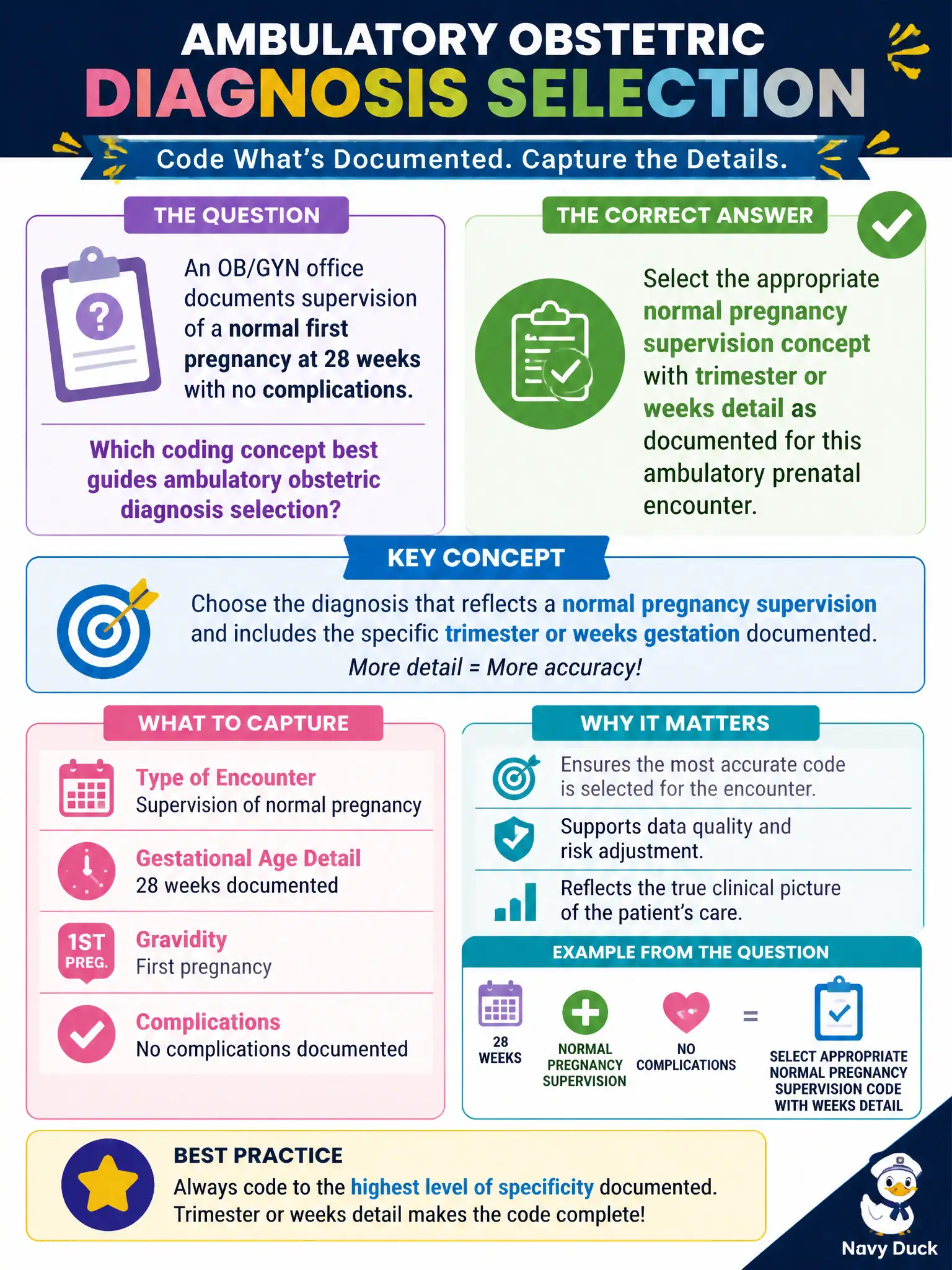
An OB/GYN office documents supervision of a normal first pregnancy at 28 weeks with no complications. Which coding concept best guides ambulatory obstetric diagnosis selection?
Select an answer to reveal the explanation.
Short Explanation
Healthy prenatal visits still live in the pregnancy chapter—they're not a generic physical. At 28 weeks you're in the third-trimester lane for routine supervision of a first pregnancy, and the chart's weeks help nail the right encounter detail.
Full Explanation
Routine ambulatory prenatal supervision for an uncomplicated pregnancy is reported with pregnancy-chapter supervision concepts, not as a generic adult wellness exam or incidental pregnancy status alone. For an OB/GYN office documenting supervision of a normal first pregnancy at 28 weeks with no complications, select the appropriate normal pregnancy supervision pathway and include trimester or weeks detail as documented. Using a postpartum supervision code fails because puerperium coding applies after delivery, not during ongoing antepartum care at 28 weeks. Coding only a general adult wellness exam and ignoring pregnancy chapter codes fails when the visit is prenatal supervision of pregnancy, even if uncomplicated. Assigning incidental pregnancy status only and never reporting weeks or trimester fails guideline expectations for obstetric diagnosis completeness when gestational timing is documented. Exam caveat for CCS-P physician-based obstetric coding: uncomplicated supervision codes are inappropriate once a complication is documented—complication pathways then take priority per obstetric guidelines. Operational check: confirm pregnancy is ongoing (not postpartum), confirm uncomplicated versus complicated status, capture trimester/weeks from the note, and choose the supervision concept that matches parity and timing rather than a non-obstetric exam code.