
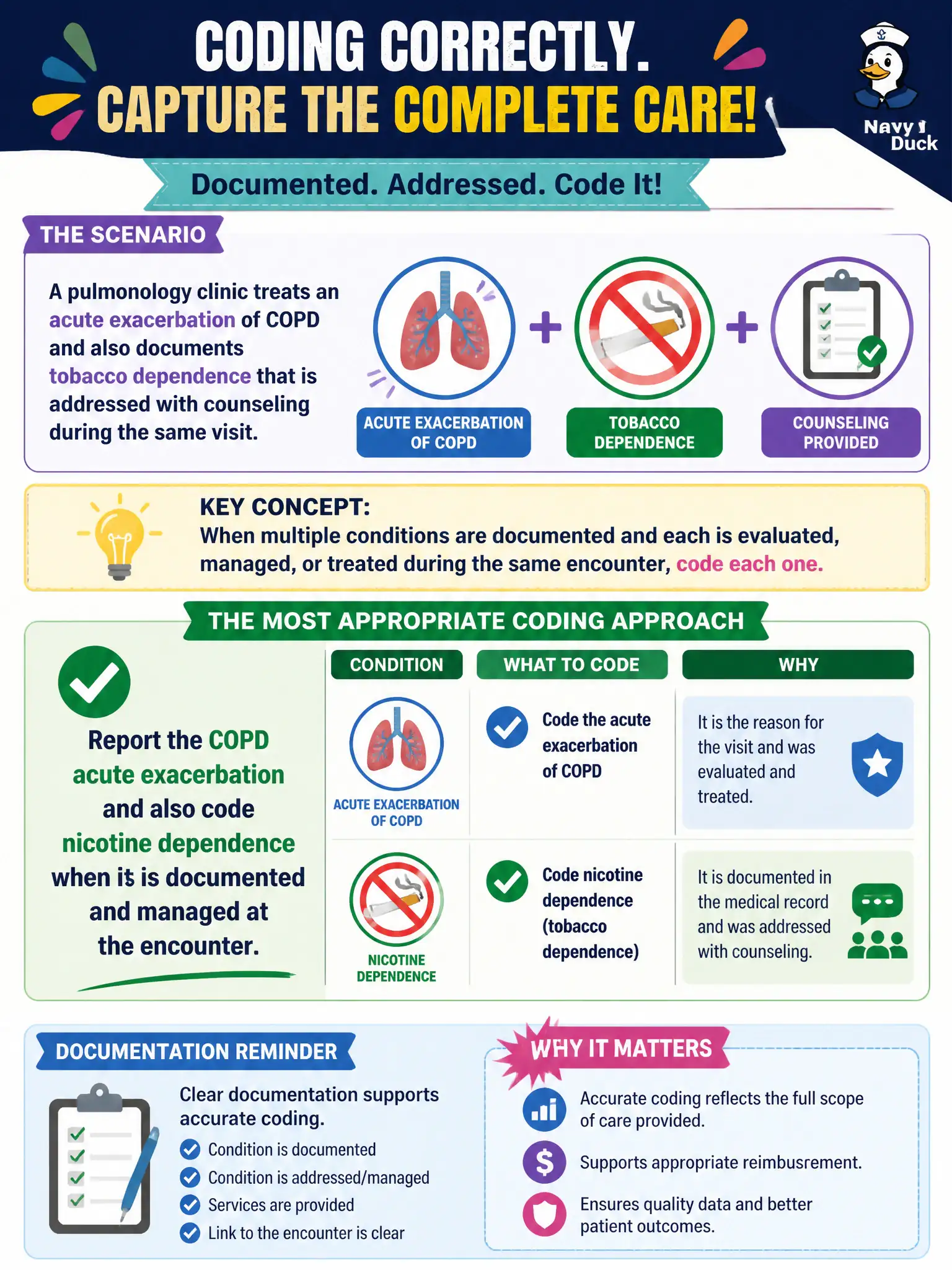
A pulmonology clinic treats an acute exacerbation of COPD and also documents tobacco dependence that is addressed with counseling during the same visit. What diagnosis coding approach is most appropriate?
Select an answer to reveal the explanation.
Short Explanation
If the visit fights both the flare and the cigarettes, both belong on the claim. COPD exacerbation is the lung problem being treated; nicotine dependence gets its own code when the provider actually addresses it—not a vague 'history of smoking' shrug.
Full Explanation
When a pulmonology clinic treats an acute exacerbation of COPD and also documents tobacco dependence addressed with counseling at the same visit, both clinical concepts belong on the professional claim. Report the COPD acute exacerbation specificity and additionally code nicotine dependence (or the tobacco-use concept supported by the note) when dependence is documented and managed. Coding only tobacco dependence and omitting the COPD exacerbation fails because lifestyle counseling does not erase the respiratory condition that drove treatment of the flare. Coding uncomplicated COPD without exacerbation fails when the record documents acute exacerbation status; dropping that detail underuses required specificity. Reporting personal history of nicotine use fails when current dependence and counseling are documented—history codes describe past status, not active dependence under management. Exam caveat: tobacco-related coding choices (dependence versus use versus history) must track the provider's exact language and whether counseling or treatment occurred; do not up-code history to dependence without support. Operational check on civic and specialty clinic claims: confirm exacerbation wording for COPD, confirm current tobacco dependence or use language plus counseling or management in the plan, then assign both diagnosis concepts and withhold history-only tobacco codes.