
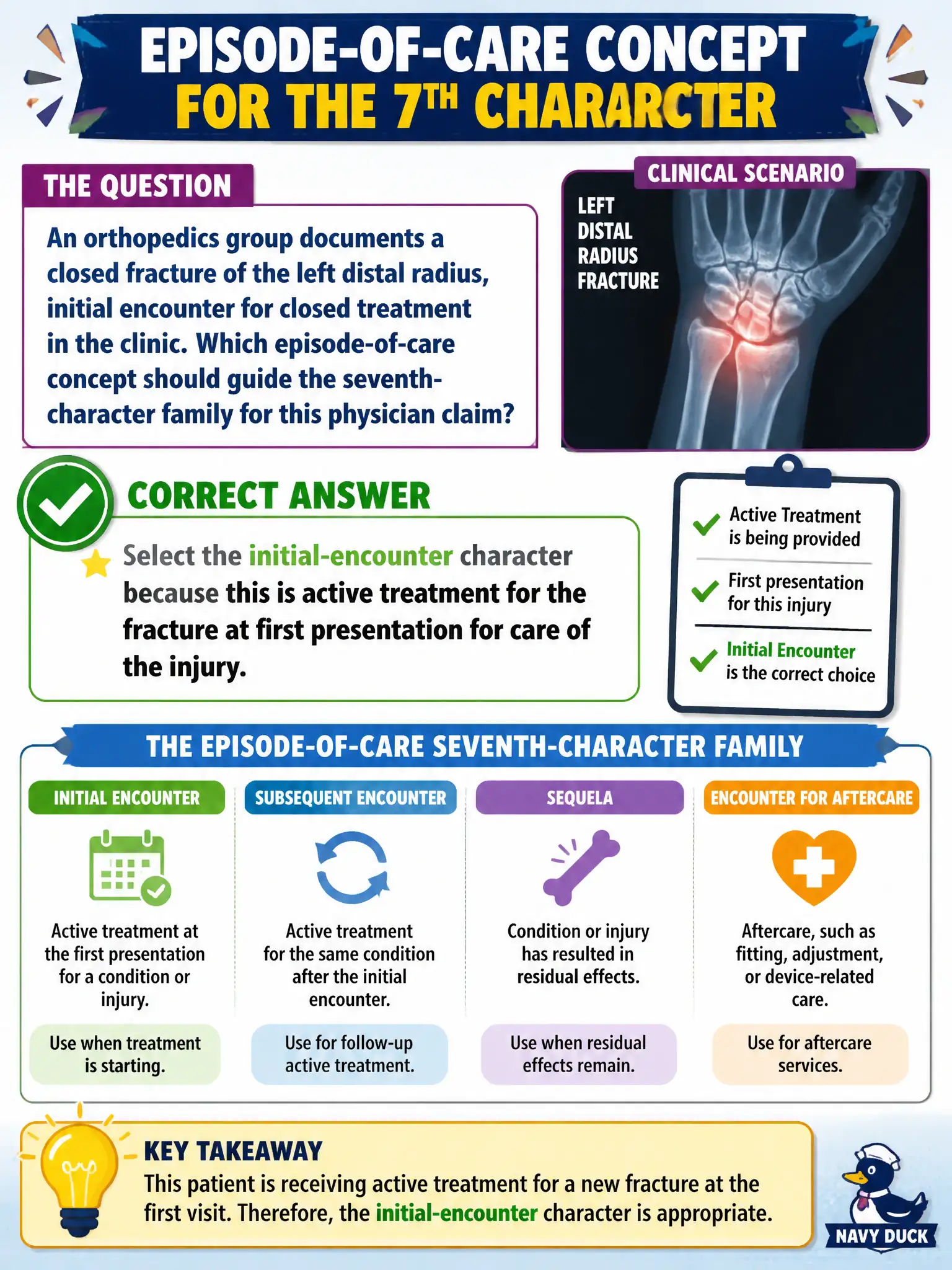
An orthopedics group documents a closed fracture of the left distal radius, initial encounter for closed treatment in the clinic. Which episode-of-care concept should guide the seventh-character family for this physician claim?
Select an answer to reveal the explanation.
Short Explanation
Seventh characters are the injury's timeline sticker. Day-one active treatment—casting, reducing, deciding the plan—gets the initial-encounter character. Subsequent is for aftercare while it heals; sequela is for the leftover scar of an old injury.
Full Explanation
Injury codes that require a seventh character use episode-of-care concepts consistently on physician professional claims. For a closed fracture of the left distal radius with initial encounter for closed treatment in an orthopedics clinic, the initial-encounter character is correct because the patient is receiving active treatment for the injury at first presentation for care of that fracture. Defaulting to sequela for any ambulatory fracture fails because sequela describes residual conditions arising after the acute injury phase, not day-one active treatment. Selecting subsequent encounter for routine healing fails when closed treatment is being initiated today; subsequent applies after the active treatment phase, during routine healing or aftercare. Omitting the seventh character because the claim is professional rather than facility fails conceptually: ICD-10-CM episode characters belong to the diagnosis code itself and apply in physician-office coding, not only on UB facility claims. Exam caveat: initial is about active treatment status, not merely the calendar first visit to a particular office—active treatment by the same or a different clinician can still be initial. Operational check: read whether today's service is active treatment (reduction, casting decision, surgical planning) versus routine healing follow-up or late effect; then assign initial, subsequent, or sequela accordingly and complete laterality required by the code family.