
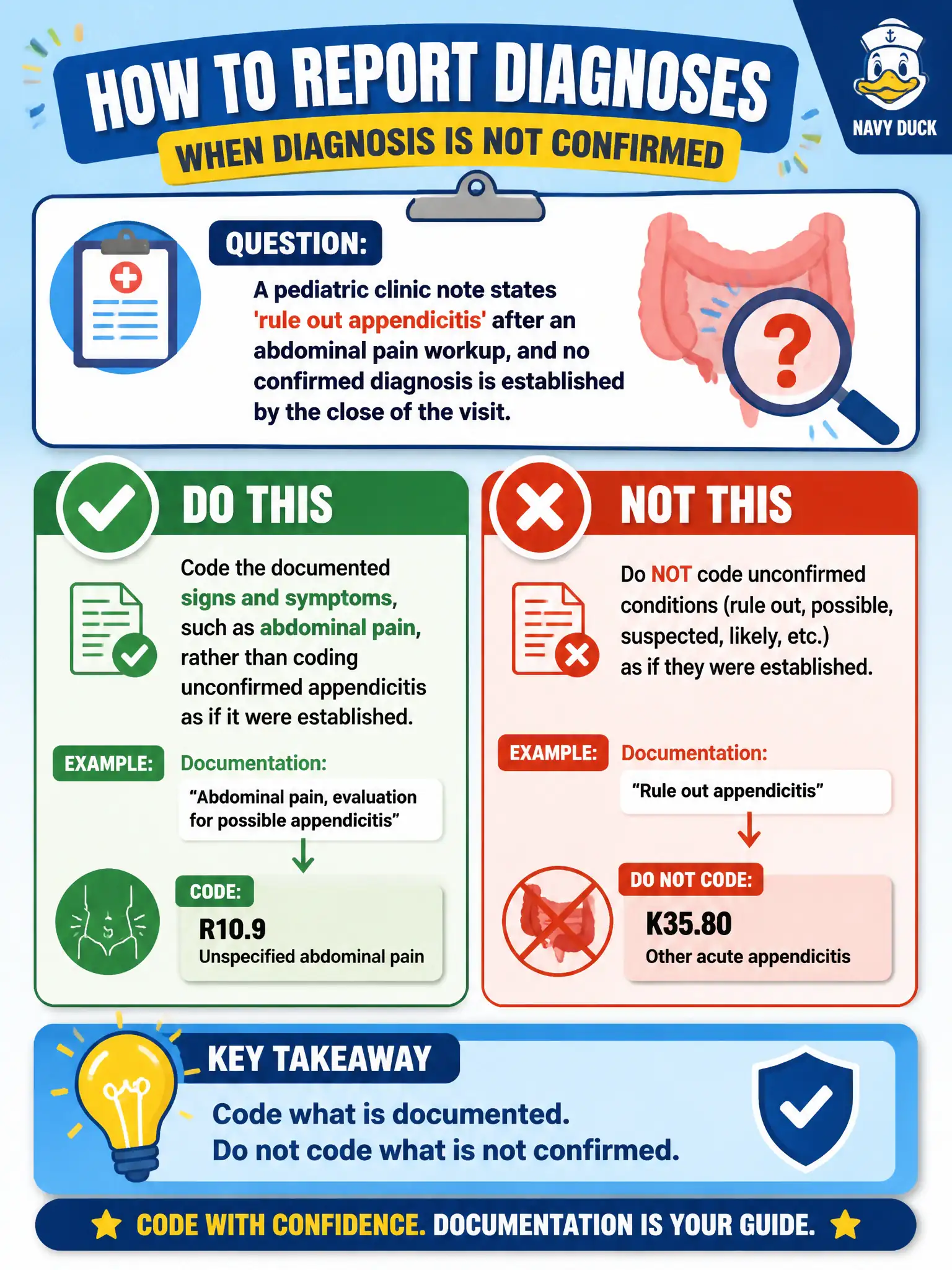
A pediatric clinic note states 'rule out appendicitis' after an abdominal pain workup, and no confirmed diagnosis is established by the close of the visit. How should diagnoses be reported for this physician-office claim?
Select an answer to reveal the explanation.
Short Explanation
Outpatient 'rule out' is a maybe—not a verdict. Until the provider confirms appendicitis, you code what you can prove: the belly pain and related signs. Don't promote a suspicion into a definitive disease on the claim.
Full Explanation
Outpatient and physician-office uncertain-diagnosis rules differ from inpatient convention. In a pediatric clinic note that states rule out appendicitis without confirmation by the close of the visit, diagnoses are reported to the highest degree of certainty—typically documented signs and symptoms such as abdominal pain—rather than coding unconfirmed appendicitis as established disease. Treating outpatient rule out the same as an inpatient working diagnosis fails because ambulatory settings do not code probable, suspected, or rule-out conditions as if confirmed. Coding only a Z03 observation concept and never reporting presenting symptoms fails when symptoms are documented and better represent the reason for the workup; observation codes have specific criteria and do not erase symptom reporting when symptoms are the certainty level achieved. Forcing acute appendicitis while awaiting surgical confirmation fails both ethics and guidelines: the coder assigns what is documented and confirmed, not a provisional surgical verdict. Exam caveat for CCS-P: once a later encounter confirms appendicitis, that later claim can report the established diagnosis; today's claim still reflects today's certainty. Operational check: search the assessment for definitive language versus rule-out or suspected wording; if unconfirmed, code signs, symptoms, and abnormal findings that are documented, and withhold the disease code until confirmation appears in the record.