
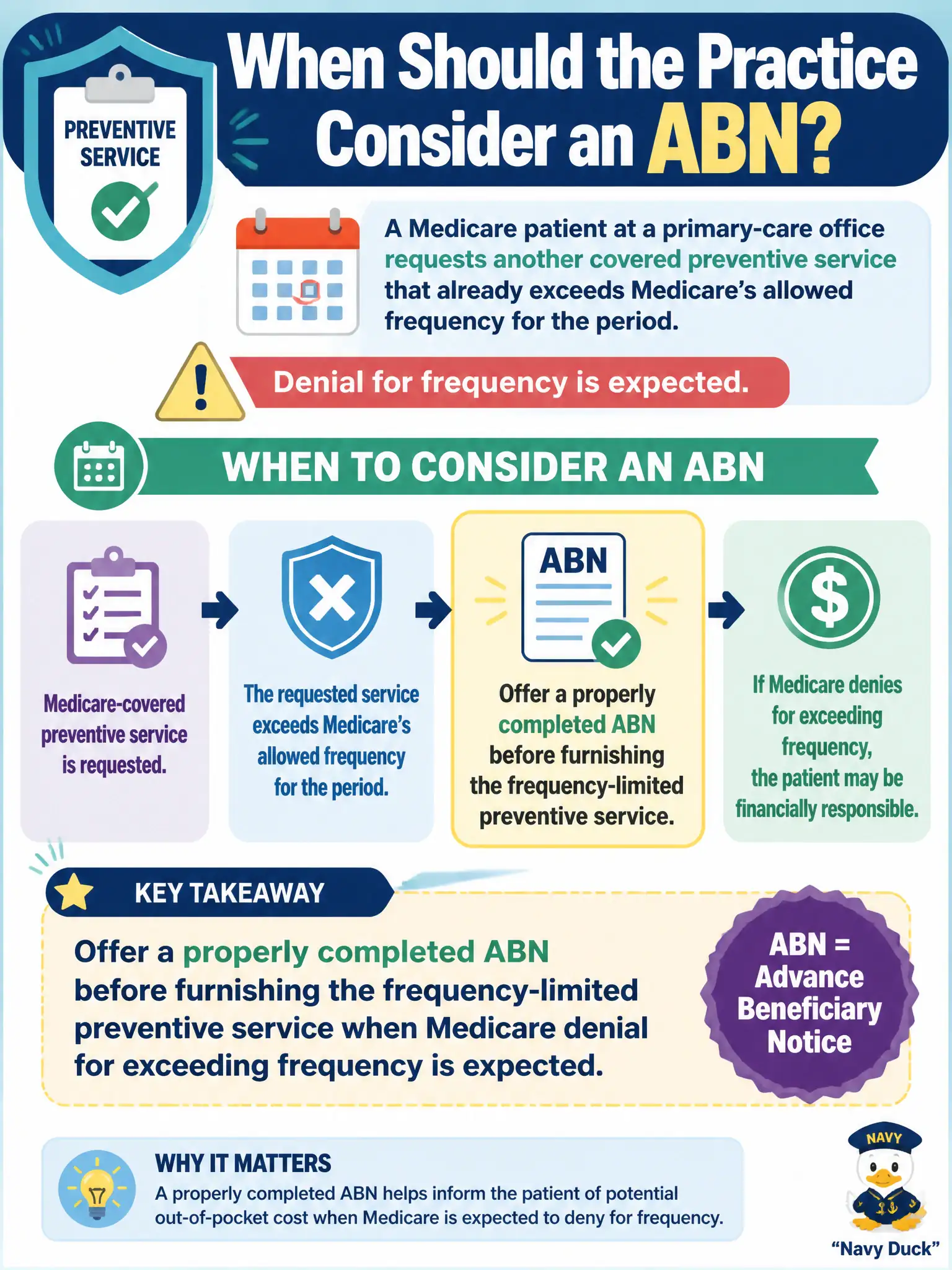
A Medicare patient at a primary-care office requests another covered preventive service that already exceeds Medicare’s allowed frequency for the period. Denial for frequency is expected. When should the practice consider an ABN?
Select an answer to reveal the explanation.
Short Explanation
Frequency limits are one of those “Medicare might say no” moments where an ABN actually fits. If the preventive visit is about to blow past the allowed count, get a completed ABN in the patient’s hands before you do the service. Waiting until after the denial is too late for the notice to do its job.
Full Explanation
When a Medicare patient requests another covered preventive service that already exceeds Medicare’s allowed frequency for the period, denial for frequency is expected. Offering a properly completed ABN before furnishing that frequency-limited preventive service allows informed choice and supports proper liability handling. Community primary-care practices should treat frequency limits as a classic pre-service ABN moment for professional-fee preventive benefits.
Never using an ABN for preventive services because they are always paid fails by concept because frequency limits can produce denials even for otherwise covered preventive benefits. Billing Medicare first and issuing an ABN only after a frequency denial fails because the notice must precede the service. Having the patient sign a blank ABN at registration for any future frequency issues fails because the ABN must name the service and reason, not act as an empty blanket waiver.
Exam caveat: confirm the specific preventive benefit’s frequency rules for the date of service; some benefits have different intervals or eligibility resets. Operational check: eligibility/benefits checks should flag frequency exhaustion before the visit, trigger a completed ABN, and hold the service until the patient makes an informed decision.