
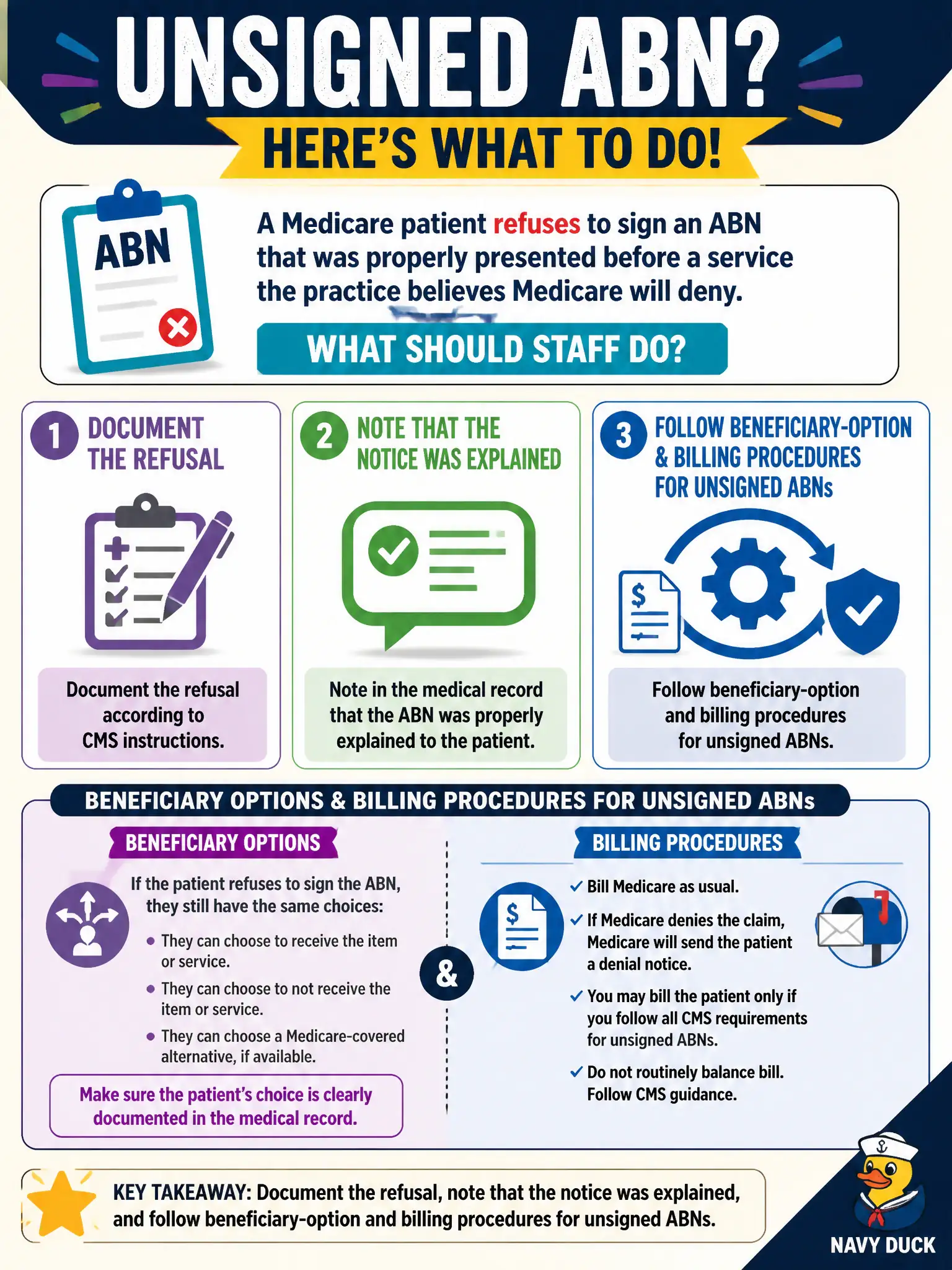
A Medicare patient refuses to sign an ABN that was properly presented before a service the practice believes Medicare will deny. What should staff do?
Select an answer to reveal the explanation.
Short Explanation
Refusal to sign isn’t a cue to shred the form or invent a signature. Write down that you offered and explained the ABN, then follow CMS’s path for unsigned notices. Paper the interaction; don’t pretend it never happened.
Full Explanation
When a Medicare patient refuses to sign a properly presented ABN before a service the practice believes Medicare will deny, staff should document the refusal according to CMS instructions, note that the notice was explained, and follow beneficiary-option and billing procedures for unsigned ABNs. Civic clinics must neither fabricate consent nor pretend the notice never happened. Proper documentation preserves the compliance trail for public-program billing decisions after refusal.
Destroying the ABN and billing Medicare as if no notice was offered fails by concept because it falsifies the notice history and may improperly seek Medicare payment. Forging the patient’s signature to support GA-modifier logic fails because forgery is fraud, not a workaround. Refusing all future primary care without documenting the encounter fails because it abandons both documentation duties and continuity-of-care responsibilities unrelated to fixing the ABN issue.
Exam caveat: CMS provides specific options for beneficiaries who refuse to sign; follow the current ABN instructions for unsigned notices rather than inventing local penalties. Operational check: keep the unsigned ABN with a dated staff attestation of presentation and explanation, select the correct claim handling path for refusal, and avoid any alteration of the patient’s signature line.