
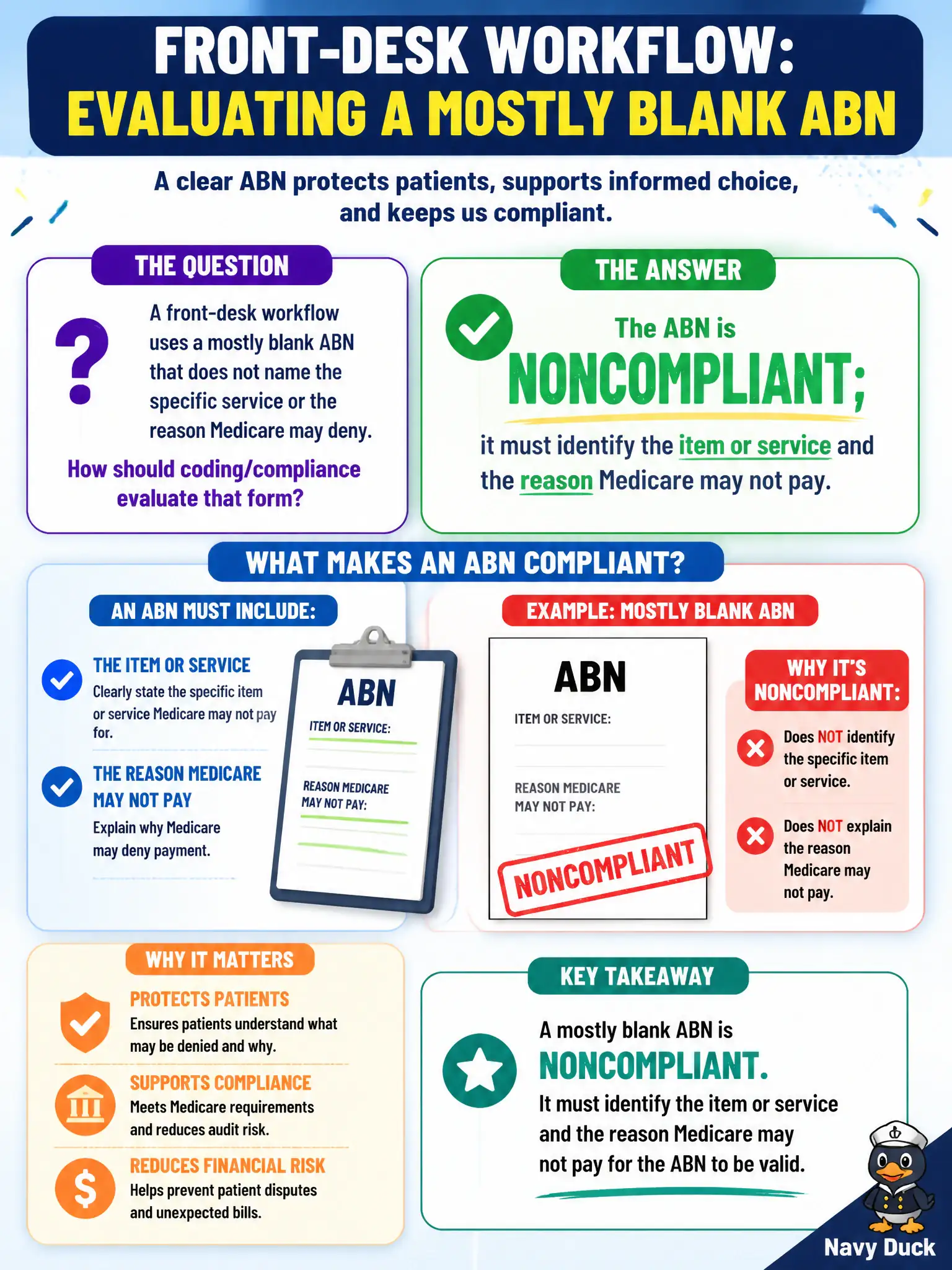
A front-desk workflow uses a mostly blank ABN that does not name the specific service or the reason Medicare may deny. How should coding/compliance evaluate that form?
Select an answer to reveal the explanation.
Short Explanation
A blank ABN is like a contract with empty blanks—pretty, but not binding the way CMS expects. Spell out the service and why Medicare may say no. Signature alone doesn’t rescue a hollow notice.
Full Explanation
A valid Medicare ABN must identify the specific item or service and the reason Medicare may not pay. A mostly blank ABN used at the front desk of a community clinic is noncompliant even if the patient signs it. Coding and compliance should evaluate such forms as defective notices that fail CMS’s content expectations and undermine informed beneficiary choice for professional-fee services.
Preferring blank ABNs because they supposedly cover every future service fails by concept because blanket empty notices do not specify the service or denial reason. Claiming only the signature matters and that service/reason fields are optional fails because those fields are essential ABN content. Validating blank ABNs merely because the practice logo appears in color fails because branding does not cure missing required elements.
Exam caveat: approved CMS ABN forms and instructions control required fields; local “short forms” that omit service and reason are not compliant substitutes. Operational check: retire blank-ABN registration packets, train front desk to list the service and expected denial reason, and audit a sample of retained ABNs for completeness before relying on them for patient liability.