
Staff want to issue a Medicare ABN solely because a commercial secondary insurer might deny a service. What is the correct scope understanding?
Select an answer to reveal the explanation.
Short Explanation
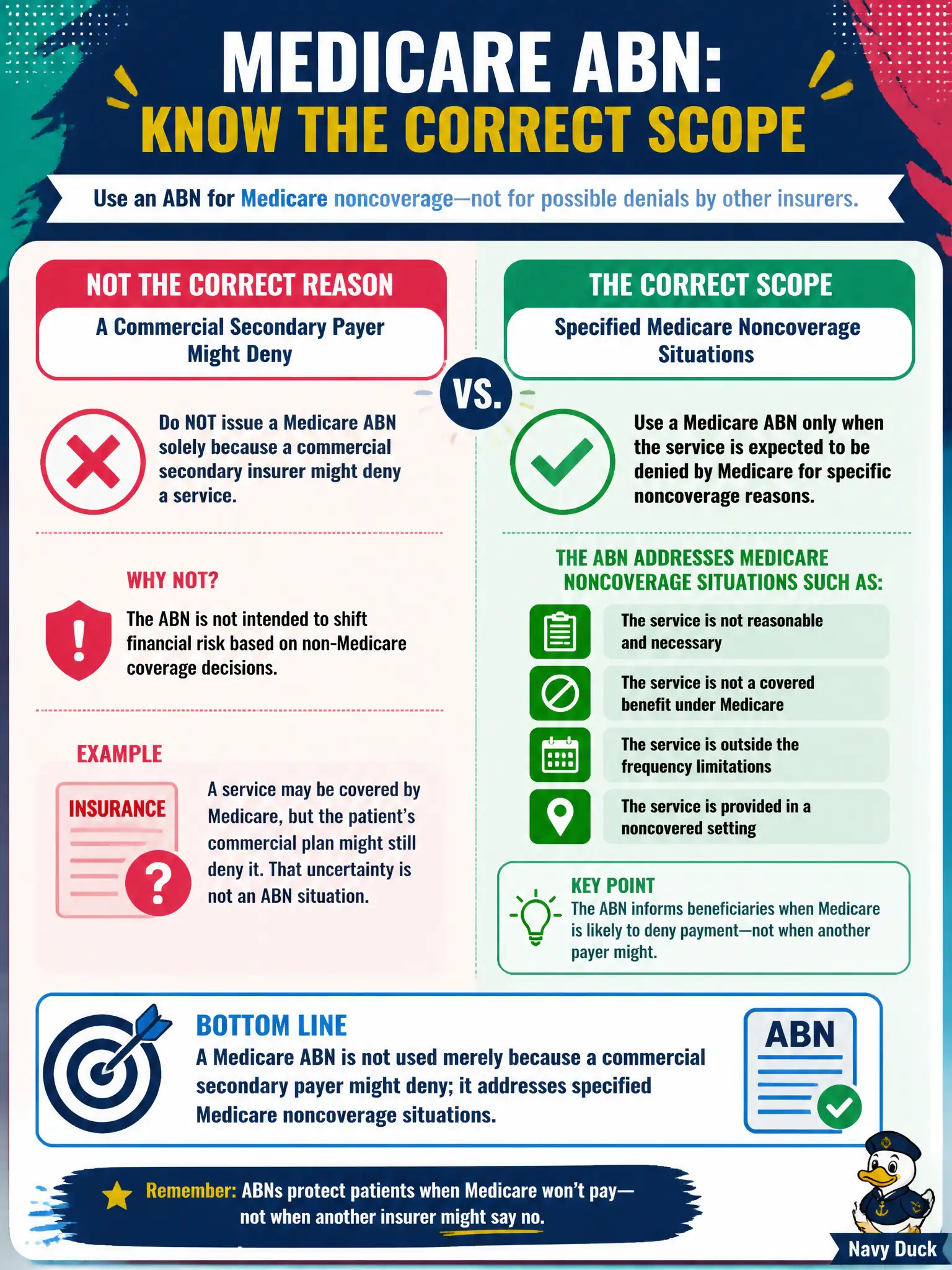
The Medicare ABN isn’t a universal “someone might not pay” form. It’s aimed at Medicare noncoverage situations CMS defined—not a commercial secondary’s maybe-deny vibe. Use the right notice for the right payer.
Full Explanation
A Medicare ABN addresses specified Medicare noncoverage situations. It is not used merely because a commercial secondary insurer might deny a service. Staff in a county multi-specialty clinic should keep Medicare notice tools scoped to Medicare rules and use commercial payer waiver or notice forms when a secondary plan’s rules require them. Correct scope understanding prevents paperwork theater that does not actually shift liability under the right payer’s policy.
Requiring a Medicare ABN for any possible secondary denial on every claim fails by concept because secondary commercial risk is not the ABN’s purpose. Treating ABNs as replacements for all commercial waiver forms nationwide fails because commercial contracts have their own notice instruments. Asserting that secondary insurance rules automatically convert every Medicare claim into an ABN requirement fails because secondary dynamics do not rewrite Medicare ABN triggers.
Exam caveat: dual-eligible and coordination-of-benefits situations can be complex; still separate Medicare noncoverage notices from commercial secondary forms rather than blending them into one generic “denial possible” sheet. Operational check: if the concern is commercial secondary denial only, stop the Medicare ABN workflow and use the secondary payer’s required patient notice/waiver process instead.