
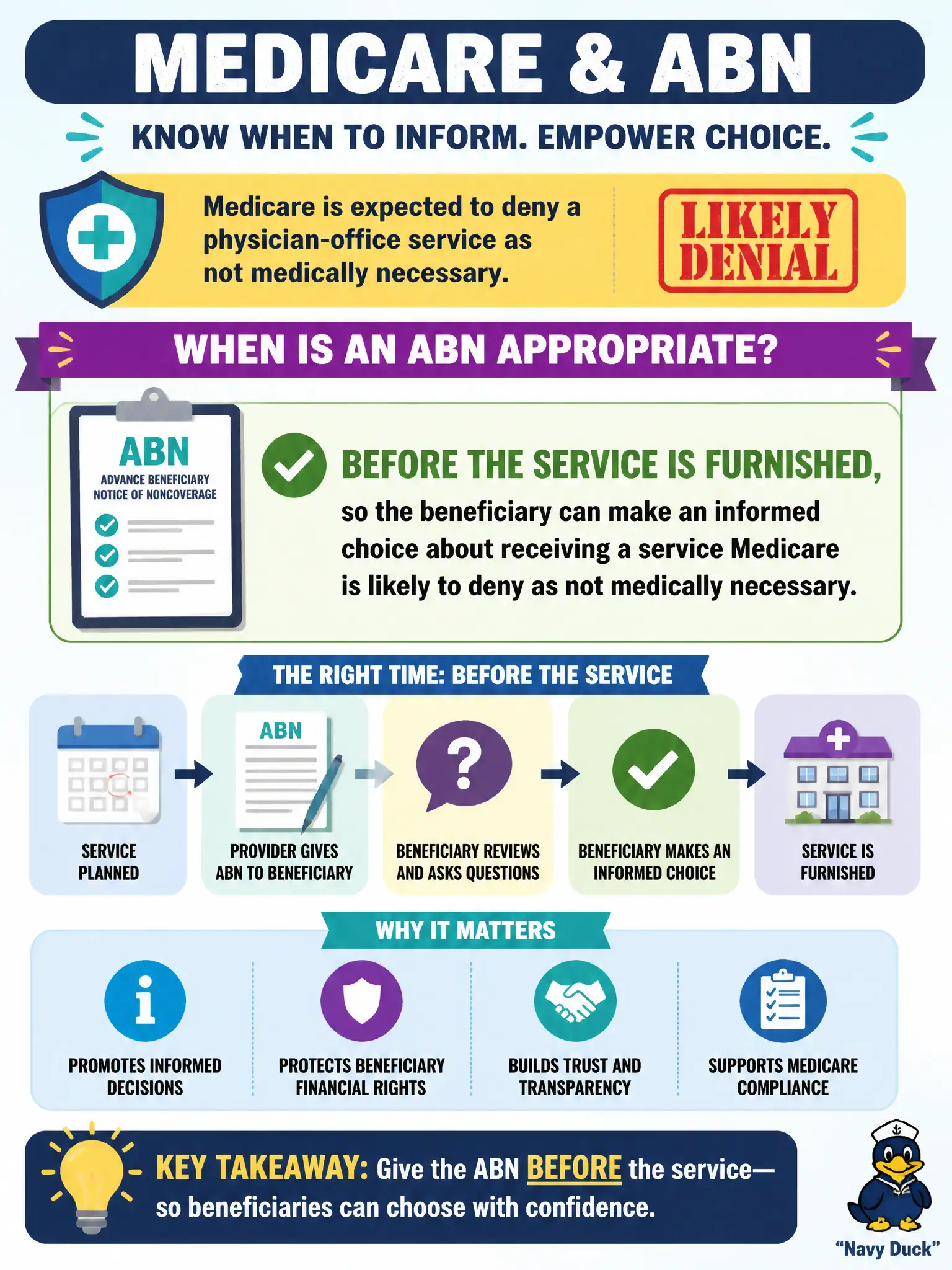
Medicare is expected to deny a physician-office service as not medically necessary. When is an Advance Beneficiary Notice of Noncoverage (ABN) appropriate?
Select an answer to reveal the explanation.
Short Explanation
An ABN is a before-the-shot conversation, not a after-the-denial surprise invoice. If Medicare’s likely to say “not medically necessary,” give the notice first. That way the patient chooses with eyes open.
Full Explanation
An Advance Beneficiary Notice of Noncoverage is appropriate before a physician-office service is furnished when Medicare is expected to deny the service as not medically necessary, so the beneficiary can make an informed financial choice. In civic clinics serving Medicare patients, timely ABN delivery is a beneficiary-protection and liability-shift tool—not an after-the-fact invoice tactic. Offering the notice up front aligns professional-fee billing with CMS ABN timing rules.
Issuing the ABN only after Medicare has denied and collected from the patient fails by concept because the notice must precede the service to support informed choice and proper liability shifting. Claiming ABNs never apply to medical-necessity issues and only to lost charts fails because medical-necessity denials are a classic ABN use case, while “lost charts” is not the governing frame. Presenting an ABN after the service merely because the patient seems willing to pay cash fails because post-service notice does not meet the before-service requirement.
Exam caveat: not every denial prediction warrants an ABN (for example, statutory exclusions may require a different notice type); match the notice to the noncoverage reason. Operational check: when utilization review or LCD/NCD logic predicts a medical-necessity denial, complete and deliver the ABN before the service, retain it, and apply the correct claim modifiers/indicators per current CMS instructions.