
Internal coding audits reveal recurring documentation weaknesses in one specialty section. How should findings be shared to educate providers effectively and ethically?
Select an answer to reveal the explanation.
Short Explanation
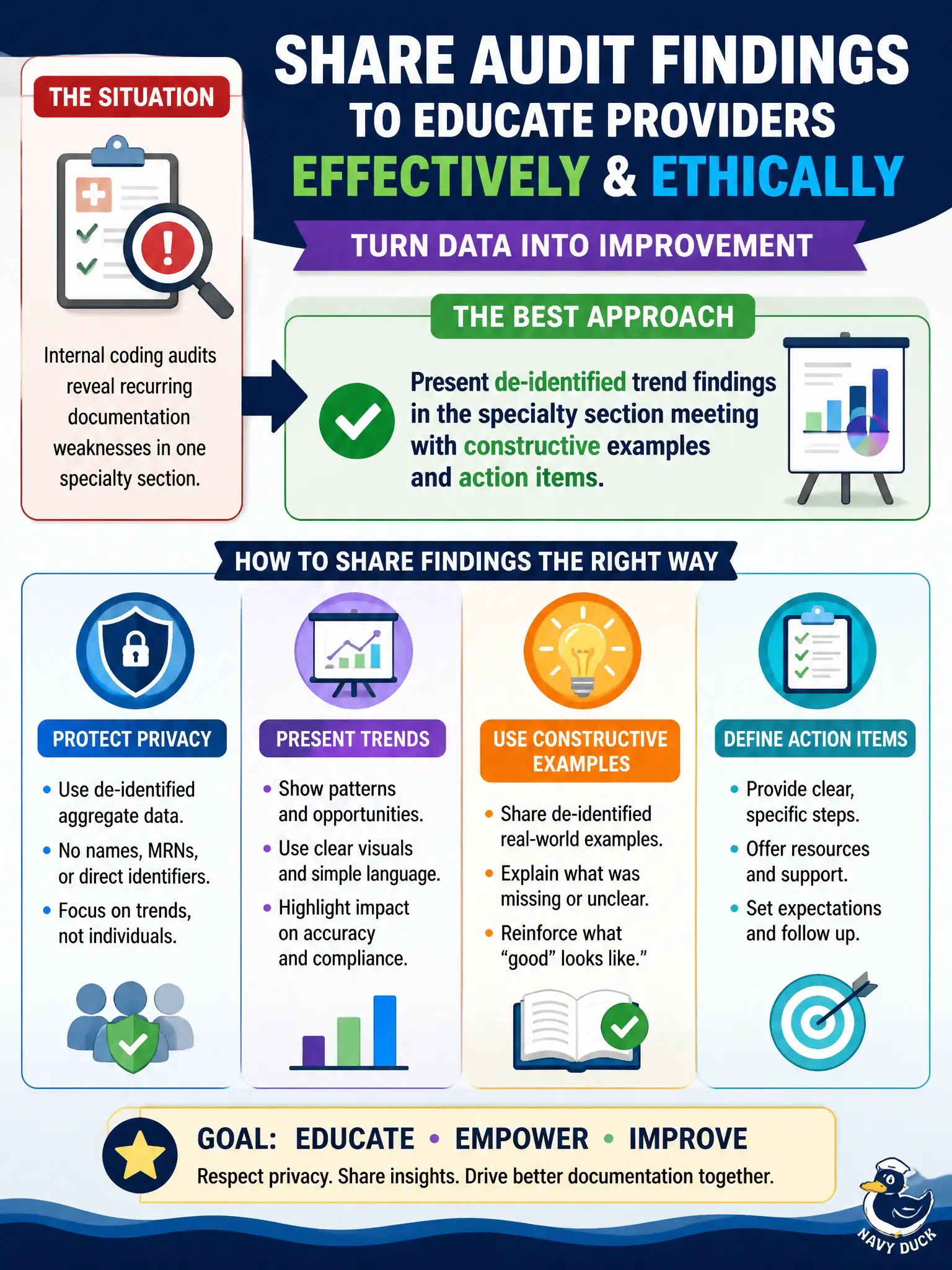
Audit trends are teaching gold—if you scrub the names and keep the lesson. Sharing de-identified patterns in a specialty meeting fixes the system without public shaming. Silence helps nobody; blast emails of PHI help even less.
Full Explanation
Internal coding audits that reveal recurring documentation weaknesses in one specialty should be shared as de-identified trend education. Presenting patterns, constructive examples, and action items in the specialty section meeting improves documentation for public-program professional-fee claims without humiliating individuals or spreading PHI. Ethical feedback loops treat audit data as a quality tool for civic clinic stewardship rather than a public scoreboard.
Posting each physician’s named error list on the break-room board fails by concept because it substitutes shaming for education and can create a hostile, noncompliant culture. Emailing unprotected PHI examples to the entire medical staff fails because it expands unnecessary disclosure of identifiable patient information. Withholding all results to avoid discomfort fails because clinicians cannot improve patterns they never see; silence perpetuates the same denials and unspecified coding.
Exam caveat: individual counseling and formal corrective action remain appropriate for outlier behavior under HR/compliance policy; the meeting method addresses section-level trends with de-identified teaching cases. Operational check: scrub identifiers from audit slides, show top documentation gaps with corrected examples, assign owners for follow-up education, and re-audit the specialty after a defined interval.