
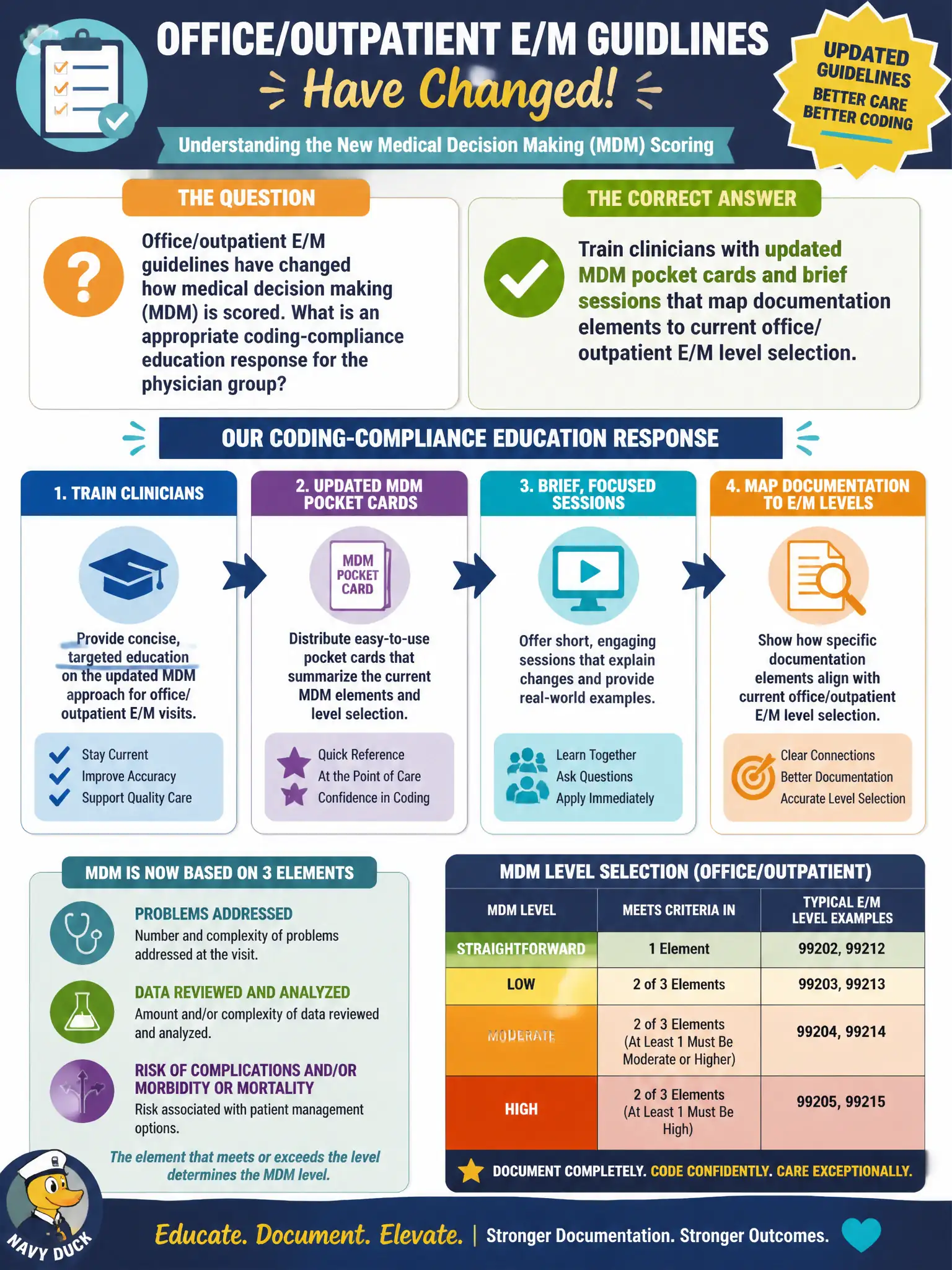
Office/outpatient E/M guidelines have changed how medical decision making (MDM) is scored. What is an appropriate coding-compliance education response for the physician group?
Select an answer to reveal the explanation.
Short Explanation
When the E/M playbook changes, you don’t keep running last year’s offense. A pocket card and short training help clinicians document what MDM actually needs now. That’s education that protects levels and audits alike.
Full Explanation
Office/outpatient evaluation and management level selection now centers on medical decision making (or time) under current guidelines rather than exclusive 1995/1997 bullet-counting for history and exam. An appropriate coding-compliance education response for a physician group serving public-program patients is updated MDM pocket cards and brief sessions that map documentation elements to current level selection. That training aligns clinician documentation with today’s professional-fee rules and reduces both undercoding and upcoding risk.
Advising exclusive continued use of 1995/1997 bullet-counting for all office visits fails by concept because it ignores the current office/outpatient framework. Instructing staff to upcode one level on every visit fails because deliberate upcoding is abusive billing, not an education strategy. Suspending all E/M coding until each physician receives a personal CMS letter fails because guideline changes are implemented through published rules and contractor guidance, not individualized mailings.
Exam caveat: time-based coding remains an alternative when documented; education should cover both MDM and time pathways without inventing hybrid rules. Operational check: distribute current MDM element cards, audit a sample of office E/M notes against the active framework, and coach clinicians whose documentation still mirrors obsolete bullet lists before professional claims drop.