
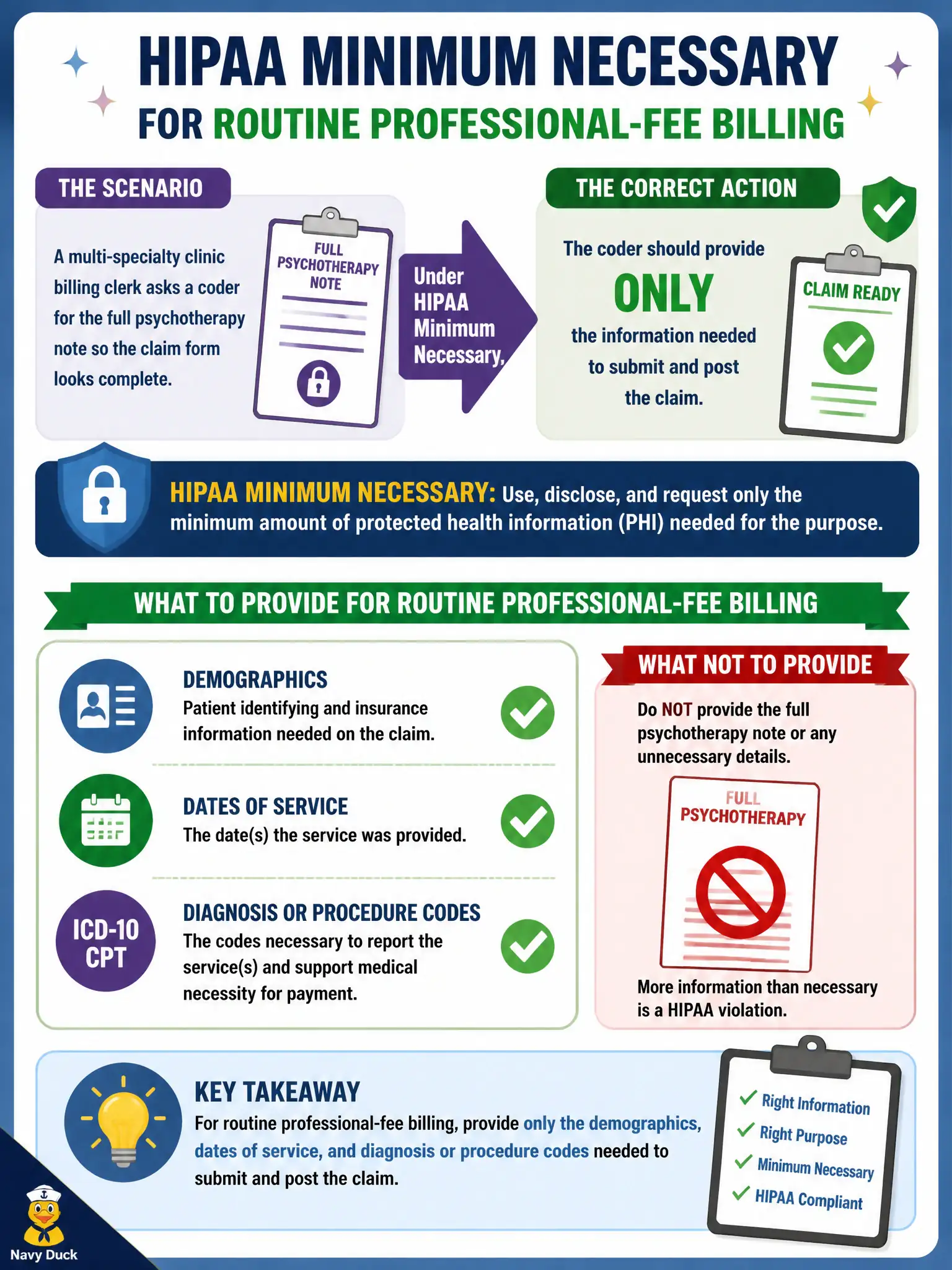
A multi-specialty clinic billing clerk asks a coder for the full psychotherapy note so the claim form looks complete. Under HIPAA minimum necessary, what should the coder provide for routine professional-fee billing?
Select an answer to reveal the explanation.
Short Explanation
Billing usually needs the labels on the claim, not the whole therapy story. Think of it like a cashier needing the SKU and price, not the diary behind the purchase. Minimum necessary keeps the psychotherapy narrative out of routine billing hands.
Full Explanation
In a county multi-specialty clinic billing workflow, HIPAA’s minimum necessary standard limits workforce uses and disclosures of protected health information to what is reasonably needed for the task. Psychotherapy notes receive heightened protection and are generally carved out from the routine treatment, payment, and healthcare operations permissions that apply to other designated-record-set content. For routine professional-fee claim submission and posting, demographics, dates of service, and the diagnosis or procedure codes needed to build and adjudicate the CMS-1500 are typically sufficient. Releasing only that claim-ready data therefore satisfies payment needs while protecting sensitive behavioral-health narrative that billing staff do not require to complete ordinary professional-fee work.
Providing the complete psychotherapy process note fails by concept because it conflates claim completion with unrestricted chart sharing and ignores the special status of psychotherapy notes. Printing every problem-list entry and the full medication list from the behavioral-health chart fails because bulk chart dumps exceed what routine claim submission requires and treat convenience as a substitute for need-to-know. Sending unredacted progress notes plus prior-authorization letters for the episode fails because it packages extensive clinical narrative for a billing clerk when coded claim elements already support payment workflows.
Exam caveat: minimum necessary does not erase legitimate access for treatment or for payment activities that truly require additional documentation (for example, medical-necessity review when a payer specifically requests supporting records under a permitted pathway); it does mean routine billing should not default to the entire psychotherapy narrative. Operational check in civic clinics: before handing behavioral-health material to billing, confirm the request is limited to claim-necessary data elements, route any broader payer demand through privacy/compliance channels, and keep psychotherapy notes out of ordinary professional-fee packet builds unless a documented exception applies.