
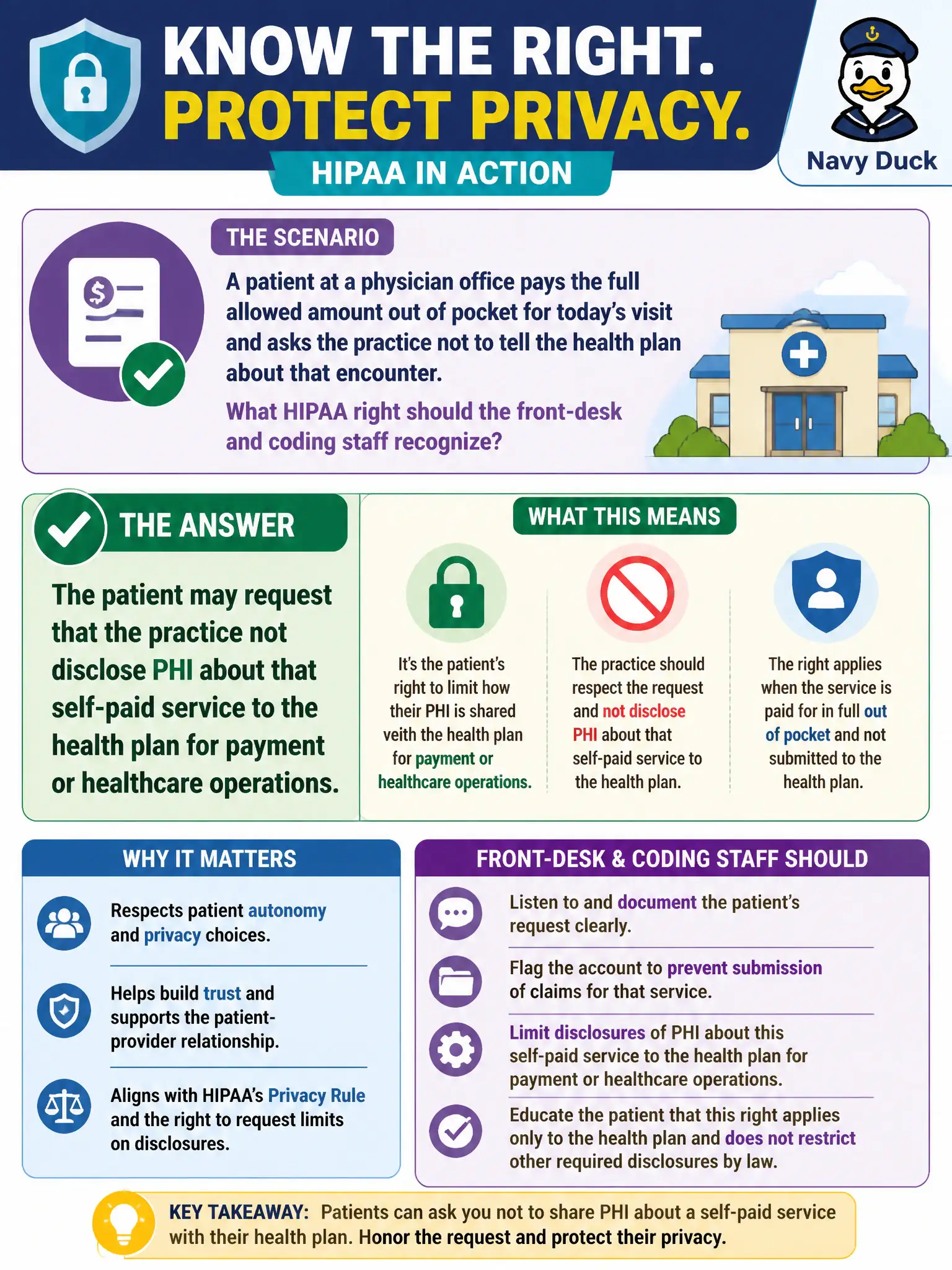
A patient at a physician office pays the full allowed amount out of pocket for today’s visit and asks the practice not to tell the health plan about that encounter. What HIPAA right should the front-desk and coding staff recognize?
Select an answer to reveal the explanation.
Short Explanation
When someone writes the check themselves, HIPAA gives them a shot at keeping that visit off the plan’s radar. It’s like paying cash at a pharmacy and asking them not to run it through insurance. Staff should know the right exists and how the practice handles the request.
Full Explanation
When a physician-office patient pays the full allowed amount out of pocket for a specific encounter and asks the practice not to tell the health plan about that service, HIPAA recognizes a patient right to request a restriction on disclosures to a health plan for payment or healthcare operations related to that self-paid item or service (subject to regulatory conditions and practice procedures). Front-desk and coding staff in a civic primary-care practice should recognize the request as a privacy right to be handled through the organization’s designated process—not as an informal courtesy that can be shrugged off. Honoring the construct protects patient autonomy over self-funded care while keeping professional-fee workflows aligned with Privacy Rule expectations.
Claiming patients may never restrict plan disclosures once insurance is on file fails by concept because it invents an absolute bar that the self-pay restriction pathway expressly addresses. Limiting restriction requests to hospital facility bills fails because the Privacy Rule is not confined to UB-04 facility claims; professional-fee office encounters are within scope. Ignoring the request merely because the plan would otherwise pay fails because anticipated plan payment does not erase the patient’s self-pay restriction right when the regulatory conditions are met.
Exam caveat: operational details (how the practice documents the request, how claims are suppressed or adjusted, and when a restriction may be declined) follow current HIPAA text and organizational policy; the tested concept is recognition of the self-paid-service restriction right, not inventing local workarounds. Operational check: if a patient tenders full payment and requests plan non-disclosure, route the request to privacy/compliance, document acceptance or denial per policy, and ensure coding/billing do not automatically drop a professional claim to the plan for that restricted service.