
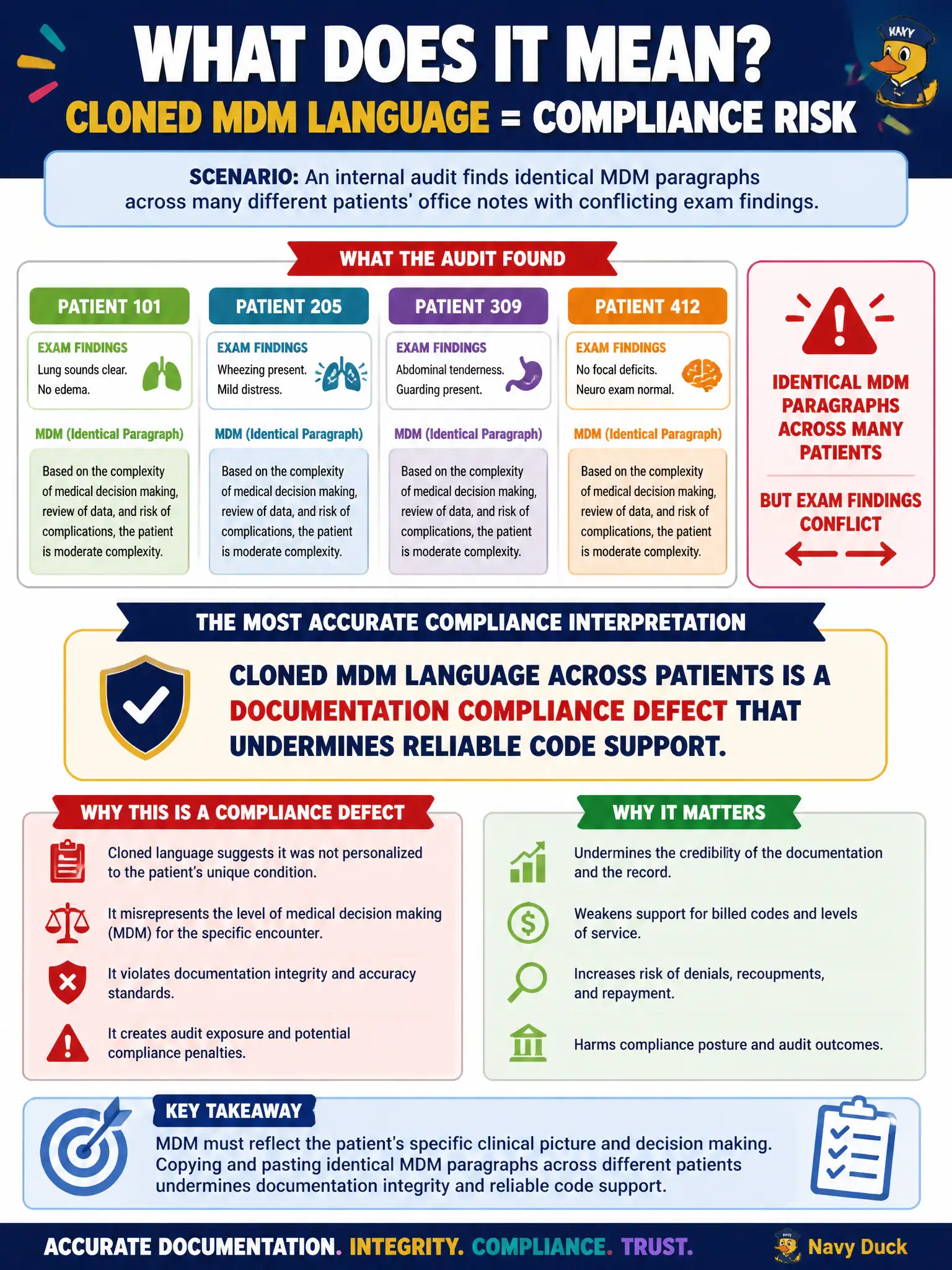
An internal audit finds identical MDM paragraphs across many different patients' office notes with conflicting exam findings. What is the most accurate compliance interpretation?
Select an answer to reveal the explanation.
Short Explanation
When every chart sings the same MDM verse, something's copy-pasted—not customized. That cloning defect means you can't trust those words to carry the E/M or diagnoses for this unique patient.
Full Explanation
Patterns of cloned MDM or assessment language across unrelated patients indicate documentation integrity failure. Such text may not reflect the individual encounter and therefore may not reliably support reported E/M levels or diagnoses. When an internal audit finds identical MDM paragraphs across many different patients’ civic clinic office notes with conflicting exam findings, the most accurate compliance interpretation is that cloned MDM language is a documentation compliance defect that undermines reliable code support. Findings should trigger education, template controls, and potential claim remediation when codes lack encounter-specific support. Claiming identical MDM text proves high clinical consistency and strengthens all E/M levels fails—identical text across different patients is a red flag, not a strength. Preferring cloning because it reduces time and automatically validates medical necessity fails ethics and medical-necessity logic. Ignoring cloning if CPT codes were paid historically fails because historical payment does not validate documentation integrity. Exam caveat: template use can be acceptable when individualized; wholesale identical MDM with conflicting exams is not. Operational check: quantify cloning prevalence, disable risky auto-text, retrain providers, resample after fixes, and evaluate refund needs with compliance counsel for the municipal network.