
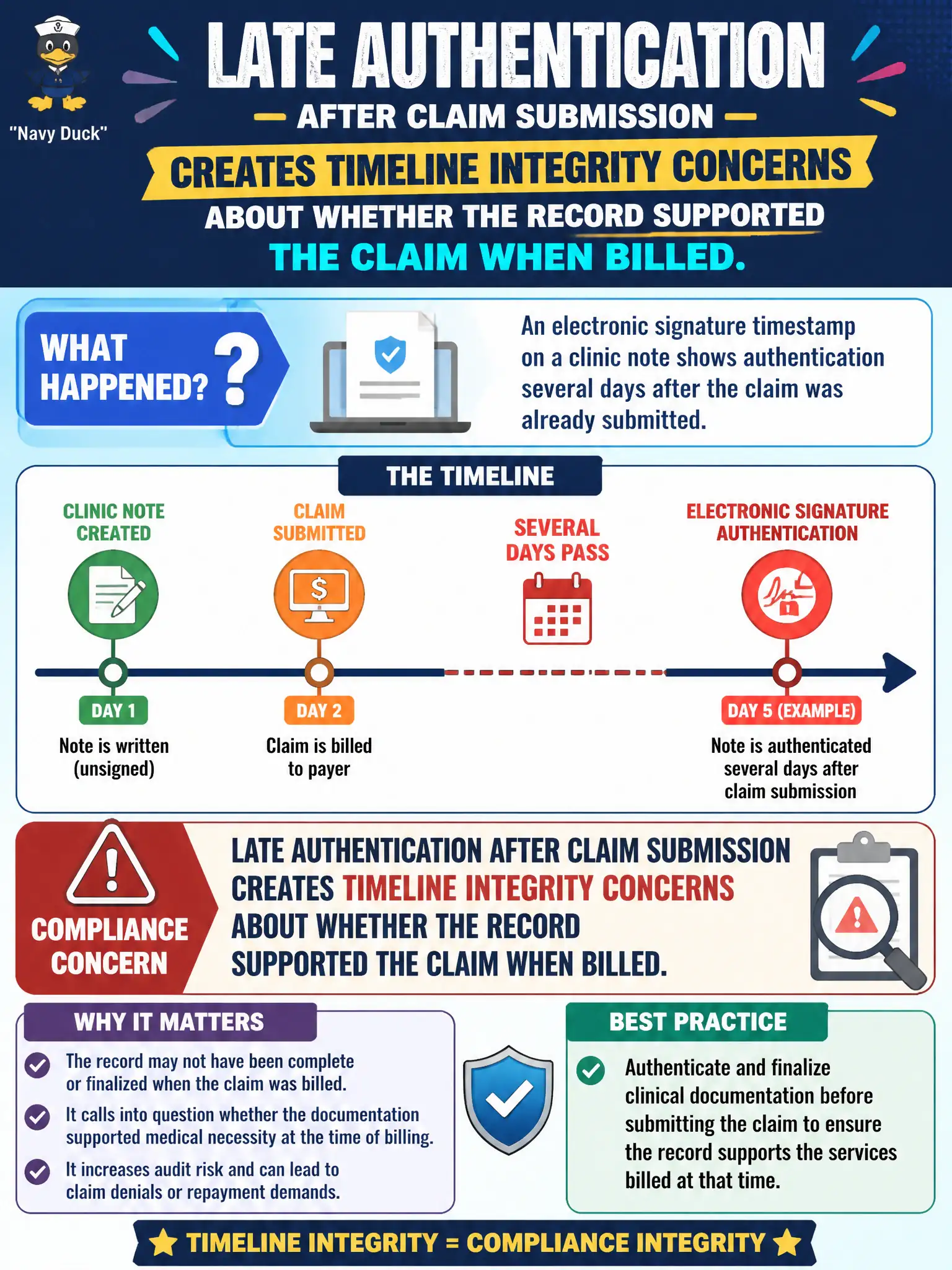
An electronic signature timestamp on a clinic note shows authentication several days after the claim was already submitted. What compliance concern does this raise?
Select an answer to reveal the explanation.
Short Explanation
If the claim left the building before the note was signed, the timeline looks fishy—like mailing a contract and signing it later. Auditors care whether authenticated documentation existed when you billed.
Full Explanation
Electronic signature timestamps establish when authentication occurred. Authentication occurring after claim submission raises questions about documentation integrity and whether a complete, signed record supported the services at billing. When an electronic signature timestamp on a civic clinic note shows authentication several days after the claim was already submitted, the compliance concern is late authentication after claim submission and timeline integrity about whether the record supported the claim when billed. Practices should authenticate before claim drop whenever possible and investigate late-signing patterns. Claiming post-billing timestamps always prove the note was complete on the DOS fails chronology logic. Ignoring signature timing if any signature appears within one year fails payer expectations for contemporaneous support. Viewing post-billing signatures as improving integrity fails—they often signal process breakdown. Exam caveat: late signature is a risk indicator; remediation may include attestation or other payer-allowed steps, but patterns need root-cause correction. Operational check: compare signature timestamp to claim submission date, quarantine late-sign patterns, retrain providers on same-day/near-time authentication, and report metrics to the county compliance committee.