
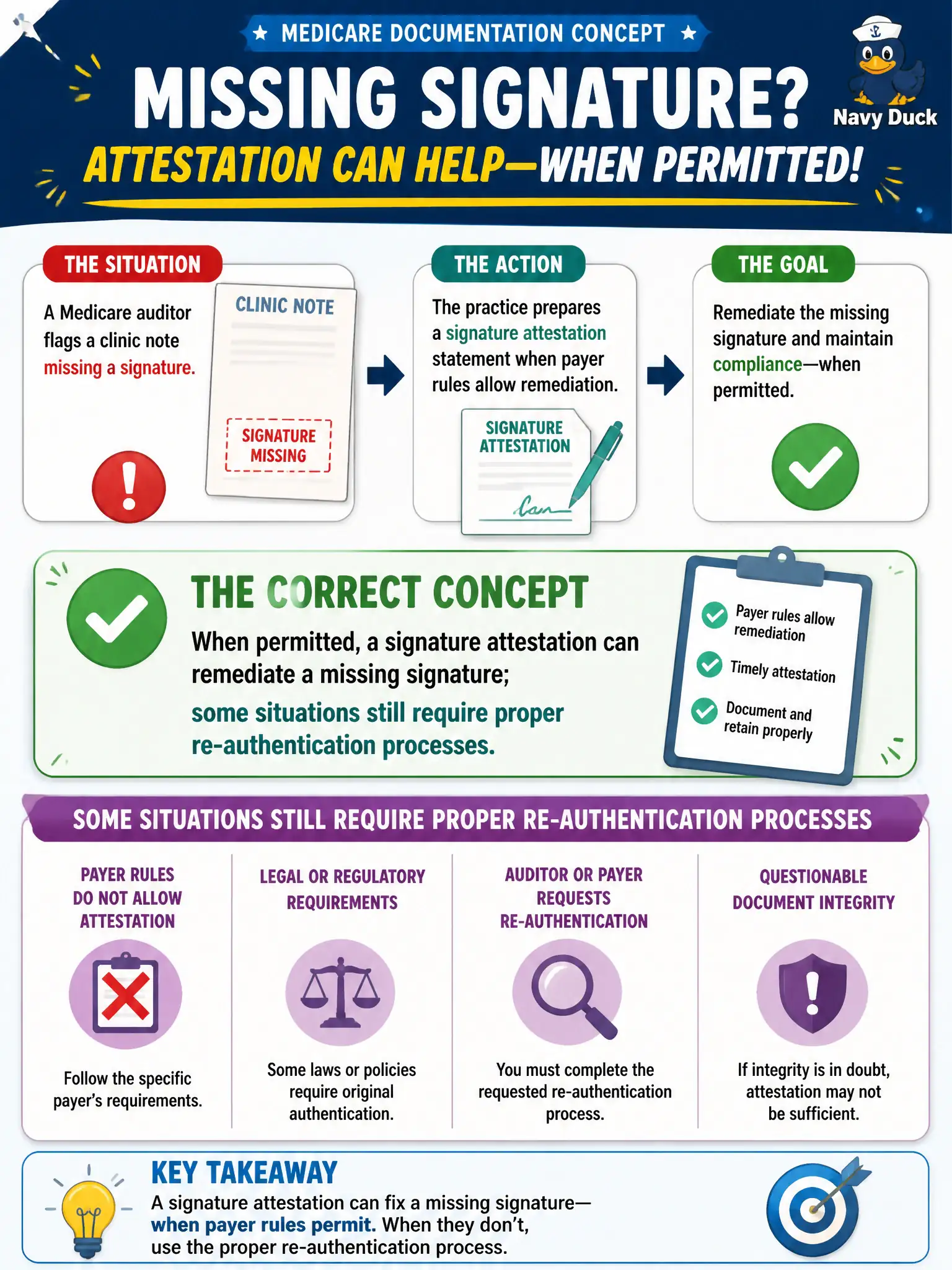
A Medicare auditor flags a clinic note missing a signature. The practice prepares a signature attestation statement when payer rules allow remediation. Which concept is correct?
Select an answer to reveal the explanation.
Short Explanation
An attestation is a formal 'yes, that was my note' letter when the ink is missing—and only when the payer says it's okay. It's a fix for a gap, not a free pass to skip signing forever or to fake a late e-sign.
Full Explanation
Medicare and other payers may accept a signature attestation statement to associate a provider with an unsigned entry when specific content and timing rules are met. Attestation is a remediation tool, not a substitute for routine authentication going forward. When a Medicare auditor flags a civic clinic note missing a signature and payer rules allow remediation, a signature attestation can remediate the missing signature; some situations still require proper re-authentication processes instead. Practices must follow payer instructions precisely. Treating attestation as permanently replacing future signatures on all charts fails—attestation remediates specific entries, it does not retire signing forever. Claiming providers may never remediate a missing signature once a claim was submitted fails because many payers expressly allow attestation pathways. Inventing a backdated electronic signature instead of using an allowed attestation fails as falsification of authentication timing. Exam caveat: attestation language and timelines are payer-specific—use the MAC/payer’s required statement, not a homemade paraphrase. Operational check: confirm attestation is permitted for the flagged claim, use the approved attestation template, avoid backdating EHR signatures, strengthen front-end signing compliance in the county practice, and track attestation volume as a risk metric.